





Tomorrow will be a better day
[Trends] Performing arts trends and issues in the Balkans
The Performing Arts Market in Seoul, held in October, featured a regional focus section on Eastern Europe, where experts from this region had a chance to talk to their Korean counterparts and look at the current situation in Eastern Europe and the issues that performance art there is facing.
|
|
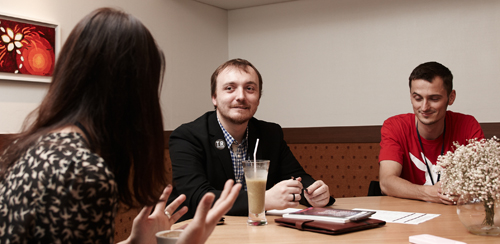
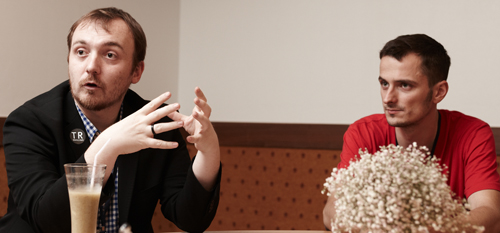
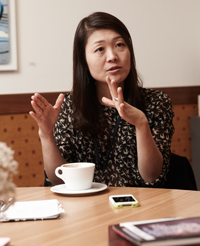
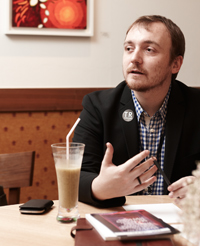
| From left to right M J CHOUN, Zvonimir Dobrović and Samo Selimovic |
Q : We often group all the countries in this region together as being part of the Balkan Peninsula, but really, each country has very distinct characteristics that separate it from the others in this region. I have been to Slovenia, Macedonia, Croatia, and Bosnia, and I noticed that the tourists in each country are very different. I think we can begin to discuss the performance art trends and themes in the countries that make up the Balkan Peninsula, which have both similarities and differences.
A Samo Selimovic ("Samo") : I work for Bunker, a nonprofit group that organizes mostly contemporary performance art events in Slovenia. A theater that holds contemporary performance art pieces is a very important space in the region, in terms of its contemporary art trends. Our group organizes around 150 performances yearly and all of them are contemporary performance art pieces. Also, we are currently working on projects that are connected to our local community. The theater we operate is not a government organization, so it is not institutionalized, and we do not own the theater. Basically, we just manage the theater. Because we don’’t own the theater, our work is assessed every five years by the administrative committee: they look at the success or failure of the programs we’’ve run so far, as well as our vision for future programs, and decide whether or not the theater will go on for another five years, through an open tender process.
Q : So does that mean that your group is a sort of management team?
A Samo : Yes. However, as I’’ve stated before, Slovenia and other Balkan countries have many organizations and institutions which don’’t have a performance venue. Our group provides the necessary functions that these organizations need. Regarding the content of our self-produced performances for the theater, there is a limit. So if an act requires more than the boundaries of our theater can provide, that performance doesn’’t get featured. If a certain performance corresponds with our theater, there is a bigger chance that the performance will be shown. As this kind of work is as a service for non-governmental and non-institutional organizations in Slovenia and other Balkan countries, there is an element that is lagging behind compared to countries which do not operate this way. I think maybe compared to other Balkan countries, Slovenia’’s situation is a bit better. In Albania, there are no established organizations in the performance sector.
Q : So there are only private organizations?
A Samo : Yes. It might be different for each country but comparatively, there is a bit more support for these non-governmental groups in Slovenia. Of course, this is only in comparison to other Balkan countries; compared to Western Europe, it is probably lacking in support. The current situation of Slovenia’’s performance art scene is that most of the works take on this non-institutional format. The repertory theaters, as well as the current state of affairs for production, all face these sorts of artistic circumstances. Most of the funding goes toward established theaters and everyone receives public funds. Like most European countries, Slovenia’’s art sector still operates with support from public funding.
Q : If so, what kinds of works are featured in these established theaters?
A Samo : It depends on the theater, but it is mostly opera performances. Slovenia’’s population is only around 2 million, but the country still has two national opera companies and two national theaters. In addition, in cities like Ljubljana and Maribor that have more than 20,000 residents, there is at least one municipal theater in the city as well. I wouldn’’t say that all the national theaters and groups focus only on classic theater or opera, because they do make small attempt to break away from traditional formats. Even so, most of the experimental and contemporary works can be seen in the independent sector.
|
|
Q : Switching the topic, I would like to hear about the situation in Croatia. When I attended the International Small Scenes Theatre Festival in Rijeka, I remember being struck by the depth of understanding by the audience members in regards to the performances during a press conference including a talk session with the audience. So I came out of it thinking that Croatia’’s contemporary theater sector is highly developed. In addition to these kinds of festivals, what are the contemporary art trends in Croatia at the moment?
A Zvonimir Dobrovic ("Zvonimir"): I think that the audiences in the Balkan Peninsula are more cultured. This is because that area has a long history of observing the contemporary theater and dance trends of the world. So, I think that Balkan audiences, not just Croatian audiences, have steadily been hearing about the trends in global theater. Also, traditionally and socially, theater has always been an art form that has garnered a lot of respect. In this sense, the audiences follow this path. Of course, films are evolving as well, but in particular, it is the theater sector that is developing.
Sometimes, I encounter rude audience members. There are people who just walk out of a performance right in the middle of it. However, there are also really devoted audiences who follow the performance well. These are audiences that have considerable knowledge about what they are watching. In this sense, Croatia’’s contemporary theater is in a satisfactory state. It is just that because the system is complex, the circumstance is complicated as well. By "the system," I am referring to the situation in which funding is focused mostly on public theaters and other government-run organizations. It is slowly changing, but the basic thinking of the state government and the Ministry of Culture isn’’t changing much. Because this is the case, opportunities will surface only when we find other sources of funding. The cultural minister of Croatia will not look at the activities of private organizations and think that they need a separate performance venue to showcase their creativity. In any case, performances are happening regardless of the stance of the Ministry of Culture, and those who want to pursue theater have to find another way to carry on with their art.
Q : So what is the festival scene like in Croatia?
A Zvonimir : Croatia’’s large-scale festivals have a long tradition. Like in Europe, the festivals formed after WWII, almost at the same time as big festivals like Festival d’’Avignon. They date back to a time when the trend was trying to promote harmony among nations after having gone through a crisis. Croatia’’s first ever festival, the Dubrovnik Summer Festival, started around two years after the Festival d’’Avignon. Also, in Pula, close to Rijeka, there is a very old, well-known film festival. These festivals, born between the 50s and the 70s, reflect the circumstances of the time, and in particular, introduced artists who had strong ties to Europe. Later on, when Yugoslavia collapsed and Croatia became an independent country, these festivals started becoming more and more institutionalized due to government interference, and works started focusing more on national identity and other national issues. With this, the cooperative relationship between countries deteriorated and more and more, these festivals started becoming a vehicle for nationalism. I think that it can be dangerous for culture to be used in that kind of way.
Q : Do you see it as a form of post-communism?
A Zvonimir : Yes. These festivals still haven’’t recovered completely. They have quite strong traditions, and although they showcase artistic works like other international festivals, most people haven’’t heard of these works or don’’t know what they are about.
Q : What about in Slovenia?
A Samo : Basically, it is mostly a similar situation. I think you can generalize what I talked about just now and see it as their overall situation. I think the 60s and the 70s, in terms of art, was probably the golden age of theater. There was substantial investment in that form of art, and the global situation meshed well with the national position, creating the best conditions. I have said that festivals are losing their originality, and the situation in Slovenia is similar. Some performance venues hold various festivals—for example, theater festivals like Borstnik Gathering, are still running. It might not be a global festival, but I think it has merit as a regional festival.
Q : I’’ve heard that in the past, Balkan countries had more direct, cooperative relations with Western European countries than with Eastern European and Central European countries. If this is so, what is the situation like among Balkan nations in terms of cooperation or making joint productions?
A Zvonimir : It is in the process of recovering its strength. In fact, it was only two years ago that cooperative efforts began, with a lot of caution and seriousness and led by small-scale private organizations like ours. We are a small, private organization, but as one of the private cultural groups which started opening up towards cooperation with other Balkan countries, we are one of the biggest.
A Samo : The 90s were the worst period in the 20th century for people in the Balkan Peninsula. This is in terms of politics, not generally speaking. For example, after the breakup of Yugoslavia, when the Balkan countries wanted to discuss international cooperation, they went outside the Balkan area, to Western European countries. They attempted to develop internally by looking at Western Europe and their art. There was no cooperation between Balkan countries, and this was for political reasons.
A Zvonimir : Croatia now has a new Ministry of Culture, but before the ministry was founded, there was no support for any joint projects with artists from other Balkan areas. There was even a reluctance to use the word "Balkan." However, it is changing now.
|
|
|
|
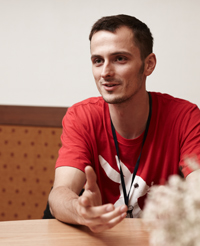
Q : There are a lot of common, similar characteristics among the countries in the Balkans, but on the other hand, what are the distinct characteristics? Compared to other Balkan nations, what makes Slovenia unique?
A Samo : First of all, the artists are different. I think that in the past, there was more organized support for art in Slovenia than any other Balkan country. For example, Croatia’’s Ministry of Culture tried to fund the arts sector, but Slovenia’’s government no longer does that. The fact is, Slovenia got rid of its Ministry of Culture one year ago. The private sector opposed it fiercely, but the fight was fruitless for us.
A Zvonimir : The things that are happening in Croatia are in a far better position compared to other countries. This is especially true financially speaking—although everybody still complains. The act of complaining is a relative thing, because the amount of funding is still not enough to support young artists or artists who want to break their own mold.
The movements that have been bubbling up in Croatia for the last 10 years are finally bearing fruit today. Croatia has a generation of young artists who are sensitive to the various phenomena happening inside the country in terms of politics, society, and art. Their works respond to contemporary issues and form a social consensus. Of course, these works also have to be relatable to the audiences as well. However, numerically speaking, the ability to attract audiences is still lagging. Ordinarily, things like contemporary dance performances do not attract a big audience because of its experimental quality. The number of people who would go to see experimental works doesn’’t even add up to a few hundreds. Regardless, in the case of Croatia, things are getting a bit better. There is an exchange of positive influences when seeing someone else succeed, such as taking inspiration from them.
Q : Besides traditional text-based art, how do you come up with new projects, find funding, and operate projects in the field of art?
A Samo : Like I’’ve mentioned, as a systematic approach, we rely on government support. We have many revenue sources, but basically, all of them are public funding. Much of this amount comes from local government funds, as each city has its own production budget. It is more difficult for private organizations to survive, because they are not systematized. That is why many dancers are choreographers, as well as the head of a small-scale NGO that they have founded. They are part of a system which forces them to do this. In order for artists to make their ideas come to life, they need to apply for funding; to produce the works, they need to make their own organizations. This has become a commonplace thing for artists. However, this brings about fragmentation. Although there have been massive amounts of works produced in the last 15 to 20 years, all of the works were either small-scale or solo performances. These performances usually have production costs of around 8,000 euros, and it will be difficult for them to keep them afloat. Because it is difficult to cover the basic costs, repeat performances are impossible, even after a successful first performance and the work gains some recognition. There have been so many performances like that. So we need to find a long-term plan to raise funds. In the past, that is the direction that the government wanted us to take, which is why funding came in one-year or three-year forms. But as the financial crisis hit, it has become harder for the government to provide funds. There are other ways to get funding when the public sector doesn’’t provide enough support, mainly getting funds from foreign institutions, but looking at the Balkans as a whole, this represents one part of the funding situation.
Q : For example, if I were to start a festival, how much would I need in public funding, or support from the state government? I am curious as to how much of the funding comes from internal profits. Can you tell me the ratio?
A Zvonimir : In our case, we have secured various sources for funding. The organization that I run doesn’’t just deal with cultural things. We do various projects. The art projects we operate span different fields, including culture, education, politics, and media. Because of this, we have difference sources for funding. This is the only way we can survive. If we had insisted on only doing festivals, we would have failed. If we start to depend on only one or two sources of funding, and later on, the funding stopped or shrank, we would have to stop our operations altogether. So to survive, we have to do a diverse range of things. So we are trying to find stability by going into publishing books related to performance art. We secure 25--30% of the total budget from public funding, and the rest we get from either international projects or projects we produce overseas. Of course, although it isn’’t a lot, the ticket sales and revenue from selling books make up around 10%.
The artists we work with do not earn a lot of money. What the artists get out of it is at least being able to finish their works with creative control and having an opportunity to showcase their works. What we are trying to do is provide an international opportunity.
Q : Among contemporary works, are there efforts to either criticize or remind the public of issues in contemporary society?
A Samo : I think you can say that. Looking at recent history, there have been big scandals in Europe every two years because certain artistic endeavors have not received sympathy from the majority of the public. There is quite a lot of politically driven content, which I think comes out when these endeavors collide with the views of the general public. Even looking at theater or art works, there have always been artists who aim for intervention, or interference. In all artistic forums, including music, performance art, and visual art, there is a political statement. I think this may be related to the breakup of Yugoslavia, because there is a lot that artists contributed at the beginning towards a solution. In Slovenia, there is a political art collective called NSK (Neue Slowenische Kunst) which was regarded as being a threat to national security at the time . For example, punk music has been seen in this light. In Slovenia, punk music has secured a place in the mainstream of art history. A Zvonimir : By organizing festivals, we really try to question and criticize. We try to understand what is making people upset or what is making their lives unbearable. There is bound to be injustice in society and we try to put forth these problems and talk about them. Because we all try to defend ourselves in our own way. The American author James Baldwin once wrote that ,"For the best actor, patriotism is criticizing one’’s own country. The way to love your country and society is to see it as it is." Patriotism doesn’’t mean saying everything is just good. That is not patriotism. I always remember this quote.
Also, relating to criticism, I want to talk about a good method that I use often. When I go to other countries to see performances, I talk to colleagues about our festival. Because these people all operate theaters, they tell me what is interesting and what is not. Then, I trust them and follow their opinion. And when I do that, I usually discover something unexpectedly, from another place. I don’’t know about Korea, but in Croatia, when we prepare for festivals, no one is in a good mood. This is because the Ministry of Culture predicts who will come to the event and sets up its own agenda. However, this is not what they should be doing. Their role is to support us so that things run smoothly, because they are not experts who deal with art every day. There are others who understand different aspects of the process better, including those who understand art, those who go to the studio, those who know what is going on in the field, those who go on business trips, and those who understand their colleagues. The ministry has to permit these people to organize the program in a much important way.
A Samo : Personally, I think that the big problem in the Balkans is that when we look at the past, we don’’t have a critical point of view, and when we look towards Western Europe, our gaze is limited to the artistic realm.
Q : So in other words, are you talking about a sort of Western Europe-centric point of view?
A Samo : Yes. Slovenia and Bosnia are very European countries, but their focus is geared towards Western Europe. Also, they want to be another France, another Germany. Although they have their own individual ways of interacting with the outside world, in our case, there is too much of a focus on Western Europe.
|
|
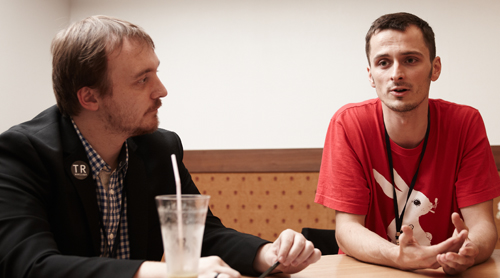
Q : What was your vision when you began your work? Why did you start, what was your goal, and what were you aiming for?
A Zvonimir : When the festival began, I didn’’t think about those things. To be honest, I just wanted to do art, culture-related things, and performance art, because I thought that there was no other thing in life that was more worthy than this. I’’m sure you are aware of this, but the problems and difficulties you face when doing art-related work fundamentally lie in the way you work with other people. This is the part I like the most. .
I like working with other people: encouraging one another, conversing and sharing opinions, pulling out questions that I have been ruminating over, and sharing these questions with others. You can know who people are, what point in their lives they are at, and why they are doing what they do through their work. In this sense, it is quite an attractive thing to be surrounded by creative people and artists. Sometimes, I think of myself as a sponge. When someone is creating something or researching, I absorb all their energy and knowledge. Overall, I am quite optimistic, because Croatia’’s situation will be better tomorrow. There are many talented, creative people and those who cherish art, theater, dance and performance art. Political and economic situations are always tough, but I haven’’t encountered a situation where I haven’’t been able to support an artist because there was no money. Fortunately, money has never turned into a sort of King Kong-like monster, at least in the last 10 years. I work with artists because I want to work with them. I want others to find their own way, like I have done for myself. The dialogue in the Balkans is always aimed at the future—because tomorrow will be a better day. (laughs)
Q : Thank you for speaking for this long a time. I wish all of you luck. I hope that the next time we meet, we will have moved to a better tomorrow.
Zvonimir Dobrovic
Dobrobic has worked as a curator for festivals in Croatia, the U.S., France, Slovenia, and Macedonia, and is the founder and program director of Queer Zagreb and Perforacije .
Samo Selimovic
Selimovic is the international program manager at Bunker. Bunker is a nonprofit group which organizes various contemporary performance art works and educational programs. He organizes and operates Mladi Levi one of Bunker’’s main festivals.
 PREV
PREV
.JPG)
.jpg)
.jpg)
.jpg)
.jpg)












.gif','The Performing Arts Market in Seoul, held in Octob..');)


