





Korean Performing Arts Market Reaches 550 Billion Won
[FOCUS] Survey on Performing Arts in Korea (based on 2010) (Ⅰ)
The Size of Korean Performing Arts Market
The size of Korean performing arts market based on performance facilities and number of performance groups are as follows: Sales at the end of 2010 was around 594.3 billion won; 3,034 companies (including performance groups, facilities, etc.); people in performing arts profession is 56,798.
The changing trend in the size of the performing arts market for the recent 4 years is as follows: Performing arts facilities have increased from 662 in 2007 to 820 in 2007, and the number of people in the profession rose from 9,037 in 2007 to 9,623 in 2010. On the other hand, the sales from the performing arts facilities fell from 288 billion won in 2008 to 230 billion won in 2008, but it began to rise again and amounted to 320 billion won in 2010.
|
|
| [Fig.1] Annual market size of Korean performing arts |
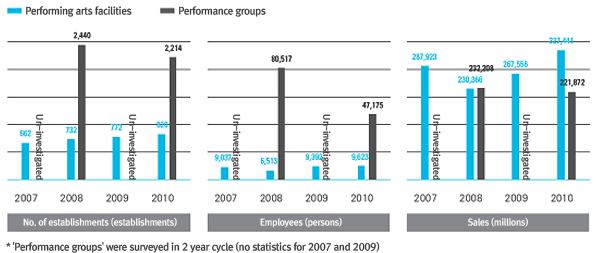
The number of performance groups (surveyed in 2 year cycle) decreased by 230 from 2,440 in 2008 to 2,214 in 2010, and the number of people in the profession also decreased from 80,517 to 47,175 within the same period. The sales by performance groups were found to have decreased by 10 billion won from 232 billion won in 2008 to 222 billion won in 2010. The number of employees in performance facilities rose by 2.5% (231 people) compared to the previous year, but the number of employees in performance groups fell by 41.4% (33,342 people) compared to the previous year. The number of members within performance groups also decreased by 46.7% (20,789 people), number of support staff decreased by 17.5% (2,553 people), and especially part-time members were shown to have decreased extensively. When looking at the sales of the establishments, the performing arts facilities showed increase by 22.4% (around 55.9 billion won) compared to the previous year, but sales by performance groups showed reduction by 4.5% (around 10.3 billion won) compared to the previous year.
High Sales Coming from Private Performance Facilities
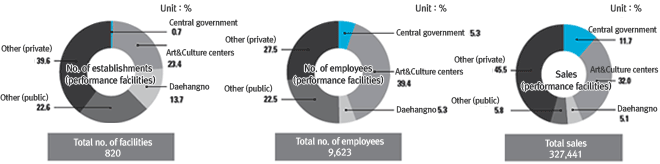
In the case of performing arts facilities, the percentage of privately operated facilities had the biggest ratio with 39.6%, and public cultural centers operated by institutions such as local governments took up 23.4% of the whole. On the contrary, the percentage of employees in cultural centers amounted to 39.4%, and employees in private facilities amounted to 27.5% of the whole.
However, in sales, private performing arts facilities took up close to half of the entire sales with 45.5%, and public cultural centers took up 32.0%. In other words, public performance facilities such as central government facilities and cultural centers have a relatively high ratio in number of employees and sales compared to the number of establishments, but facilities in Daehangno have relatively low ratio in number of employees and sales compared to the number of establishments. Other public facilities (other than national and local government operated cultural centers) were found to have high ratio of establishments and employees, but relatively low ratio in sales. The ratio of establishments, employees, and sales for private facilities were found to be high overall, but the number of employees was low whereas sales was high.
|
|
| [Fig.2] Market size comparison of performing arts facilities |
Plays and Western Music Account for Over Half of the Groups
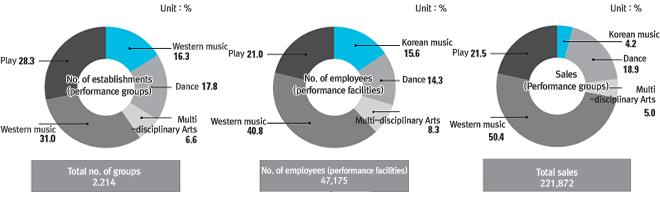
In performance groups, the percentage of establishments for Western music groups and play groups have high ratio compared to other groups with 31.0% and 28.3% respectively, and employees in Western music groups take up 40.8% of the entire percentage of employees in performance groups. Sales from Western music groups amount to over half of the entire sales with 50.4%, and play groups also show relatively high sales with 21.5%.
Overall, the sales ratio of Western music groups is fairly high compared to the number of establishments and employees, but sales ratio of Korean music groups in comparison to the number of establishments and employees is relatively low.
|
|
| [Fig.3] Market size comparison of performing arts facilities |
 PREV
PREV
.JPG)
.jpg)
.jpg)
.jpg)
.jpg)











.gif','The size of Korean performing arts market based on..');)


