





Representative Support Organizations in Wales,
Focusing on Korean Performing Arts
[FOCUS] Arts Support Structure in Wales, UK
At recent international performing arts markets, it isn''t difficult to meet regional support organizations of culture and arts, and community-based performing artists, groups, and practitioners who participate in events through the support of such organizations. Also, one can especially see the focus of support in easy music genres of industrialization and tour organizations through recording and distribution. At the Performing Arts Market in Seoul (PAMS) 2011 as well, I was able to meet performing arts practitioners who flew in from Catalonia Spain, Quebec Canada, and Wales UK.
The United Kingdom is a federation of 4 self-governed nations which include England, Scotland, Wales, and Northern Ireland. These self-governments have an independent support system of culture and arts, and in many cases, the roles are divided where the Arts Council is an organization that supports the promotion and development of regional culture and arts, and the Creative Scotland and the Wales Arts International (WAI) are in charge of overseas entry and promotion of regional culture and arts.
Of these, Wales develop its supporting policies centered on the Arts Council of Wales (ACW) and the Wales Arts International (WAI) under the umbrella of the Wales government. When looking at the theatre genre among its various support projects, the ACW has its focus on supporting the producing theatre and creation/tour of performing groups, and audience development of drama. In 2009, it has opened the National Theatre Wales as a building-less national theatre, and is seeking new ways to promote theatre in the Wales region. The Council''s key supporting policies are ''Innovative and multi-genre experiment'', ''Activation of theatre in Welsh'', ''Venue infra maintenance and development of young audiences'', and ''Promotion of critics and media activities of Welsh theatre/drama.'' The WAI promotes the international exchanges of Welsh theatre by supporting international joint projects, coordinating international projects, and developing and collaborating with international networks. For example, in 2011, the British Council supported 3 theatre groups from Wales that participated in the 2011 British Council Showcase, which is a showcase that internationally promotes performances held every two years at the Edinburgh Festival Fringe. In addition, the ACW and WAI are aimed at activities for attracting the 2013 WOMEX events to the central city of Wales, Cardiff, and are putting in much effort to create an environment for promoting international exchanges.
The Creu Cymru
The Creu Cymru is another organization that deserves attention for international exchanges in Wales region. The Creu Cymru, founded in 2001 by the initiative of the performing arts community in Wales, is an organization that facilitates distribution of performing arts so that good works are discovered by the theatres and art centers across Wales, and through such sustainable and active network, allow the Welsh audiences to meet many good performances. The organization secures financial resources through the funds from ACW, membership fees, and fundraising activities; and over 41 professional theaters and arts centers such as Chapter Arts Center and Wales Millennium Centre are members of the organization.
|
|
| |
|
Members of Creu Cymru |
2011 annual report of Creu Cymru |
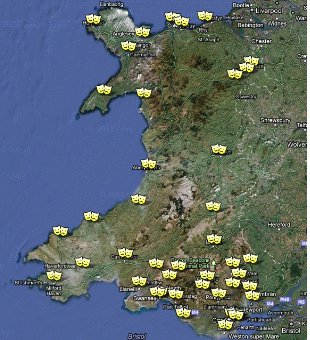
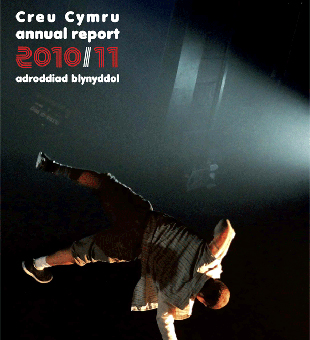
The Creu Cymru is an organization that promotes cooperation among groups of a genre, encourages collaborative working of theater-supervised tour/creation/research through the auspices of donating foundations, gives programming support for research and touring for creation, and provides management support such as consulting on theater management. And at the same time, the Creu Cymru represents the rights and interest of theaters and arts centers, develops/advocates theater related policies, and is playing the role of a representative organization for theaters in the Wales region in terms of federation.
Organizing research tours so that the member theaters/arts centers can discover good performances, and promoting distribution of performing arts so that the Welsh audiences can see good performances are few of the key roles of the Creu Cymru. As part of the research program ''Go and See Scheme'', the Creu Cymru has organized the program so that research can be done through watching performances and through human exchanges by participating in member''s festivals and events such as CINARS of Canada; the largest world music market, WOMEX; winter music festival in Scotland, Celtic Connections; and Edinburgh Festival Fringe. And among the performances presented in the festivals, Creu Cymru is in the process of reviewing for performances that can be shown in the Wales region with the members.
Meanwhile, the scale of Wales tour performances that was held through the financial support of the Creu Cymru from the second half of 2009 to the first half of 2010 is being reported as 20 performing groups, 29 member theaters, and 119 performances.
The Creu Cymru and its Exchange with Korea
Several Welsh theaters and arts centers have had already organized the Wales tour with Korean performances under the support of the Creu Cymru for many years with such works as The Dandelion''s Story and A Love in a Dream by Modi Theatre The Angel and the Woodcutter by Cho-in Theatre, and Non-verbal Performance One by Cheong-Bae Traditional Performing Arts Troupe.
Important thing to note is that the PAMS was selected as the first Asian market for the international research program ''Go and See Scheme'' by the Creu Cymru, and during the last PAMS, the program manager of the Creu Cymru and the directors of five member companies visited Korea and researched the performing arts scene here in Korea. During their one week-long visit, they encountered various performing arts, people, and had a number of formal and informal meetings.
Through this research opportunity, the Creu Cymru expressed their interest in a wider and more diverse exchange with Korean performing arts community, and furthermore, their desire to expand on the methods of exchanges through such collaborative works based on sources of theater scripts in Korean-Welsh. I am looking forward to the manifestation of such exchanges with Korea, and I hope for continued interest from the Korean performing arts community as well.
 PREV
PREV
.JPG)
.jpg)
.jpg)
.jpg)
.jpg)












(0).jpg','At recent international performing arts markets, i..');)


