





The Status of Independent Arts of China
[Focus] Seen through the Caochangdi Workstation
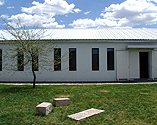
The Caochangdi Workstation is located in a region called Caochangdi near the Wuhuan street in Beijing. This article seeks to observe the progress of independent arts space, documentary, and theaters that are developing outside the Chinese system through their relationship, and especially, through the case study of Caochangdi Workstation (hereinafter Caochangdi) which has been built as an art space in this region.
The early 90’s were the period when independent documentaries and theaters started to emerge and the artists who were unhappy with the censorship and restriction over artworks began their independent creative work outside of broadcasting stations, film studios, and national and public theaters. Naturally, because these artworks didn''t have the means of reaching the public through systems like broadcasting and public theaters due to reviews and regulations, they often quietly made themselves known through bars, special programs in universities, or through "internal performances" that did not sell tickets. One of the unique means of exposure was also through screening or performances at international art festivals such as film, theater, or dance. This was the situation of the ''90s. In the 21st century, it seems the cultural policies aren''t as strict as before due to the movement into the era of commercialization, but the lack of any kind of sponsorship or funding for creating independent arts remains unchanged.
On the other hand, the extreme materialistic social atmosphere created by evermore commercializing times made the individual artists feel more isolated and differentiated. Broadcasting stations, movie theaters, and theaters still did not welcome these independent and non-commercial artworks, and even the bars that presented such works started to close down and go bankrupt. Theaters only gave performance approvals with even more expensive rental fees. Under these circumstances, producers who insisted on creating independent works were faced with the trouble of having to promote broadcast advertisements, create works to meet the commercialized demand, or introduce their works by touring film festivals and other various festivals abroad. Authentic audiences in China began to disappear, and the resources and skills needed in creation also diminished as the linking chain between the production artists and the society was broken. This situation continued on into the early years of the 21st century, and the independent documentaries and performances of China faced a survival crisis as they were under the dual pressure from the system and commercialization.
 |
 |
 |
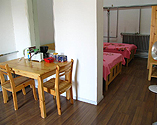 | |||
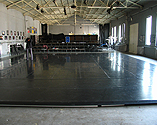
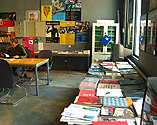
| Caohchangdi Workstation | Rehearsal studio | Archives | Living area |
Platform for Independent Artists
I started producing independent documentaries in 1988. I was one of the frontiers in the field of independent documentaries in China. Also, I founded, along with choreographer Wen Hui, an independent performing arts company called Living Dance Studio in the early 90''s. This company is considered one of the first independent production groups in China. My own experiences can said to be a condensed summary of many colleagues of mine who shared the same passion for independent production. It''s not only about creating an individual performance, but there needs to be a combined effort in creating an environment where independent performance can be developed. In other words, independent art spaces should be set up and there must be a union of independent producers which clearly conveys its art and voice apart from maintaining individual''s creative activities. This was the aim of Caochangdi when it was constructed in 2005. Caochangdi, with the cooperation from art institutions and artists, held documentary screening, theater/dance workshops, lectures, festivals, etc. And this provided opportunities for independent artists, students, or people with interest in the field to participate and exchange. Caochangdi is leading the way in the forefront for many people who are walking the same path, and it is pioneering the environment for the independent arts to develop their artworks.
The major programs of Caochangdi are the May Festival and the Crossing Festival, which are held in May and October of every year since 2005 respectively. These two festivals present independent documentaries and performances at the same time. More than 100 independent documentary films have been screened and it has presented performances from theater companies with artistic qualities such as Beijing''s "Paper Tiger" and Shanghai''s "Zuhe Niao." It has also presented performances from young independent groups from over 10 cities including Beijing, Jinan, and Guangzhou. In the ‘Young Documentary Filmmaker Training Project’ that was launched in 2006, over 120 young documentary producers from across the country participated and had already begun their own creative works. In the performance field, the ‘Young Choreographer Project’ met its 3rd year since being started in 2006, and 30 young independent choreographers or companies were receiving funding and were able to perform during the festival period of Caochangdi Workstation.
This series of activities or support projects were all made possible as the international exchange developed. Europe''s performing artists and film producers were invited to Caochangdi under the cooperation and support from several cultural institutions and festivals such as Borneoco of the Netherlands, Goethe Institute of Germany, Swiss Film of Switzerland, and Pro Helvetia. Their works were exhibited and their documentaries were screened as workshops and lectures were also held.
All the works that were screened, exhibited, or received production support from Caochangdi were created freely by the artists. Through these works, the artists expressed realities of the society, current conditions, experiences, feelings, etc. through topics such as the struggle of foreign laborers living in the cities, conflicts in rural societies, and lives of the unemployed or homosexuals. Understandably, these kinds of works didn''t have the chance to be presented through the mainstream media of China. But, at the least, Caochangdi is currently providing platforms for more independent producers, and at the same time, it is allowing more audiences who are interested in such fields to appreciate and discuss them. Through this, one independent documentary, performance, and space where more people mingle with the society are able to be created.
Communal ''Storage of Folk Memories''
Caochangdi has been contemplating about what kind of influence, participation, change, and practice will bring to the society by these artworks. The ''Villager Documentary Project'' which has been conducted since 2005 is one of the important implementation of Caochnagdi. This project handed out DV video recorders to villagers to allow them to directly participate in filming, and this was the start of the ''talk through my own voice'' method. 10 farming artists from 9 provinces across the country participated in the project and completed the documentary with the topic called ''Autonomy of villagers.'' The documentary included village committee elections, resolving and processing public affairs and conflicts, etc. This project has continuously developed since the first documentary, and 4 farming artists among them have already completed 8 feature-length documentaries.
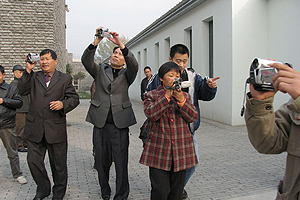 |
| Farmers'' Documentary Project |
In 2010, this project changed into the ''Folk Memory Project'' where many more people participated, and not only village residents, but also over 30 artists, documentary directors, and students from arts schools participated one after the other. All participants traced their steps back to the villages and their past to interview village elders, and created their own performances and documentaries through such processes. The 8 hour-long Memory: Hunger was screened in October 2010, where all the actors and actresses were participants of the project. They were not only able to bring back the long lost memories of the elders, but also their own experiences and stories during the process of searching the memories of the elders. They became the testimonies on the stage along with the elders'' memories of hunger 50 years ago. They were discoverers of reality as well as the ''people searching for history.'' This is a project that needs to be a long-lasting project, and as the interviews of the elders become accumulated, the ''Storage of folk memories'' is currently being built. At the same time, the participants are ceaselessly continuing their own creation of art. This can be considered a kind of contribution to others and the society that must be taken up by the artists for the intervention involving construction of reality and the environment, and for the process of creating art.
The exchange between the independent space of Caochangdi and independent productions is still a very small part in China. However if the reality of China''s cultural policy is seen as a highway, I hope for the possibility that the birth of independent cultural production and exchange environment as new beginnings can serve as a secondary road to the highways that can give rise to similar kinds of space and producers. Maybe this is a kind of an attempt to construct and develop its own self as an independent arts environment. This kind of thoughts was possible because China''s artists in documentary, performance production, and exhibition exchange were in an environment of drought. It is probably better to take the initiative to try self-change and move forward by independently doing something rather than just waiting for the change.
 PREV
PREV
.JPG)
.jpg)
.jpg)
.jpg)
.jpg)












.jpg','The Caochangdi Workstation is located in a region ..');)


