





Overview of Korean Arts Management Community’s 2011
[FOCUS] Discussion: What happened in 2011?
This article sums up the discussions by former and present editors of our online magazine weekly@artsmanagement (published by Korea Arts Management Service) on major news and issues of all genres in 2011 of the Korean arts management community, and their predictions for 2012.
Date: Monday, December 19, 2011
Moderator:
Sung-yeop LEE _ Professor of Arts Management, Korea National University of Arts
Attendants:
Byungsung PARK _ Editor in Chief of the monthly [The Musical ]
Hyun-mi YANG _ Professor of Culture & Arts Management, Sangmyung University
Ji-yeon YANG _ Professor, Curator Department, Dongduk Womens University
Noam KIM _ CEO of Alternative Space Hue
Se Hyung OH _ Grants Programs Dept., Gyeonggi Cultural Foundation
Tae-geon YOON _ CEO of public arts consulting firm THE TON
Yong-kwan LEE _ President of Korea Arts Management Service Institute
Performing Arts Market to Be Expectedly Enlarged in 2012
Sung-yeop LEE (“Sung-yeop”) : Today, we’ll start with ‘7 big issues in Korea Arts Management’ See related article from theApro voted by our readers. Then, I wish we sum up this year and move onto next.
Noam KIM (“Noam”) : The director of the National Museum of Contemporary Art resigned last November. The position sways a heavy influence over the visual arts community in Korea. It’s a grave matter the director stepped down four months prior to his term.
Yong-kwan LEE (“Yong-kwan”): Most directors and presidents of public arts agencies and organizations end their terms this year or at the beginning of next year. They started their career with the incumbent administration. Huge changes are expected to follow. They should be allowed to run again, if they are good. But it’s kind of hard to expect it in our country.
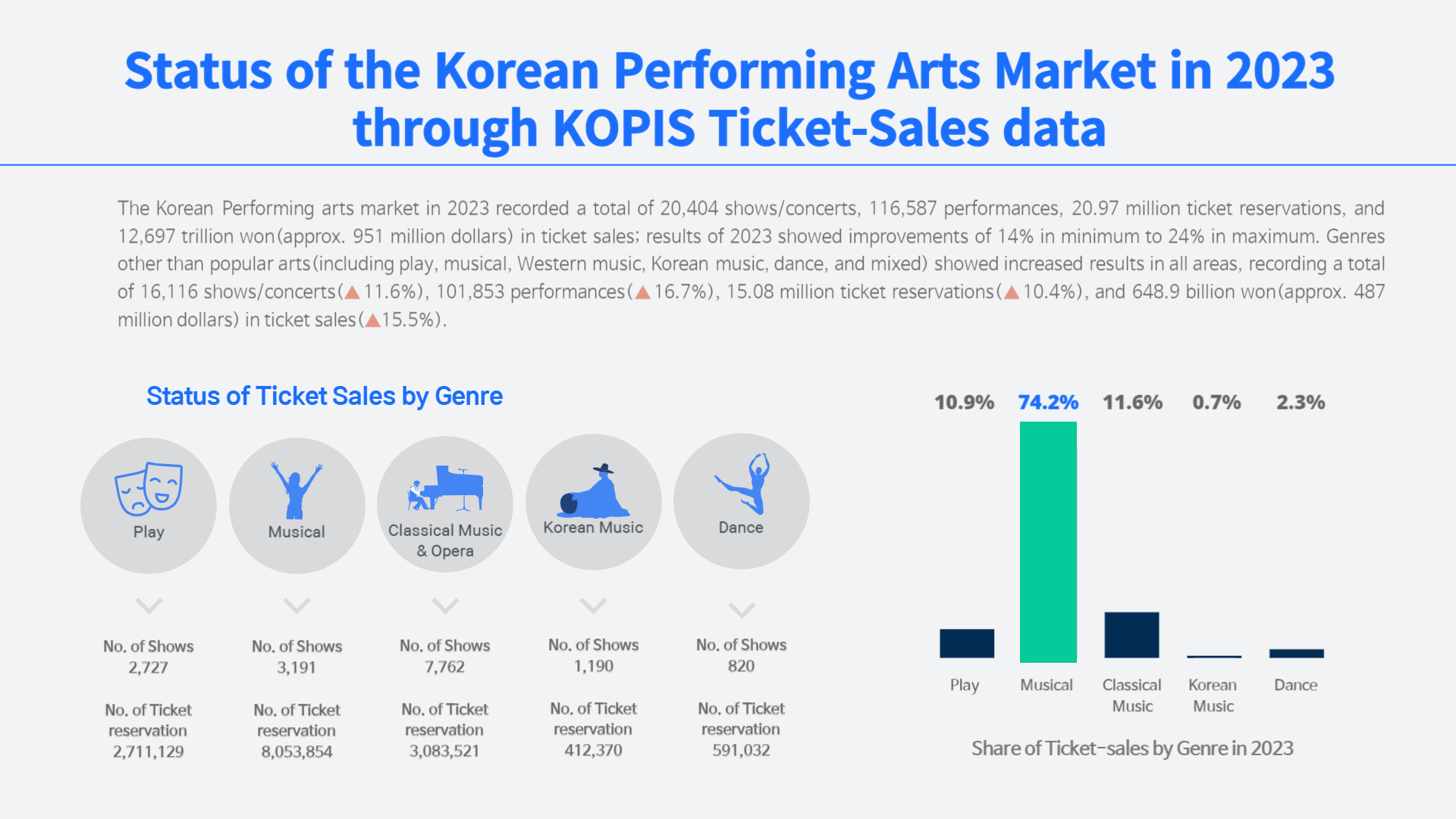
Se Hyung OH (“Se Hyung”) : Big corporations will accelerate expansion of the performing arts market in Seoul. Moreover, local communities lead public projects, and will do more next year. Now, we have a cultural foundation for each locality. In other words, we have a nation-wide network of infrastructure. Local communities will compete with each other, as their projects get more divided and detailed. Sung-yeop : According to the online ticketing agency Interpark, the performing arts market has grown considerably for a couple of years. The biggest contributors are pop concerts, and, then, musicals. These two genres especially grew bigger. But the musical community is heard to complain of the sluggish market in 2011.
Byung-sung PARK (“Byung-sung”) : The market hit its pinnacle in 2007. Then, it slid back, and bounced back to the 2008 level in 2010. The market will outsize 2007, and will probably amount to 210 million dollars. One thing is strange. When markets were growing, producing companies used to make heavy investment. Now, economy is pretty bad. So, reruns dominated the market to reduce risks. New shows were rare in 2011. But they plan to make big steps. Upcoming year, general (in April) and presidential (in December) elections will take place. Still, producers reportedly make huge investments. Considering market conditions, they strategies and investments move in opposite directions. Among the major shows in 2011, only a handful of licensed ones like Jekyll & Hyde were commercially successful.
Yong-kwan : The global financial crisis slowed down the market. Now, it’s rebounding, and it’s true of all genres. The classical market wasn’t affected that much. The market for dance was almost the same. Musicals seem most sensitive to market conditions. Despite bad economy, the number of shows increased. It was probably attributable to the increasing number of local theaters. The entire size of local theaters amounts to 56 million dollars, excluding the Seoul metropolitan area. It will probably amount to 87 million dollars if it includes performing arts festivals across the country.
Byung-sung : Since large-scale theaters were newly built, the size of market depends on how long large-scale shows can run. In 2011, large musical theaters like Blue Square [1,700 seats] and D-cube Arts Center [1,200 seats] were constructed. Next year, more theaters will open. Considering musicals alone, the market size will inevitably grow.
Tae-geon YOON (“Tae-geon”) : This year’s arts market was slow, and shows no sign of rebounding. One art fair succeed in some way, and the next one went under. Things were like that. For visual part, 2011 was lukewarm, to say the least. Nothing happened, nothing was sensational, and there was no biennale.
|
|
|
|
| |||
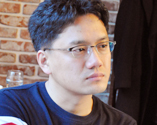
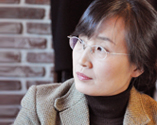
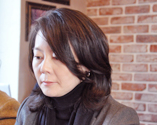
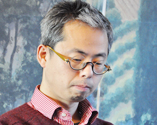
| Sung-yeop LEE | Byungsung PARK | Hyun-mi YANG | Ji-Yeon YANG | |||
|
|
|
|
| |||
| Noam KIM | Se Hyung OH | Tae-geon YOON | Yong-kwan LEE |

Social Role of Arts v. Social Functions of Public Resources
Sung-yeop : Arts-related institutional protections and laws were amended and enacted this year. The Artist Welfare Act See related article from theApro is a model example. System-wise, arts majors’ getting jobs and issues concerning social enterprises are connected with employment. Good or bad, the jobs issue is no longer a remote issue.
Noam : Policies and their focuses are all drawn to creating and getting jobs. Few arts graduates get jobs. But we’ve got to think deep about it. Of course, arts are expected to play a different social role. But, art community didn’t pay much attention to the jobs issue.
Hyun-mi YANG (“Hyun-mi”) : Actually, getting jobs is an alien topic to artists. It’s related to the Artist Welfare Act. Artists are like self-employed, mostly working at home or in studio. It’s impossible to tally them all. But colleges are dying to see more of their graduates get jobs. Arts majors should be trained to become good artists. But their schools push them toward employment. Maybe, design graduates have more chances. It’s not true for fine arts majors. Self-employed artists are mostly in the fields of art and literature. We should think about how to apply welfare to them.
Byung-sung : Pay was raised for musical actors and actresses. But the gap between them and enforcing contract terms still pose problems. New actors are paid lower than the minimum wage. Moreover, they earn money only during the run of a show. They can’t make living. The Korea Musical Theatre Association is preparing to make a standard contract form ensuring the minimum wage.
Hyun-mi : This year, public funding was for enhancing social role. Lottery funds mostly went to programs for the culturally disadvantaged and community arts. The trend stresses the social need for arts, rather than arts itself. Here, we have to think about this: whether or not citizens truly benefited from this funding, and whether or not artistic results matched the enhanced opportunities from the support.
Yong-kwan : Actually, variables determining public funding differ from occasion to occasion in Korea. For some time to come, the stress on social role dictates how to and what to fund. But it is doubtful whether the policy focus will produce any results. For example, these “approaching community members” events are too many, and they themselves feel as pollutants.
Sung-yeop : It’s a matter of whether social role for the purpose of public funding really matters in terms of social function of arts. Now, activities are very system-oriented. We need to approach this from wider and critical perspectives.
Hyun-mi : If arts carry out critical and social functions, we need corresponding mechanisms for their subsistence. To achieve that, we need more experts in arts management. But we don’t have sufficient experts or artists.
Noam : Funding for public arts mostly comes from state agencies. But that direction carries a high risk of distorting. Burgeoning public funding is some sort of warning signal.
Se Hyung : We have to pay critical attention to institutionalization of the policies in the direction of smothering social creativity. The policy which can bring about possibility and imagination is needed.
Tae-geon : One thing’s clear: arts’ social role’s getting more important. Performing and visual arts should not be game of pop culture, though. Just giving up the right to voice, they either remain community artists or chase commercialism.
Ji-yeon YANG (“Ji-yeon”) : I think it’s natural there’s some gap between arts’ social role perceived by the public and its execution in carrying out policies. Traditionally, arts perform the social function of criticism and leading. But I’m wondering how what people think of the social role of arts match the focuses of welfare policies. Now, I believe, it’s time to look into whether or not the traditional belief in arts’ social role is changing. Crowd funding and social enterprise are the two concepts exemplifying the change. As to fundraising, for example, crowd funding is being used more and more widely. But traditional methods of fundraising and donating haven’t even completely settled down in Korea. It’s like getting spread almost on a real-time basis with other countries that tried it first. Why don’t we take it as reflection of changes in our society? I’m wondering how it will unfold in the future.
So far, we’ve just encouraged foundation of social enterprises. Now, it’s time to think seriously about what we’ve gained with them. Thinking about next year, policies about art museums and museums will probably change in a positive way. The policies have drifted so far.
Meanwhile, the economic and cultural focus of the world is being shifted from Europe and America to Asia. Korea is becoming a melting pot. Our cultural policies and artists should take that into consideration, and lead the move.
Hyun-mi : The world heeds Asia. Actually, China and Southeastern Asian countries are leading the change.
Yong-kwan : Many things depend on how well China fares economically next year. If China should get unstable, Korea will be shaken to the root. It’s already got diverse variables.
Byung-sung : This year, Korean musicals commanded Asian fans. Newly created Korean musicals were played in Japan. Teenage Korean stars starred. CJ E&M entered into a contract with Japanese entertainment firm Shochiku. Under the contract, it will present a creative musical every year to Japan. Musicals are like a derivative from the K-Pop.
Creative Spaces Need New Search Overcoming Trends
Noam : For some time to come, foreign artists will be favored in art market. The emerging creative space is taking the place of alternative space. Just outside the Seoul metropolitan area, there is little room for modern arts’ communicating with local arts. Creative and alternative spaces are non-profit. Still they perform public social functions like community welfare and restoration. From the perspective of creation, process matters in these spaces. This causes the difficulty of making evaluations. For revitalization of local community, creative space is considered as trend. We need tools to make objective assessment. Without a new breakthrough, it’s hard to maintain the present momentum.
Se Hyung : Each local government is dying to do creative space. Artists choose which space they work for.
Hyun-mi : They just thought good managers would do everything. The space has become a gathering place for the artists serving local community. This tendency will remain strong.
Noam : Seoul has nine creative spaces, and relevant budgets will probably continue increasing. We need grounds for that. So far, contribution to local economy has worked. But it’s another matter whether it will work in the future. Mechanisms are necessary to visually demonstrate the significance of activities. Exhibits aren’t all that matter. I don’t look at the dark sides only. Creative space becomes an event, when meeting with local residents.
Hyun-mi : Usually, artists stay for less than one year in a space. It’s too short to understand local characteristics and make relevant contributions. Therefore, tools are necessary to clearly define each space.
Continuing Construction of Infrastructure and By When
Sung-yeop : Let’s talk about infrastructure. The government set forth a goal first in the 1990s. It intended to build one arts center per locality. The project ends this year.
Ji-yeon : Art museums and museums continue increasing in the public and the private sectors. In terms of sheer numbers, the plan was achieved. But the statistics included a considerable number of unregistered organizations, and didn’t reflect concentration in some local communities. More fundamentally, do people now really have more facilities to visit? But it’s also doubtful.
Yong-kwan : Construction will continue until 2015. It completes the “one center per locality” policy. The private sector is also preparing some large-scale theaters. In addition, we need remodeling of existing theaters. Therefore, the overall environment will improve. After all that construction and remodeling, I’m afraid they will just stick to the old way of lease business.
Hyun-mi : Museums outnumber libraries. But private ones are considerably big in number. It’s impossible to regulate them all. In terms of art museums, the 1998 “one museum per locality” policy is not completed yet. Other than local government-run art museums, alternative space, gallery, and creative space – everything’s in short. I wonder where the local artists exhibit their artworks in this situation.
Sung-yeop : The US-ROK FTA will take effect next year. What will happen to culture and arts scene? Copyright, screen quota and other issues still linger. Nothing special is palpable at this stage.
New Contact Points Reflecting Social Change
Hyun-mi : 2011 watched many issues rocking Korea. The arts community was silent, though. Back in the 1980s, arts functioned the role of social critic. On the other hand, arts are now used to support policy projects. It almost never carries the role of social critic. Now, pop culture has taken up the role. It criticizes society with the emergence of ‘socialtainers’. Looking at that, arts no longer lead, predict and provide ideal living conditions; and, highlight present problems.
Noam : Artists we expect don’t do what they are supposed to do. It’s not normal. They aren’t that lazy. There are good artworks, and sincere artists among arts graduates. But nobody introduces them.
Ji-yeon : In 2011, we have to pay attention to the changing process of arts consumption and distribution under the digital environment in 2011. Crowd funding is an example. The arts market stumbled this year. Interpreting it differently, the pool of fans has grown bigger. Let’s take art fairs. Art fairs didn’t sell much, but more fans visited them. Of course, marketing drives contributed most. Despite the gloomy sales records, more people were attracted. More and more people will obtain information through diverse applications, social media and blogs. We have to think of ways to attract the fans to arts markets and museums, and how to accommodate them.
Noam : Public attitude toward pop and classical music, contemporary and visual arts have changed a lot. Unfortunately, we haven’t found a common ground. One of the examples the government did for us was community art.
Ji-yeon : This year, disaster after disaster haunted us. But we haven’t seen any move to heal the wounds through culture and arts. Looking at that, I think arts are losing internal and external momentums. It would be great if a cultural infrastructure should become part of the physical contingency plan.
Sung-yeop : Some joke that absence of big issues was the issue in 2011. 2012 is more volatile with so many variables. Let’s keep watching for now.
 PREV
PREV
.JPG)
.jpg)
.jpg)
.jpg)
.jpg)












;)


