





Building a Domestic Network is as Sound as the International Network
[FOCUS] Review on KAMS Connection Conference
Last 21st Dec., the participants of the 2010~2011 KAMS Connection project such as artists and festival and theatre practitioners attended the conference, Connection Box to discuss various measures to activate the international exchange of performing arts with the parties concerned in Busan. The KAMS Connection is the project for strengthening the global power of performing arts, conducted by the Korea Arts Management Service. The Connection Box was the first attempt to expand the regional network for the KAMS Connection which used to be focused on performing arts market in Seoul (PAMS) and the metropolitan area.
Why is International Exchange Important?
People have interest in many different things depending on their situation but just like the attributes of arts, their interest starts from the curiosity for new things. Maybe there are desire to get away from the things used to do and things used to see, desire to experience and learn something better which I haven’t even thought of and desire to fill the domestic performing arts market with something that you like or that someone likes. I as the programmer of public arts center in local have satisfied the curiosity of other producers and audience by inviting well-made domestic performances of private producers or arts groups, introducing international performances from international performing arts festivals and collaborating with other theaters which are interested in co-productions, in inviting overseas performances. However, I haven’t had time to care about the curiosity of the regional artists. So I participated in the seminar to learn more about what international exchange meant and was.
|
|
| |
| Connection Box Conference | ||
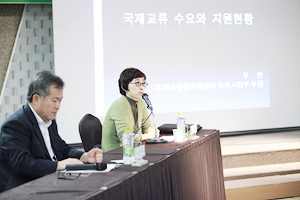
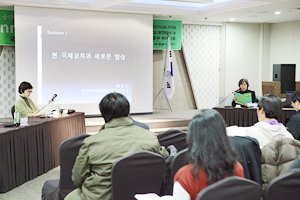
Professor Junho CHOI gave the keynote on the current international exchange of performing arts and his example on the public theaters in France was fundamental and practical guidelines for international exchange. In France over 140 public theaters which receive public support form the cental government generally co-produce with private artists (groups), and they produce all of their programs without having to rent a venue for performance and distribute through the network with other theaters throughout the year. Also, they can internationally exchange their programs anytime because their distribution network and co-producing partners are international. Besides the public theaters, there are numerous performing arts festivals and networks by genres and types (meetings of members who are interested in different fields – theater, festivals, research and agencies) that play the role as co-producers and co-distributors at diverse levels including program research, exchange of information, programing and workshops, calls for projects, residency and project budget, technical support for the international exchange of performing arts.
In Korea, KAMS supports international co-production (research, collaboration among artists, residency and project support etc.) in the pre-production phase with producing theaters and spaces for creation (residency) which is new trend in the arts market besides importing and exporting finished products. The attendees at the conference discussed measures to handle the rapidly changing environment for active international exchange by expanding indirect supports including spaces for creation, promotion, network information and the multinational support system by regions (EU, Nordic, Association of Central and South America etc.) in addition to the support to connect creation with the distribution and financial support. As one of the attendees mentioned, “We Koreans are showing the power of our compressed growth even in the international exchange of performing arts”. In order to prevent the risk of poor construction caused by the speed battle, the last movers should continue to develop creative and imaginative contents which can attract the leading runners as being faithful to the basics.
The Contact Point of Diverse Directions
At the presentation of cases form KAMS Connection, M Theater for Dance, Sungsoo Ahn Pick-up Group, Uiejeongbu Music Theatre Festival (UMTF), research of Performance Group TUIDA introduced the results of research and joint projects. They respectively participated in the KAMS Connection with Finland See related article from theApro, the UK and Australia.
On the other hand, the artists and arts institutions in the regions are sometimes given with an assignment to develop a program that is suitable for the characteristics of their region. But an international exchange program must open a door for diverse directions including new stimulation through artistic achievement or exchange by collaborating with other artists rather than including a community program under the obligation. Also, it is important for artists to have the capability of dealing with international exchange for successful international exchange rather than just giving a meaning to the international exchange itself. In addition, artists need to find common interest, for example, artistic direction or artistic advantage which can be helpful to one another.
|
|
| Indie Space AGIT |
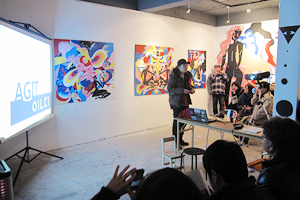
In Busan, just like other local governments, large-scale international events in diverse genres and international exchanges through the relationship with the international sister cities are held on a regular basis. However, many events are just for one time only without establishing network. From time to time, some private organizations which are not supported with funds or the system from the government voluntarily build a network for international exchange.
‘WATAGATA (literally means coming and going) Arts Festival’ by Busan-Fukuoka Art Network, international exchange residency through the corporate mecenat, Shin Eun Ju Dance Company which has a small theatre for presenting its performances, and Indie Space AGIT which shows the spectrum for international exchange of diverse sub-cultures as residency for indie-band performances and visual arts(graffiti) were impressive. Busan Cultural Foundation is also pushing ahead with a local culture-based international exchange program by building a residency network ‘Joseon Tongsinsa’ which was the first international residency that allowed Korea spread diverse genres of our arts to Japan. The domestic network is as helpful as the international network. In order to expand the domestic network, diverse information exchange workshops such as Busan Connection Box and international arts market should be held throughout Korea.
Realistically if it is difficult to expect most of the public theaters in Korea to have the co-production and co-distribution system based on the network like Europe, we should have attitudes to create an environment for diverse exchanges and a platform and need to set up a collaboration system with the network of domestic public theaters. Also some public theaters with sufficient human resources and materials for international exchange should actively participate in co-production.
Links
| Joseon Tongsinsa (Japanese) Go
 PREV
PREV
.JPG)
.jpg)
.jpg)
.jpg)
.jpg)











;)


