





Demanding New Change in Croatia
[Focus] Change and Demand of Culture and Arts in Croatia
The performing arts in Croatia is moving away from its former convention since the breakup of Yugoslavia, and since the ongoing process of political, social and economic transition in Croatia. Hence, it is unprepared for a new context that is quickly being developed all around the Balkans and in Europe. The surviving funding system still reflects the strong positioning of representative institutions of state and locally funded theaters, and this is the result of the nation inevitably maintaining and surviving the transition period from the abolished socialist system to a democratic system. That means the vast majority of the available resources had to be used to sustain the institutions running, to keep the number of employees, and to continue to keep the system stable.
In terms of festivals, only a few international festivals with over 50 years of history like Dubrovnik Summer Festival, Bitef in Belgrade, and MESS in Sarajevo were able to receive funding, all of which had their golden times two or three decades ago. The influence of these festivals in local and international landscape was also helped by the global political situation in which Yugoslavia was one of the leading countries of the non-aligned movement, which meant that while bordering with the Eastern and the Western Block, it was a symbolic meeting point between the East and the West. So, the artists from the West and those from the East could freely travel to Yugoslavia where the audiences had the opportunity to be in sync with whatever was happening internationally. Those festivals created a point of education, information and connection along with mutual exchange as well. The audience was able to experience art of the surrounding nations of Balkans including the arts of the world, and this was the driving force in the development of cultural arts in Yugoslavia and the source of pride even.
When the East - West divisions lost its global political relevance and urgency, the cultural position of nations in the Balkans, especially following the breakup of Yugoslavia, was an extremely different one. Nations in the Balkans became excluded not only geographically, but also in other aspects, and it had to redefine itself and find new cultural channels in response to this situation. As mentioned earlier, this is true because Croatia was a part of the same pot where its cultural policy only had the agenda to sustain the inherited art institutions and festivals.
However, political democratization in Croatia also meant “cultural democratization”, so the perception of power within performing arts shifted from the state theaters and only a handful of festivals to numerous others. Here, only the perception of that shift of power will be mentioned, because the funding was still centralized and it lay exclusively at the hospices of Ministry of Culture and different municipalities and local councils.
Their main goal was to preserve the institutions, which means that only the surplus funds could have been distributed to anyone else who is working outside of these institutions such as independent theater companies, other festivals, individual artists, etc. But, as more and more international funding opportunities became available, they began creating their own platforms for those connections with festivals, networks, small spaces and venues. This is why the operational system of the existing large-scaled institutions who get public funding and the independent arts organizations who create their own funding can’t help but to be different.
An interesting point here is that new and emerging artists and independent arts organizations are conducting a lot of artistic research and experimentation, and establishing strong artistic energy and language through exchanges with artists of the world. This is because, this is necessary for clearly recognizing the artists’ creative energy and artistic language, reflecting the local culture through artistic activity, and finding the visible and concrete expression of art.
|
|
|
Growth and Expansion through Festivals
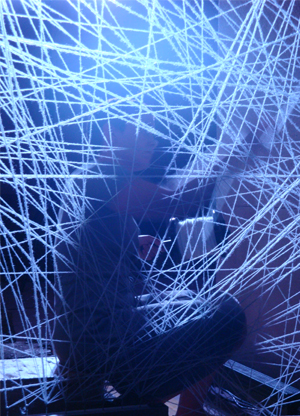
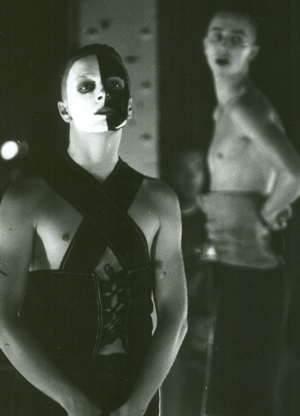
Among the arts festivals in Croatia that is in progress and also meets the above criteria is the Perforations Festival. The Perforations Festival promotes and expands regional cooperation of the arts organizations and producers of the Balkan region, and it is connecting networks as its goal is to create growth opportunities for emerging artists. The festival is held in 3 cities of Rijeka, Zagreb, and Dubrovnik, with different programs for each city. Among them, over 20 works are produced by the artists from Central and Eastern Europe. Externally, Perforations festival works on the idea of decentralizing the influence of the festival touring different cities, but the main mission behind Perforations festival is to support new productions and encourage collaboration by a range of artists from Croatia and the Balkan region working in performance art, theater, and dance, whose diverse approaches to art-making will blur the borders between these genres. In particular, the close collaboration from art organizations of neighboring nations in the Balkan region is a decisive factor in creating successful festivals. Because of its program, it has become a reference point for international curators and presenters who are interested in innovative artists whose work may not be a part of the regular international festival circuits. This allows Perforations to serve the local Croatian and regional artists by providing them a wider international visibility which can help them in further developing their work.
|
|
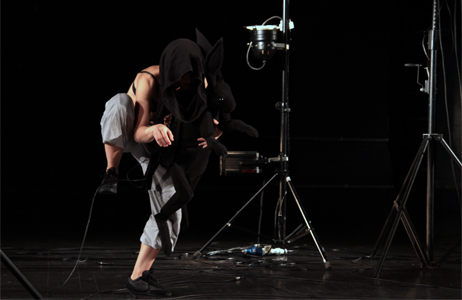
Perforations Festival is the largest such initiative in Croatia that is focused on the artists and audience. It supports emerging as well as established artists who are working in the so called independent cultural scene. It can be seen as a successful festival that discovers and develops the talents and values of arts organizations and artists that have been relatively isolated by the management which only focused on large-scaled institutions. Perforations Festival has offered a new context to artists through regional and international connections. Although there are many other festivals that support independent arts organizations and artists in Croatia, there are no other festivals that is more influential than this one. Croatia is a country known to hold many festivals, in fact, numerous festivals are held annually. However, there are many cases where the majority of the festivals fail to understand the artistic taste or understanding of the audience, and in turn lose the interest of the audience. Croatia must focus on developing and nurturing quality festivals rather than the sheer number of festivals, and this is probably an essential item for exchange among audiences and artists all over the world including Croatia.
 PREV
PREV
.JPG)
.jpg)
.jpg)
.jpg)
.jpg)












.jpg','The performing arts in Croatia is moving away from..');)


