





Now, Time to Act!
[FOCUS] Issues in World Arts Management: (Ⅲ) Europe
To understand the newest issues and trends of arts management, we have prepared the “Issues in World Arts Management.” Through analysis of home and overseas editors at “theApro”, this article is planning to organize, by areas and issues, the main keywords that are being dealt with throughout the world arts management sector, and to examine each country’s current situation and response.
Overseas(Ⅰ) Asia (Ⅱ) North America (Ⅲ) Europe
Korea(Ⅳ) Private arts institutions (Ⅴ) Supply of and demand for experts
(Ⅵ) Status of arts managers
Overseas & Korea(Ⅶ) Discussions
This article is the excerpt from the monthly report by Korea Arts Management Service’s overseas editor Judith Staines (UK) and from the articles of other professional journals.
Pursuit of Durable Competence of Self-Subsistence
The key word of economic recession has engulfed entire Europe, along with discussions on how to survive it. As the epicenter of the global economic turmoil since 2010, Europe has taken the brunt of it. Above all, the area of arts and culture has been bleeding most severely, due to its nature of heavy reliance on public funding and low marketability.
In the Netherlands, the economic downfall has led to dramatic budget cuts in that area. For the past 40 years, the Dutch government had funded 90% of the money required in that industry, contributing significantly to promotion of new artists and innovative art works. Topping 900 million euro once, the relevant budget size dwindled to 200 million euro, hitting hardest the industry of performing arts. For example, public funds to the Theatre Institute Netherlands (TIN) have stopped, and the TIN has transformed itself into a multi-use arts space. For more information from theApro-Dialog
 |
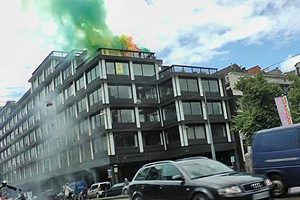 | |
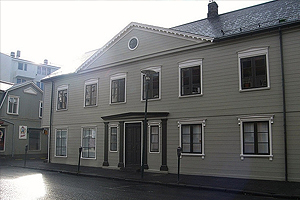
| Center for Icelandic Art | Artbombs Campaign in the Netherland |
The situation is not that different in the Great Britain. The financial support from the Arts Council has been dramatically cut down. The British private theaters severely suffer from the ramifications as well. The artistic director of the Tricycle Theater, or the longest one in the UK (i.e. 27 years), stepped down for instance. For the related article in [The Guardian]
The Dutch artists community had pleaded for domestic and international campaign such as artbomb campaign, even prior to the decision of budget cut. For related Culture 360 coverage The budget cut, however, has become reality. Despite the misfortune, the Dutch arts community is waging movements against the budget reduction, arousing the need and meaning of public support for arts. The Campaign for Solder of Orange is exemplary. Each one-minute clip of the namesake music piece Soldier of Orange has been played and recorded by 45 orchestras around the world, and these sources are posted online for public appreciation. Soldier of Orange is the theme song of a film featuring the resistance movements by the Dutch during the World War II, and is taken as symbol of the national identity. In the meanwhile, positive efforts are being undertaken to address the problem by, for example, developing income sources other than public funds and ticket sale, enlarging the size of each performance for more economic efficiency, and further enhancing the quality of performances.
The UK’s arts management magazine [Arts Professional] featured a cover story in its August of 2011 issue titled “Richer Than You Think.” There, the magazine defined the world economic turmoil in 2008 as a beneficial event to the art and culture community in general, and introduced how Icelandic artists cope with the harshest economic downturn in Europe. Considering its economic size, Iceland was believed to provide insufficient supports for arts and culture. But stoppage of the public support wreaked havoc on the community, leading to, for example, cessation of promising projects and the national event of the Icelandic Visual Arts Award.
The Center for Icelandic Art seems an illuminating example on how to overcome dwindling income faced by most museums. Since its foundation in 2005, the center has not taken the usual path. It has enlarged its treasury through individual and corporate donations, rather than depending on scarce government subsidies, and pursued quality projects rather than large-scale exhibitions. Its pursuit of financial independence has helped it act on its own missions amidst the economic turmoil. Based on this tradition and experience, Icelandic artists are pitching in their best to come up with new strategies for arts distribution and organizational operation. It may sound paradoxical, but the austere situations in Iceland draw attention to its artists for their handling of the economic downfall. Another example introduced therein is the transformation of a college in that country. Lack of room to store or display works, the college pasted its collection over the walls of the school, turning it into an artistic space by itself. Indeed, the number of exhibits by art halls and galleries has decreased, and, when done, Icelandic artists, in place of overseas artists, mostly provide the exhibits. More people, however, have visited, and the domestic and overseas interest in Icelandic arts has risen.
According to [Arts Professional], Icelandic artists wish that the crisis should help the Icelandic people understand the country’s arts and culture as national asset. The mindset is spreading across entire Europe. European artists believe the economic crisis is to serve as an opportunity, for example, to help understand the need for international cooperation, the need to develop income sources in place of heavy dependence on public gratuity, and understand the role of arts for better society.
Practical, Environment-friendly Measures
The entire human race is faced with an urgent issue of climate change and its impact on nature. The environment-friendly issue also dominates European artists, and they are trying to tackle it.
They are currently developing and carrying out diverse projects. For example, Stoke Newington International Airport of the UK introduces, through the residency and workshops for artists and citizens, the new performance format of “Live Art Speed Date” on the topic of climate change. They performed in last year’s Chuncheon International Mime Festival.
The July issue of Arts Professional covered British arts organizations, under the title “Ten Green Organizations,” which are spearheading environment-friendly activities in the UK. For more information from [Arts Professional]
 |
 | |
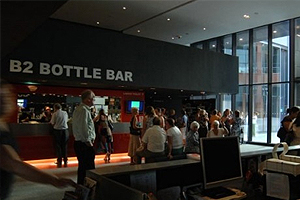
| The Belgrade Theatre | 『Europe’s First Green Mobility Guide for the Performing Arts』 |
The article introduces the British arts organizations that are implementing environment-friendly measures in the entire process of from operating facilities to running shows. For example, Arcola Theatre tries not to generate CO2 emissions, the Belgrade Theatre carries out diverse energy policies such as use of LED bulbs, and the Orchestra of the Age of Enlightenment is conducting an internal campaign “Green Tour,” which highlights use of environment-friendly transportation means and accommodation in conducting tours.
Julie’s Bicycle is a renowned entity for research and consulting on environment-friendly artistic activities. Founded in 2007 as non-profit organization, it has published research reports with college institutes related to the environmental policy, offered training programs, and developed consulting and other programs. Giving advice to arts groups on how to implement environment-friendly activities, Julie’s Bicycle has given advices to most of the entities listed above as British examples. This organization has published Europe’s First Green Mobility Guide for the Performing Arts, in cooperation with a European network “On-the-Move.” For more information from Culture 360
The two key issues engulfing entire Europe, or how to cope with economic recession and how to carry out environment-friendly practice, illustrate how artists survive amidst changing social and outside surroundings, and what role arts should carry out in an era of change and chaos.
Julie''s Bicycle GO
[Culture 360] GO
[Arts Professional] GO
| See other articles on issues on world arts management :
(Ⅰ) Asia (Ⅱ) North America (Ⅳ) Private arts institutions (Ⅴ) Supply of and demand for experts
(Ⅵ) Status of arts managers (Ⅶ) Discussions
 PREV
PREV
.JPG)
.jpg)
.jpg)
.jpg)
.jpg)












;)


