





“Denying Tradition Is Also a Tradition”
[FOCUS] Discussion - Asian and Korean Traditional Music, the Present and Future
This forum was held by domestic and world music experts who participated in the "Journey to Korean Music 2011" and Performing Arts Market in Seoul(PAMS) to diagnose the value and nature of Asian and Korean music. Within the changes of market''s flow, the value and possibility of Asian/Korean music will be discussed by four Korean music experts.
Date & Time _ Thu., Oct. 13, 2011 at 2:30 pm
Place _ Press room at the National Theater of Korea
Chairman _ Jung-kang YOON (Korean traditional music critic)
Panels
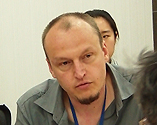
Maarten Rovers _ RASA Centre for World Cultures, Artistic Director
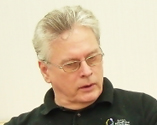
Randy Raine-Reusch _ Rainforest World Music Festival, Artistic Director
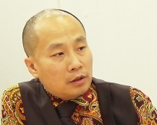
Jung-kang YOON _ Korean traditional music critic
Gyu-won KIM _ Chief of Cultural and Arts Policy Research Division, Korea Culture & Tourism Institute
Why Are We Immersed in Korean Traditional Music?
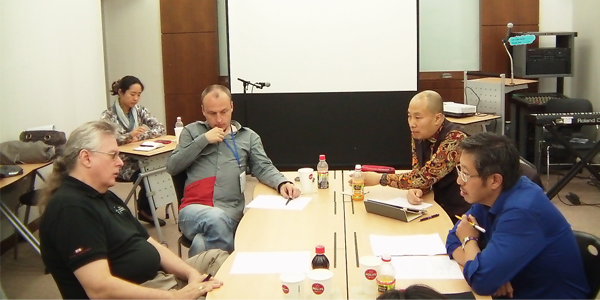 |
Yoon : I''d like to share an idea how did we encounter Korean traditional music at first?
Maarten : It''s been 20 years since I first encountered Korean music. I used to listen to dissonant music to torment my father when I was little. I became infatuated with 20th century composed music and avant-garde jazz. Musically I believe it’s not such a big step to move from certain contemporary American composers toward the traditional music of the Islamic world, India or East Asian countries like Japan and Korea. One day, I happened to listen to the shamanist music of Park Byung Chun, and I was so much shocked that it''s totally different from what I had heard. At first, I didn''t have fuller understandings on the story. When I first heard An Sook Sun’s pansori, I didn’t have a clue about the story. Her music was just abstract sounds and rhythms to me. Only much later I became aware of the context and of the crucial "give and take" relationship within pansori between the performer and the audience.
Randy : It''s been 40 years since I have first encountered Korean traditional music. My early experience included the UNESCO record series. I had a chance to know Mr. Kim Duk-soo while he visited Vancouver, Canada in 1986, and I visited Korea for a month in 1987 to perform a concert in Korea. I remained to study Korean traditional music such as Kayageum Pyongchong with Park Gwii-hee, Sanjo, Sijo, with the aid of Mr. Kim. I also bought all the recordings I could at that time.
I began creating contemporary compositions when I started music. Contemporary music always seeks new sound. As I encountered Korean traditional music, I was deeply impressed by depth and range of expression. Korean music easily expresses the thin line between a cry of pain and a cry of joy; sounds that reach toward heaven but don’t quite reach and fall back to earth. But Korean traditional music is not well-known by western artists other than contemporary or free-jazz musicians even now.
Kim: I was not in the generation who were soaked up by Korean traditional music. Samulnori might be all that I hear about it. I listen to Korean traditional music after I grew up. I experienced opposite poles like coming in and out of heaven, and felt like I''m hit by the thunder light. I’m finally immersed into it. Just like my experience, it would be hard to explain how to get into the music logically, and I wonder what part of it brings Westerners in, and what the power is.
Maarten : Only then you can maybe connect to it with your heart and the rest of your body, instead of just registering it with your ears and head. Once you are able to open yourself to Korean traditional music, it will get to you, simply because of its strong relationship with nature, its shamanistic root. In a way Korean traditional music emits a similar energy, similar vibrations as the earth and our bodies. It’s almost like the sound of nature triggering an instinctive human response. Humans after all are also part of nature.
 |
 |
 |
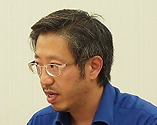 | |||
| Maarten Rovers | Randy Raine-Reusch | Jung-kang YOON | Gyu-won KIM |
The Charms of Korean Traditional Music and World Music
Yoon : When we discuss about the value of Korean traditional music, we often mention three idioms in Korean: heung, i.e. an esthetic idiom to express joyful or excited feeling, han, i.e. an esthetic idiom to express full of sorrow that are left in one''s heart, and sinmyeong, i.e. an energy exploded by great joy or excitement. Sometimes, it is told as "the music of which change between tension and relax is more and somewhat interesting" among Asian music.
Randy : Maarten mentioned that there''s a point of contact between Korean traditional music and the sound of nature. It''s just a same when we talk about world music. Music is a pure expression, and reflects the often uncomfortable dialogue between human beings and nature. Such an emotional expression is easily seen in Korean traditional music. I think it is the attraction of Korean traditional music and world music. Unlike that of some cultures, Korean traditional music isn’t afraid of bending its musical structures such as rhythms and melody not only bending them, but also moving around in between those elements. Such characteristics are also found in other Asian cultures'' music such as Chinese, Japanese, and Vietnamese. Yet, those are not as vital as Korean. To add all these elements together – the emotional aspects, and the sound of nature like Maaten said, the complexity of rhythm and energy rooted in Shaman rituals – in a single composition makes Korean traditional music extraordinary.
Maarten : The reason why Western contemporary composers or free-jazz artists like Korean traditional music is not made by chance. European classical music tends to be more out of their traditional formats of harmony and rhythm after 20th century. It''s either a sculpting the pure music, or minimalism, tone cluster that pursues simpleness. Korean court music and aristocratic music have similar characteristics. And a free-jazz musician easily connects to the free floating rhythmic patterns of some Korean folk music styles. In a way ancient Japanese and Korean music seem to start where contemporary western music has ended: in minimalism, complexity, pure sound and free rhythms. It’s almost like a rotating circle in which ancient Eastern music naturally follows contemporary Western music. It is important to keep this image in mind when you ask yourself the question where to find the future audience of Korean traditional music.
The Value of Korean Traditional Music, Hard to Catch It Up with FUSION
Yoon : Korean traditional music has undergone many changes after 20th century. For now, the new genre of music ― so called "Fusion" ― takes larger portion in the market than that of traditional music. I don''t think the esthetic perspectives of Korean traditional music that Maatren and Randy suggested is possibly applied to all fusion music.
Kim : The genuine characteristics of traditional music are hardly found in fusion-Korean traditional music. There are many medical studies which show the effects of Korean traditional music maybe helpful to cure depression or cardiac disease. Such results show that Korean music has not only its musical value, but also the function of cure. In such studies, it is found that the values of authentic traditional music, which is far closer to the original form, may be enlarged rather than that of fusion music. We need to keep in mind what it has traditional shapes, yet the value to be studied with the mixture of modernization.
Maarten : I agree. And we also have the musical responsibility to explain that western instruments are developed within an esthetic that is very different from that of Korean music. The piano for example was invented for playing chromatic music and it became the main instrument for composition. To be able to play in all the western keys a compromise had to be found in piano tuning. Nowadays most piano’s use an (unnatural) even tempered tuning in which the intervals between the notes are all the same. It''s not easy to combine this with Korean traditional instruments that use a natural tuning. The piano is fixed (you cannot bend the notes), it cannot adapt to the Korean tuning. So eventually the Korean traditional instruments will move away from their natural tuning to follow the piano''s path and start playing ‘even tempered’ music. It is only natural that we prefer to listen to harmonic music on piano or harp rather than on 25-string gayageum. If a piano and a gayageum start competing, the one which was originally developed to play western music will win. This is obvious. If we want to use fusion to keep the true value of traditional music alive we will need something beyond the simple exchange of instruments.
Randy : If Western harmony is said to "fixed", the Korean traditional music is "moving". Western pitch is like nail on the wall unmoving, whereas Korean traditional music is a silk ribbon draped around those nails. In Western music the pitches are the music, yet in Korean traditional pieces the music is found between the pitches. That''s why the two are hard to mix with each other; it creates a "structural discord". The Western harmony traps the Korean melody and does not allow it to move and express naturally. Because of this, fusion music often has all the expression that is at the heart of Korean music taken out of it. And thus we are left with "kimchi without peppers, it is just plain cabbage". Korean traditional instrumentalist need to understand that it is possible to create a modern expression on traditional instruments without the necessity of importing Western instruments to create fusion. Nevertheless, if we put the two instruments together, the Western instruments always should be in a supportive rather than dominant position.
Kim : You mentioned "structural discord" between Western and Korean instruments. What do you think of the combination among the instruments of Asian countries?
Maarten : I think the combination of Korean-Asian instruments has potential power and possibilities to create synergy effects. Contrary to what many fusion musicians seem to believe, modernization and Westernization are not the same thing. Harmonizing Korean music is not a modernization, but more like a return to past ‘Western’ ways. Even though each Asian country has its own musical style and it has no historical connections to one another, there are large possibilities for Asian music to step ahead toward diverse audience only if they get out of the frame of Western traditional music. When we take a look at the World music scene, various musical encounters are made such as Asian-Islam, or Islam-Africa rather than European-Asian/Latin/Islam. I believe fusion music is in a transitional period. A new era is beginning, and that''s where we are.
The Hub of Pan-Asian Music Market
Randy : Many world musicians recognize such a problem, and they are sharing idea with each other in order to troubleshoot - counting on new methods of approach.
Maarten : I think that young Korean musicians should free themselves from the Western note paradigm. They should meet with artists from all over the world to organically share ideas and inspiration. Young musicians should feel free to do what they really want to do. When you look at the Latin root of the word ‘tradition’, you will find that the word doesn’t refer to something which is static, but to something which is forever changing. Doing what you want to do is in itself part of tradition. Denying tradition is also a tradition.
Randy : Young Korean musicians are barely exposed to world music market. We can now listen to almost all music from anywhere in the world by virtue of information technology. Strangely, young Korean musicians'' traditional music is not easy to get. We can still find some sound sources or videos on the website of World Music Expo(WOMEX) or sites for world music related festivals. Yet, it''s true that we hardly can find young Korean musicians'' traditional music on the web.
Kim : This is not the only problem of traditional music in Korean society. It''s just a beginning stage to get out of isolation even from other cultural elements, too. It is more likely to be focused on the cultures of main stream so far in Korean society. More efforts were put to conserve the tradition within the society, and that confront Western cultures. Now, we need to step ahead. It''s the time when the older generation should arrange a platform to meet Western cultures for the new generations such as Woodstock of world music in which young traditional music artists from all over the world can meet.
Maarten : I regret that the true nature and value of Korean traditional music has not yet been properly defined and made clear to young artists. If you think of Korean music as a tree, then what is the defining characteristic of its root? What qualities are transported from this root to all the branches and leaves? If this is clear, then Korean music can grow into a healthy tree with abundant leaves and with many new branches (fusions) into all parts of the world. If this root is cut, then Korean fusion music will be nothing more than a bunch of pretty flowers in a bottle. It looks very colorful for a week and then withers away.
Yoon : The world pays attention to Asia just like the agenda of PAMS, 2011. It is true that Korean movies, dramas, and K-pops are already beyond the interest, and achieved substantive outcome. There are some movements of the co-working process by young Korean artists ― who take a key role to organize teams ― among Asian artists including China, Japan to promote for the world''s market.
Maarten : Korea and The Netherlands have in common that they are surrounded by three powerful nations. Korea has Japan, China, and Russia nearby, and the Netherlands has the UK, Germany, and France. These world powers are competing with each other and therefore sometimes find it difficult to collaborate. But, they don''t mind to co-work with some smaller neighbors with whom they are not in direct (political) competition, like the Netherlands, for example. The Netherlands takes an advantage of geographical location within the competitive landscape between Germany and France. The Netherlands naturally became the hub of pop music market in Europe and export her pop music to other European countries. I believe Korea, especially PAMS, can do such a job in the future. This job is to take a leading role in the Pan-Asian music market, while bringing Korean music to the rest of the world in the process.
Randy : In the contemporary traditional music market, China is not awake yet, and Japan is bit ahead of Korea. Considering this fact, Korea would be the ideal platform to exchange each other''s culture. I wonder what the outcome would be if there was a platform in which the Asian artists freely meet. I expect a birth of new music, if Korean traditional musicians meet and co-work with that of Japan, India, Malaysia, Northern Thailand, and Vietnamese Minority peoples. I know, though, it''s not going to be easy. It''s going to be like a blind man walking across the river full of crocodiles, feeling for the next rock with his feet. Danger always lurks for the pioneers. He may lose a couple of his toes, but what he gets will be the fantastic result, after all.
Maarten : Even 10 hours of talking would not be enough. Today, and this place is the beginning. It is more important that such discussions are made continuously for the deeper understandings of Korean and Asian traditional music.
Scribed by Sojin JU
Translated by Yu-seok KIM
 PREV
PREV
.JPG)
.jpg)
.jpg)
.jpg)
.jpg)












.jpg','This forum was held by domestic and world music ex..');)


