





New Approach to Creation
[Focus] International Conference Held by Asian Arts Theatre of Asia Culture Complex
[Focus] International Conference Held by Asian Arts Theatre of Asia Culture Complex
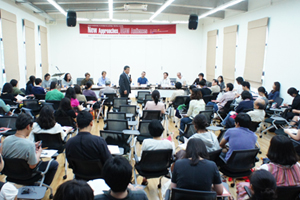
On June 30, 2011, the Asian Arts Theatre of the Asia Culture Complex held an international conference under the title "New Approaches, New Audiences" at the Artist House in Daehangno, Seoul. This conference was organized as part of the project designed to performing arts pieces to be performed at the Asian Arts Theatre. The theater is to be open to the public in 2014 within the Gwangju Hub City of Asian Culture. Aiming to establish itself as the hub of creation-oriented Asian contemporary performing arts, the theatre listened, at the symposium, to overseas artists and their creating and producing methods, who are applying space, sound, media and technologies in a creative way. The artists shared their thoughts with Korean counterparts who joined the conference as panel members.
Stress on Free Improvisation
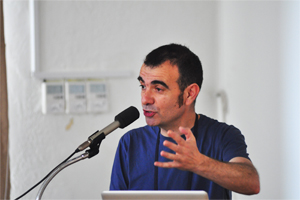
Artistic director of the British theatre troupe Dreamthinkspeak, Tristan Sharps has put on stage diverse interdisciplinary shows containing components of image, performance and installation art. His directorship took not on traditional prosceniums, but on public places like buildings and department stores. He is also directing In the Beginning was the End, a work title of that art piece where Korean, Japanese and British artists and producers participate. At the conference, he vividly described to the conference attendees the entire performing process of Before I Sleep, a work that had taken the motif from The Cherry Orchard, which had been created in memory of the 150th anniversary of Anto Chekov. The attendees felt like watching the show before their eyes.The work was created upon efficient application of the space, structure and environment offered by a department store, along with that of fine design and high-tech imagery technology. In real performance, audiences encounter various images, improvements and performances, wandering through the inside of the department store. The stage, or the store, offers a contrast between the part and the present, reality and imagination, and fine spatial arrangement and identical miniatures. What was most impressive, above all, was his accommodation of audience as last stage of creation. As a result, his work flexibly undergoes changes in accordance with interaction with audiences. Taking the first week of the show as last stage of creation, Sharps completes finish works impromptu based on the diverse reactions and responses of the audience. A show under his directorship remains fresh and dynamic through acting crew''s interaction with audiences and resulting impromptu performance within the frame set up by him.
|
Tristan Sharps |
Accommodation of Contemporary Technologies
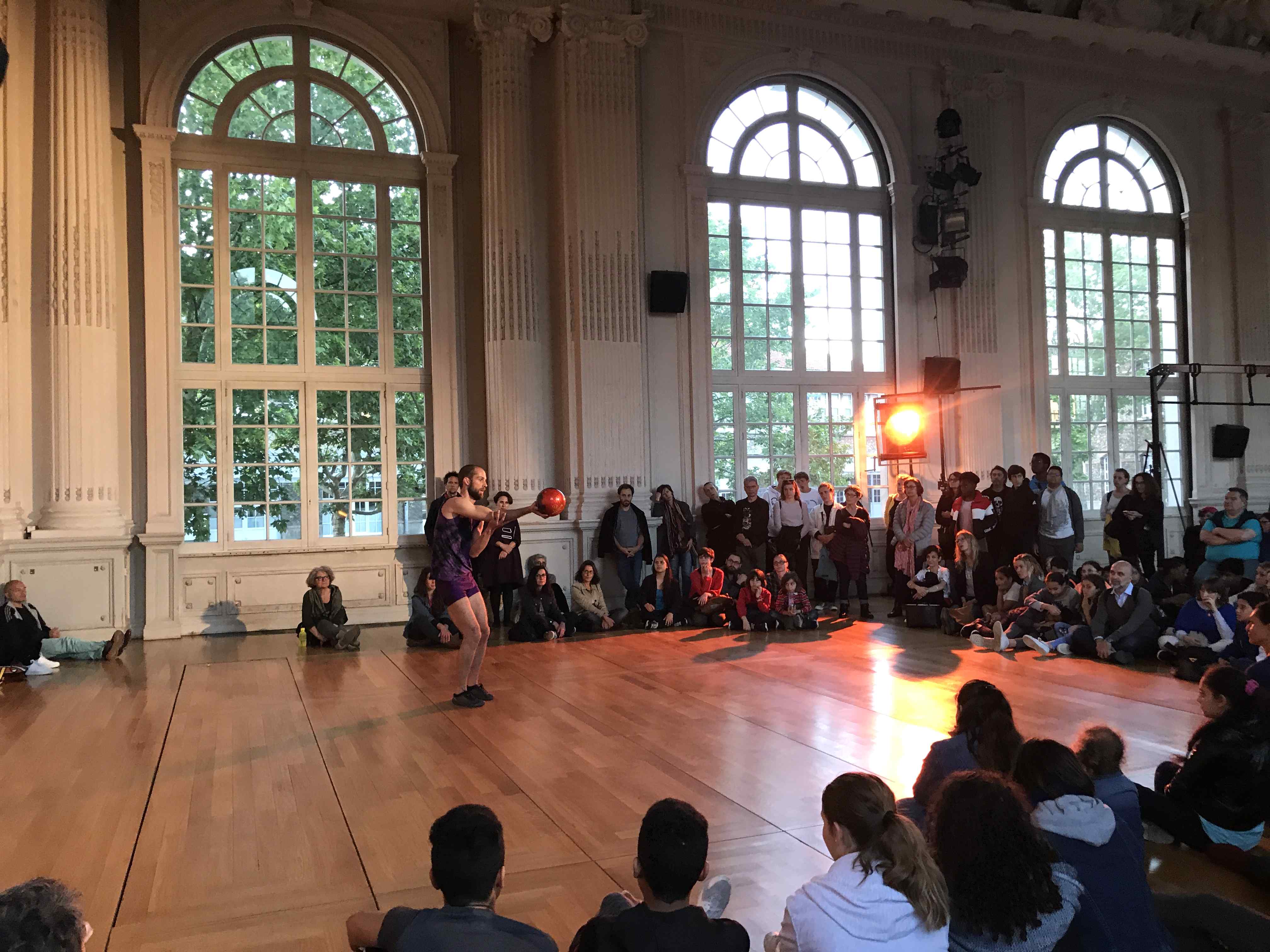
Another artist catching our eyes is Duncan Speakman. He is a musician, sound engineer and mobile media artist based in the British area of Bristol. His working method, or subtle mob that is similar to but different from flash mob, helps audience collectively or individually acquire special and sound experiences. A flash mob refers to a group of people who assemble suddenly in a public place, perform a weird, pointless act for a brief time, and then disperse. On the other hand, a subtle mob means the act of those who has shared information and exchange sympathy subtly among the crowd, without attracting attention. In As if it were the last time, audiences acquire a movie-like experience by getting together at a certain place, downloading an audio clip via cell phone or MP3, and acting upon the instructions recorded on the clip (e.g. walking aimlessly). In other cases, they break themselves into different smaller groups, and each group alternates the roles of audience and performer upon the instruction. That way, they experience various social issues or look into them from different viewpoint.
New Producing Platform
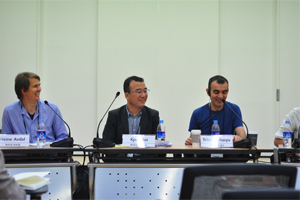
Heine Avdal stresses the role of audience in connection with performing space and performance. He is now the artistic director of deepblue, which is a company and production structure for performance, dance, music, video and installation work, based in Brussels, Belgium. For him, the space for performance is the medium collecting the world of audience to the world of acting crew. Under his methodology, space should function as interface enabling the mutual communication. In the early phase of his work You are here, audiences represent a fixed group watching a show from an identical viewpoint. As the performance progresses, however, different boxes are given to viewers, a point where the core of performance is being shifted to audiences. Thereafter, image technology switches the stage with the audience seats. In the end, audiences realize that each of the boxes represents the miniature of the Black Box Theater where they have watched the show. The realization enables them to watch their positions from a viewpoint impossible to be realized in reality. Founded in 2004, as multi-art performance platform, the Playground NZ, Ltd. Leaves its artistc directorship to Sam Trubrige who has attempted, in planning and creating performances, to harmoniously build up links among script, objet, light, space, media technology, actor''s body and audience. During the process, his focus remains on performance design. To get closer to audiences, he introduced a project titled Performance Arcade at the symposium. Refusing the Black Box Theater and the White Cube galleries as venue, he ushered in a brand-new producing platform by setting up containers in a public place and having installation and performance carried out within them. His approach is designed to create a dynamic environment in which audiences appreciate performances the way they wish.
|
|
| |
|
|
New Dynamic Relation Between Space and Audience
The discussions between the panel and the floor mostly focused on the relational structure of participants in creation, and relational characteristics between performers and audiences. Performances accommodating new technologies or space-responsive performance often involve collaboration among artists of diverse genres. Consequently, unlike traditional shows wherein a certain hierarchy is observed among writer, director, performers and staff members, all participants should take the leading role, argued Sharps. Sharps further agued that they constitute part of an art piece as producer as well as consumer, mentioning the attributes of space-responsive performance where two-way communication occurs with audiences.Stressing the equal relations during production, Heine Avdal took the role of sound artists for example. He emphasized that a sound artist should actively participate in creation, rather than stay outside by coating a piece in music. What really matters, he asserted, was the reevaluation of all basic components from equal viewpoint instead of approaching them based on a hierarchy.
On the question of how to attract more participation of audiences and, thereby, overcome the one-way communication approach under conventional art production, Sam Trubridge took his work, The Restaurant of Many Orders, for example. Entering a place decorated as a restaurant, audiences easily realize that they should act like the restaurant''s customers by looking at the performers dressed like waiter/waitress filling the water glasses on their tables. An organic combination of space, appropriate application of technology, objet and performers naturally induce active participation of the audience.
|
|
| |
|
|
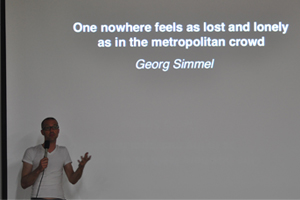
This conference ushered in new ideas that were hard to be presented as method. The ideas touched on many topics such as unconventional production, role of space, concomitant role of audience as performer and viewer, for example.
At the end, questions followed, like "Will the audience actively participate at all?," "Will new producing methods complete works?," and "What would be the response from the audience."
Most of the conference participants agree that this event was meaningful in that it has introduced new producing approaches.
Photo by Asia Now
 PREV
PREV
.JPG)
.jpg)
.jpg)
.jpg)
.jpg)












;)


