





What''s going on in Polish culture and theater?
Basically: a lot. Not a day goes by without a concert, exhibition opening, or theater production; and not a month passes without several, if not several dozen, festivals being held. While this is nothing unusual, it is notable that all this activity is taking place not just in the big cities, but practically all over the country. Theater festivals are being held in Warsaw, Kraków, Poznań, Wrocław, but also in remote towns such as Sejny, Węgajty, and Gardzienice. Krasnogruda, a village on the Polish-Lithuanian border has just become the seat of the International Center for Dialogue whose patron is the Nobel Prize-winning Polish poet Czesław Miłosz. Cultural outreach by groups like the "ę" Association for Creative Initiatives or the Zoom In on Culture Centers program have shown that there is a great deal of creative energy waiting to be unleashed in small towns. It would, in fact, be safe to say that there are no places in Poland that culture doesn''t reach.
Seen from the outside, it is obviously nationwide events that attract the most attention. As of July 1, Poland holds the presidency of the Council of the European Union – a major opportunity for promotion coupled with a great administrative challenge.
For the Polish Presidency, we have chosen to make culture our "main export." Consequently, over 1400 artistic events will take place in the coming six months: concerts, theater plays, exhibitions, presentations, installations, and workshops. A detailed program in English may be found on www.culture.pl. The National Audiovisual Institute is responsible for the program inside the country, while the foreign component is handled by the Adam Mickiewicz Institute.
|
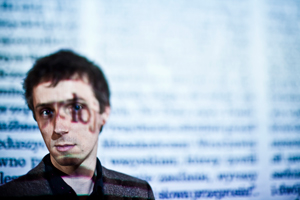
Small narration - play of Wojtek Ziemilski photo by Krzysztof Bielinski |
Great Artists Presenting New Works One after Another
What is most worth seeing in Poland in the coming months? There will definitely be a lot going on in September and October: in mid-September, Warsaw will be hosting the tenth edition of the Body/Mind Festival, an international event promoting contemporary dance and the most interesting young dancers in the country. Shortly afterwards, in early October, Krakow will host the Reminiscencje Festival, coinciding this year with a congress of IETM: the International Network for Contemporary Performing Arts. Also coming up in October are two important theatre festivals: Wrocław''s Dialog Festival, where acclaimed international productions will be shown back-to-back with new work by the best Polish stage directors and Konfrontacje Festival held in Lublin, the Eastern Polish city known for its rich multicultural history and its focus on the cultures of its immediate neighbours: Ukraine and Russia. Attending these festivals is a good way to get an overview of what is happening in Polish theater, much of whose creative energy is recently being generated at the interface of the known and established with the new and the wild. A possible high-point of the European Culture Congress, to be held in Wrocław in September, will be director Krystian Lupa''s latest production, based on texts by Dorota Masłowska, which promises to be an exciting encounter between an old master and a young writer with attitude to burn. Other internationally acclaimed directors, Krzysztof Warlikowski and Grzegorz Jarzyna, will also have premieres of their new works: notably Warlikowski working on the Prospero Project that collects all stories from the antiquity and addresses them in our contemporary world, and Jarzyna getting his take on one of the most popular myths, that of Nosferatu the Vampire. Both works will open this fall and both are international co-productions having attracted both European as well as US and Australian partners.
Original Challenge, Emergence of New Generation
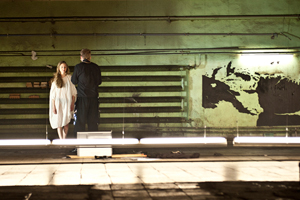
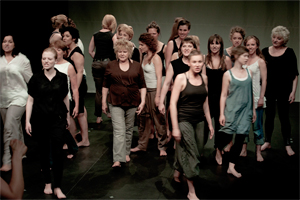
A new generation challenging the established order of things is just beginning to make its mark in Polish theater. Plays by Paweł Demirski and Monika Strzępka, produced at the Teatr Dramatyczny in the rust-belt city of Wałbrzych, contest the language of capitalism, liberalism, and politics. A similar attitude is to be found in projects by Marta Górnicka, who recently staged The Chorus of Women: a theatrical feminist manifesto with the participation of women otherwise uninvolved in theater. Wojtek Ziemilski''s most recent solo performance-play, the intimate A Small Narration, pares down artistic expression to a minimum, and uses productions by other directors as inset quotes. Further representatives of this generation include Radosław Rychcik, director of In the Solitude of Cotton Fields, a play cum punk/rock concert, which toured over a dozen countries last year; and the artistic tandem of Krzysztof Garbaczewski and Marcin Cecko, who already have several highly-regarded (mis)productions under their belt where they dismantle texts, logic, preconceived ideas about theater, acting, directing, with complete disregard to copyrights'' laws yet their creations attract young crowds everywhere.
|
|
| |
|
The sexual life of savages - dir. Krzysztof Garbaczewski |
Chorus of women - dir. Marta Górnicka |
Encounter between Theatre and Popular Culture
Video plays no small role in contemporary Polish theatre and the most visible trend of blurring boundaries of both genres is manifested in works of such acclaimed masters like Lupa, Jarzyna, Warlikowski as well as youngsters like Garbaczewski and Cecko. Another ambitious project attracted a lot of critical attention: in the mining town of Wałbrzych, the already mentioned Teatr Dramatyczny has produced " In the Desert and the Wilderness"- an innovative found footage collage/hyper text "authored" by Weronika Szczawińska and Bartek Frackowiak- but "written" by the blogging audience who over the period of several months contributed freely to this piece on Polish concept of "colonialism," addressing a venerable novel and the popular film that every Polish child knows. New media allow young directors surf freely in the cultural references that slowly have lost national boundaries and are easily recognizable icons for every hip youngster. This by no means exhausts the list of Poland''s "young talents" – writers, directors, filmmakers, and photographers telling the world their stories while learning important things about the world. In a word: the scene is more than vibrant. Culture in Poland is gaining new ground and, by carving out a space of freedom that encourages exploration and experiment, is becoming one of the key factors shaping life in the country. It''s definitely worth coming to see everything that is going on in a country positioned between East and West and in a cultural environment developing between the official and the unofficial.
 PREV
PREV
.JPG)
.jpg)
.jpg)
.jpg)
.jpg)












;)


