





Korea-Finland Connection: an East-West dance project incubator
|
By Judith Staines |
Korea-Finland Connection: an East-West dance project incubator
Culture360.org’s Europe Editor Judith Staines looks at a unique cultural exchange programme currently building connections between professional dance specialists in Finland and Korea. She speaks to organisers and participants to find out what motivates them to be involved and how the exchange is developing.
Finland and Korea are distant and - one might think - dissimilar countries. It is perhaps surprising then to discover that a new cultural exchange project is currently opening up connections between Finnish and Korean professional dance specialists. In its first phase, the Korea-Finland Connection project is already finding interesting parallels between the dance scenes in the two countries, as well as other links between their history, culture and society. The aspirations for future collaborative projects seem to be on track.
The Korea Arts Management Service (KAMS) launched the KAMS Connection project in 2010, setting up international exchange programmes with Finland, the UK and the USA. KAMS is a public foundation for the development of Korean performing arts and has developed many projects to assist Korean artists and companies to enter overseas markets since it was set up in 2006. The aim of KAMS Connection is to create a system of long-term, mutual cooperation with Korean and international performing arts organisations, councils, festivals and theatres and to develop original international collaboration projects. With Finland the focus is on dance through a partnership with Dance Info Finland. This national agency is responsible for promoting the development of Finnish dance art and improving its status and operating conditions in society. A second partner in Finland is TAIVEX, a training programme for art exchange aiming to improve the international expertise and export of Finnish cultural industries.
The partner organisations first selected seven dance specialists in their own countries. These included companies with an international profile and touring experience as well as some less experienced. Preliminary online research by all participants identified their own areas of interest, and the exchange element kicked off with a visit to Korea in October 2010 by the Finnish group. KAMS organised an intensive 9-day programme of performances, visits, talks and workshops, intersecting with the PAMS Performing Arts Market in Seoul. The Finnish and Korean participants were partnered in line with their interests and experience and, alongside the common programme, individual visits and meetings were scheduled. A Korean return visit to Finland is planned for August-September 2011.
Finland and Korea are distant and - one might think - dissimilar countries. It is perhaps surprising then to discover that a new cultural exchange project is currently opening up connections between Finnish and Korean professional dance specialists. In its first phase, the Korea-Finland Connection project is already finding interesting parallels between the dance scenes in the two countries, as well as other links between their history, culture and society. The aspirations for future collaborative projects seem to be on track.
The Korea Arts Management Service (KAMS) launched the KAMS Connection project in 2010, setting up international exchange programmes with Finland, the UK and the USA. KAMS is a public foundation for the development of Korean performing arts and has developed many projects to assist Korean artists and companies to enter overseas markets since it was set up in 2006. The aim of KAMS Connection is to create a system of long-term, mutual cooperation with Korean and international performing arts organisations, councils, festivals and theatres and to develop original international collaboration projects. With Finland the focus is on dance through a partnership with Dance Info Finland. This national agency is responsible for promoting the development of Finnish dance art and improving its status and operating conditions in society. A second partner in Finland is TAIVEX, a training programme for art exchange aiming to improve the international expertise and export of Finnish cultural industries.
The partner organisations first selected seven dance specialists in their own countries. These included companies with an international profile and touring experience as well as some less experienced. Preliminary online research by all participants identified their own areas of interest, and the exchange element kicked off with a visit to Korea in October 2010 by the Finnish group. KAMS organised an intensive 9-day programme of performances, visits, talks and workshops, intersecting with the PAMS Performing Arts Market in Seoul. The Finnish and Korean participants were partnered in line with their interests and experience and, alongside the common programme, individual visits and meetings were scheduled. A Korean return visit to Finland is planned for August-September 2011.
The organisers’ point of view
The co-organisers – Euna Im (EI) from KAMS and Pirjetta Mulari (PM) from Dance Info Finland were interviewed about their aims for the Korea-Finland Connection project and experiences to date:
JS: What were your aims in participating in the Korea-Finland Connection project?
EI: There are two aims for this project. We try to introduce the Nordic performing art scene, which is an unfamiliar area to the Korea performing arts field. Also, we aim to lay a good foundation for incubating international collaborative projects through an in-depth exchange programme between Korean and Finnish dance specialists. To achieve these goals, we built an online platform for communication to start to understand one another.
PM: As the Korea-Finland Connection aims to develop partnerships between Korean and Finnish arts organisations and artists, the implementation methods for the programme come out of sharing and exchanging ideas and information. As arts markets have shifted from pure promotion into networking and exchanging ideas, Korea-Finland Connection aims to build long-term relationships and projects between Korean and Finnish art organisations and artists.
KAMS has similar programmes with UK and USA and this enables Korea-Finland Connection to reach even further through the other programmes: to find new ways of international collaboration in the changing world.
JS: How does this exchange project fit into your organisation’s international programme?
EI: KAMS tries to go beyond the limitations of simply exchanging work between Korea and overseas countries, and tries to develop a long-term collaborative working relationship. Also, by running this project, we are discovering improvements in the capacities of larger-scale participants and decided that our final goal would be ‘incubating projects’.
PM: Korea-Finland Connection is an excellent example of a project within Dance Info Finland’s international activities. As our role in the Finnish and international dance scene is to launch, facilitate and co-ordinate international projects, it offers co-operation to achieve just that. A platform for Korean and Finnish performing arts professionals is created, where they can share their knowledge, ideas and best practices, and come up with new ideas of possible co-operation. In our experience, international co-operation takes time to flourish. It needs a lot of discussions, personal connections and relevant contacts. Here, the time factor has been taken into account by giving professionals time to get to know each other, and also by spreading the project over few years.
JS: What were your impressions of the performing arts scene from the producers visit?
EI: In recent years, the Finnish performing arts scene has focused on contemporary dance. KAMS has been impressed that an organisation like Dance Info Finland actively organises programmes for domestic and international exchange. We could feel the energy of the visiting Finnish dance specialists and they made us eager for additional programmes to help us improve our understanding of Finland’s performing arts. KAMS hopes to develop relationships, not only with Finland, but also with others in the performing arts in the Nordic region.
PM: It was my first visit to Korea and Seoul, although some of the Finnish managers/producers had visited the country before. I found Seoul a very easy city to fit into: somehow everything worked well, and it is well-organised. Through the visit we found many similarities between the Koreans and the Finnish: in many ways our history and development into technological societies have many things in common - also the character of the people.
We saw quite a lot of Korean dance performances. The technical level of the dancers is exquisite; generally speaking, the choreographic creativity seems to still be at developmental stage. We saw some excellent works by Korean choreographers and dance companies – the overall impression of the Korean dance scene was positive, lively, diverse, and really draws from its traditions. The nurturing of tradition is something that we could learn in the western world.
JS: What were your aims in participating in the Korea-Finland Connection project?
EI: There are two aims for this project. We try to introduce the Nordic performing art scene, which is an unfamiliar area to the Korea performing arts field. Also, we aim to lay a good foundation for incubating international collaborative projects through an in-depth exchange programme between Korean and Finnish dance specialists. To achieve these goals, we built an online platform for communication to start to understand one another.
PM: As the Korea-Finland Connection aims to develop partnerships between Korean and Finnish arts organisations and artists, the implementation methods for the programme come out of sharing and exchanging ideas and information. As arts markets have shifted from pure promotion into networking and exchanging ideas, Korea-Finland Connection aims to build long-term relationships and projects between Korean and Finnish art organisations and artists.
KAMS has similar programmes with UK and USA and this enables Korea-Finland Connection to reach even further through the other programmes: to find new ways of international collaboration in the changing world.
JS: How does this exchange project fit into your organisation’s international programme?
EI: KAMS tries to go beyond the limitations of simply exchanging work between Korea and overseas countries, and tries to develop a long-term collaborative working relationship. Also, by running this project, we are discovering improvements in the capacities of larger-scale participants and decided that our final goal would be ‘incubating projects’.
PM: Korea-Finland Connection is an excellent example of a project within Dance Info Finland’s international activities. As our role in the Finnish and international dance scene is to launch, facilitate and co-ordinate international projects, it offers co-operation to achieve just that. A platform for Korean and Finnish performing arts professionals is created, where they can share their knowledge, ideas and best practices, and come up with new ideas of possible co-operation. In our experience, international co-operation takes time to flourish. It needs a lot of discussions, personal connections and relevant contacts. Here, the time factor has been taken into account by giving professionals time to get to know each other, and also by spreading the project over few years.
JS: What were your impressions of the performing arts scene from the producers visit?
EI: In recent years, the Finnish performing arts scene has focused on contemporary dance. KAMS has been impressed that an organisation like Dance Info Finland actively organises programmes for domestic and international exchange. We could feel the energy of the visiting Finnish dance specialists and they made us eager for additional programmes to help us improve our understanding of Finland’s performing arts. KAMS hopes to develop relationships, not only with Finland, but also with others in the performing arts in the Nordic region.
PM: It was my first visit to Korea and Seoul, although some of the Finnish managers/producers had visited the country before. I found Seoul a very easy city to fit into: somehow everything worked well, and it is well-organised. Through the visit we found many similarities between the Koreans and the Finnish: in many ways our history and development into technological societies have many things in common - also the character of the people.
We saw quite a lot of Korean dance performances. The technical level of the dancers is exquisite; generally speaking, the choreographic creativity seems to still be at developmental stage. We saw some excellent works by Korean choreographers and dance companies – the overall impression of the Korean dance scene was positive, lively, diverse, and really draws from its traditions. The nurturing of tradition is something that we could learn in the western world.
|
|
|
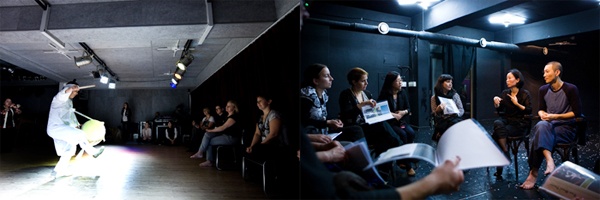
| Meeting with Korean group, Dulsori and Trust Dance Company (photo by Hyun Jun Lee) |
Finnish impressions of Korea
Selected participants from Finland were interviewed to discover what the programme means to them. The interviewees were Janne Ikäheimo (JI) from Nomadi Productions, Riitta Aittokallio (RA) from Glims & Gloms Dance Company, Kirsi Mustalahti (KM) from Tirakkor Group and Outi Järvinen (OJ) a producer for Zodiak – Center for New Dance.
JS: Why did you decide to participate in the Korea-Finland Connection project?
JI: Nomadi Productions represents artists and companies that are interested in making international co-productions, e.g. alpo aaltokoski company and Arja Raatikainen & Co, and I found interesting Korean culture and dance artists to introduce to them. Projects like Korea-Finland Connection give a lot of organisational and financial support for travel and to meet Korean artists, producers and artistic directors.
KM: My ambition and aim was to change ideas and networking with international theatre-managers, event managers and to get to know how accessibility is taking place in the world (in different events, festivals and theatre).
OJ: The chance to participate in the Korea-Finland Connection provided a wonderful opportunity to get an overview of the contemporary dance scene in Korea.
JS: How does this exchange programme fit into your company’s overall international programme and/or policy?
JI: I think it fits very well. Having a collaborative project as a result of an exchange programme can introduce our choreographers, designers and dancers to new audiences and new cultural influences. Giving Korean artists the same experience here in Finland is very satisfying for both sides. Dialogue between cultures is crucial nowadays, also to increase your understanding of yourself. In a global world culture, there are still specific ways of communicating, as in dance, and it is always interesting to hold up a mirror to your own ways of doing things. Collaborative projects can be more fruitful for artists than touring, which still forms the basis of our international programme work.
RA: This programme fits well into our international programme. We are developing our own sketch which is based on our knowledge in dance theatre for children and young people (e.g. workshops for professionals, performances and licence agreements). And in Korea they have a desire to offer more high quality performances for children.
KM: There is a direct connection between my future work and this Korea-Finland Connection. I realised that it really is possible to work on accessibility in theatre, because there are many groups also interested in the same thing, ready to create something new where everyone can participate.
OJ: Zodiak - Center for New Dance is a dance organisation with many facets: production house, presenter, festival organiser, regional dance centre, a community of artists - a hub of dance-related activities in Helsinki. In recent years, it has developed its international strategy and there is a tremendous increase in international interest in our activities. We are involved in a number of international networks, partnerships, and exchange programmes.
Although there are more interesting projects and proposals than we have time and resources for, we want to keep our eyes and ears open to new ideas. The Korea-Finland Connection fits our international policy very well because it gave us an opportunity to create links with Korean dance organisations and artists, and to get a perspective on the Asian scene in general.
JS: What were your impressions of the Korean performing arts scene from the research visit?
JI: We saw many dance performances in theatres and also in companies’ own studios. Afterwards we had fruitful discussions with artistic directors and dance producers. I got the impression of a high interest in making collaborative projects with partners abroad.
RA: In my opinion Korean performing arts scene is very versatile. There is so much to see. Some of their inspiration comes from the ancient history of Korea. They really know how to mix the past and the present interestingly. But they also have the courage to turn their backs on that rich history and create something totally new. And one thing is similar to European dance field: many outstanding performances are being made by small companies and as everywhere they are struggling hard to find finance.
KM: I’’m more than happy to get to know Korean culture deeper and their thoughts about life and art. My group is working towards a new type of dramatic expression and looking for international partners with whom we could stage joint linguistic and cultural productions in four languages. I see a similar intensity on stage with Korean performing arts and I believe this is a good starting point to create cultural cooperation.
OJ: The dance scene of Korea seems to have strong influences both from Korean traditional dance and art, and from Western contemporary dance based on American and Central-European traditions. What struck me as most interesting were artists who define their own contemporary dance – how they interpret their own being in time and place.
The organisational side of the dance scene seems to be well structured. I am sure that KAMS has a big influence on this. During our visit, we could meet many types of organisations; management offices, theatres, festivals, and dance companies.
There were many similarities between the dance scenes of Korea and Finland. At the same time, there are also many differences. One notable difference is the significance of universities there and the vast numbers of well-trained, university educated dancers in Korea.
JS: Are you developing any collaborative projects as a result of the connections made in Korea?
JI: alpo aaltokoski company has began to develop a project with NOW Dance Company in Korea. The project starts in 2011 with workshops and visits to both Finland and Korea. By 2012 we hope to have two new dance works touring in Finland, Korea and in other countries.
RA: We are performing this year in a Korean festival and will give a workshop there. We are also looking for the possibility of a long-term cooperation.
KM: There are some good cooperation ideas growing with the Korean group and I will go back to Seoul this spring to deepen the connection. It is important first to get to know each other and each other’s culture and, after that, when confidence and a shared mindset are “born” it is possible to create something together.
OJ: For Zodiak, the most important aspect of any project or partnership is the content itself. Zodiak is dedicated to producing challenging and innovative works, to nurture the creative process and to provide a creative environment for artists and audiences. We look for partners who share our visions and goals, and we want to develop collaborations on a long-term basis. Many interesting discussions were started as a result of the connections – the future remains to be written.
JS: Why did you decide to participate in the Korea-Finland Connection project?
JI: Nomadi Productions represents artists and companies that are interested in making international co-productions, e.g. alpo aaltokoski company and Arja Raatikainen & Co, and I found interesting Korean culture and dance artists to introduce to them. Projects like Korea-Finland Connection give a lot of organisational and financial support for travel and to meet Korean artists, producers and artistic directors.
KM: My ambition and aim was to change ideas and networking with international theatre-managers, event managers and to get to know how accessibility is taking place in the world (in different events, festivals and theatre).
OJ: The chance to participate in the Korea-Finland Connection provided a wonderful opportunity to get an overview of the contemporary dance scene in Korea.
JS: How does this exchange programme fit into your company’s overall international programme and/or policy?
JI: I think it fits very well. Having a collaborative project as a result of an exchange programme can introduce our choreographers, designers and dancers to new audiences and new cultural influences. Giving Korean artists the same experience here in Finland is very satisfying for both sides. Dialogue between cultures is crucial nowadays, also to increase your understanding of yourself. In a global world culture, there are still specific ways of communicating, as in dance, and it is always interesting to hold up a mirror to your own ways of doing things. Collaborative projects can be more fruitful for artists than touring, which still forms the basis of our international programme work.
RA: This programme fits well into our international programme. We are developing our own sketch which is based on our knowledge in dance theatre for children and young people (e.g. workshops for professionals, performances and licence agreements). And in Korea they have a desire to offer more high quality performances for children.
KM: There is a direct connection between my future work and this Korea-Finland Connection. I realised that it really is possible to work on accessibility in theatre, because there are many groups also interested in the same thing, ready to create something new where everyone can participate.
OJ: Zodiak - Center for New Dance is a dance organisation with many facets: production house, presenter, festival organiser, regional dance centre, a community of artists - a hub of dance-related activities in Helsinki. In recent years, it has developed its international strategy and there is a tremendous increase in international interest in our activities. We are involved in a number of international networks, partnerships, and exchange programmes.
Although there are more interesting projects and proposals than we have time and resources for, we want to keep our eyes and ears open to new ideas. The Korea-Finland Connection fits our international policy very well because it gave us an opportunity to create links with Korean dance organisations and artists, and to get a perspective on the Asian scene in general.
JS: What were your impressions of the Korean performing arts scene from the research visit?
JI: We saw many dance performances in theatres and also in companies’ own studios. Afterwards we had fruitful discussions with artistic directors and dance producers. I got the impression of a high interest in making collaborative projects with partners abroad.
RA: In my opinion Korean performing arts scene is very versatile. There is so much to see. Some of their inspiration comes from the ancient history of Korea. They really know how to mix the past and the present interestingly. But they also have the courage to turn their backs on that rich history and create something totally new. And one thing is similar to European dance field: many outstanding performances are being made by small companies and as everywhere they are struggling hard to find finance.
KM: I’’m more than happy to get to know Korean culture deeper and their thoughts about life and art. My group is working towards a new type of dramatic expression and looking for international partners with whom we could stage joint linguistic and cultural productions in four languages. I see a similar intensity on stage with Korean performing arts and I believe this is a good starting point to create cultural cooperation.
OJ: The dance scene of Korea seems to have strong influences both from Korean traditional dance and art, and from Western contemporary dance based on American and Central-European traditions. What struck me as most interesting were artists who define their own contemporary dance – how they interpret their own being in time and place.
The organisational side of the dance scene seems to be well structured. I am sure that KAMS has a big influence on this. During our visit, we could meet many types of organisations; management offices, theatres, festivals, and dance companies.
There were many similarities between the dance scenes of Korea and Finland. At the same time, there are also many differences. One notable difference is the significance of universities there and the vast numbers of well-trained, university educated dancers in Korea.
JS: Are you developing any collaborative projects as a result of the connections made in Korea?
JI: alpo aaltokoski company has began to develop a project with NOW Dance Company in Korea. The project starts in 2011 with workshops and visits to both Finland and Korea. By 2012 we hope to have two new dance works touring in Finland, Korea and in other countries.
RA: We are performing this year in a Korean festival and will give a workshop there. We are also looking for the possibility of a long-term cooperation.
KM: There are some good cooperation ideas growing with the Korean group and I will go back to Seoul this spring to deepen the connection. It is important first to get to know each other and each other’s culture and, after that, when confidence and a shared mindset are “born” it is possible to create something together.
OJ: For Zodiak, the most important aspect of any project or partnership is the content itself. Zodiak is dedicated to producing challenging and innovative works, to nurture the creative process and to provide a creative environment for artists and audiences. We look for partners who share our visions and goals, and we want to develop collaborations on a long-term basis. Many interesting discussions were started as a result of the connections – the future remains to be written.
|
|
|
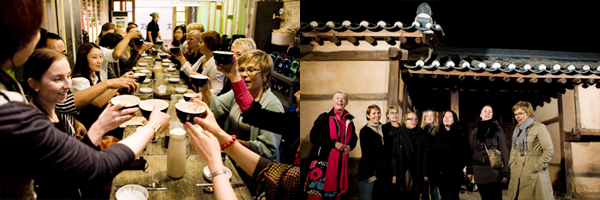
| Experiencing Korean culture (photo by Hyun Jun Lee) |
Korean perspectives
Selected participants from Korea were interviewed about their involvement in the programme: Kyung Ae Roh (KAR) from Trust Dance Company, Sungsoo Ahn (SSA) from Sungsoo Ahn Pickup Group and Kwangryul Jang (KRJ) from IPAP International Performing Arts Project.
JS: Why did you decide to participate in the Korea-Finland Connection project?
KAR: Trust has focused on long-term and mutual cooperation for international exchange. Trust does not aim to only tour and show work. Trust always has tried to communicate on a deeper level. Through this programme, we aim to create a co-operation with Finland, to try to have wider range of collaborations and build up a new network.
SSA: I have been interested in the Finnish way of culture. So KAMS suggested I join the project.
KRJ: As an artistic director and programmer of international dance festivals, I have been involved in international relations. I’’ve decided to expand the exchange channel in dance between Finland and Korea. Also I wish to sound out potential for new projects between the two countries.
JS: How does this exchange programme fit into your company’s overall international programme and/or policy?
KAR: This programme gives Trust a chance to introduce the company at a deeper level. When Finnish performing arts specialists visited Trust studio, it offered us diverse ways of introducing our work, such as videos, performance and artists talk. This time helped Trust build the possibility of further collaboration with Finnish organisations.
SSA: Last November my group toured Sweden and Estonia performing ’’Rose’ and it was well received. I would like to meet Finnish dance audiences.
KRJ: I think the programme was beneficial to my company in having a chance to meet people from various professions. I am sorry there was not enough time to talk and discuss more about future projects with partners.
JS: What were your impressions of the Finnish performing arts scene from the producers visit? SSA: Sincerity, maturity and efficiency.
KRJ: Finland’s dance scene is very active, alive and positively dynamic in international relations. My impression is that the Finnish dance scene is very open to many kinds of exchange collaboration.
JS: Are you developing any collaborative projects as a result of the connections?
KAR: Trust exchanged some ideas with Zodiak and Tirakkor-Group for collaborative projects. But we couldn’’t get any grants for them so, for now, we have to drop the ideas. But Trust wishes to make the project in the future.
SSA: Not yet. But I plan to do that, hopefully soon.
KRJ: We are developing a collaboration work between a Korean dance company (NOW) and a Finnish dance company (alpo aaltokoski). It will be performed at Busan International Dance Festival in Korea and also tour Finland, starting in July 2011.
JS: Why did you decide to participate in the Korea-Finland Connection project?
KAR: Trust has focused on long-term and mutual cooperation for international exchange. Trust does not aim to only tour and show work. Trust always has tried to communicate on a deeper level. Through this programme, we aim to create a co-operation with Finland, to try to have wider range of collaborations and build up a new network.
SSA: I have been interested in the Finnish way of culture. So KAMS suggested I join the project.
KRJ: As an artistic director and programmer of international dance festivals, I have been involved in international relations. I’’ve decided to expand the exchange channel in dance between Finland and Korea. Also I wish to sound out potential for new projects between the two countries.
JS: How does this exchange programme fit into your company’s overall international programme and/or policy?
KAR: This programme gives Trust a chance to introduce the company at a deeper level. When Finnish performing arts specialists visited Trust studio, it offered us diverse ways of introducing our work, such as videos, performance and artists talk. This time helped Trust build the possibility of further collaboration with Finnish organisations.
SSA: Last November my group toured Sweden and Estonia performing ’’Rose’ and it was well received. I would like to meet Finnish dance audiences.
KRJ: I think the programme was beneficial to my company in having a chance to meet people from various professions. I am sorry there was not enough time to talk and discuss more about future projects with partners.
JS: What were your impressions of the Finnish performing arts scene from the producers visit? SSA: Sincerity, maturity and efficiency.
KRJ: Finland’s dance scene is very active, alive and positively dynamic in international relations. My impression is that the Finnish dance scene is very open to many kinds of exchange collaboration.
JS: Are you developing any collaborative projects as a result of the connections?
KAR: Trust exchanged some ideas with Zodiak and Tirakkor-Group for collaborative projects. But we couldn’’t get any grants for them so, for now, we have to drop the ideas. But Trust wishes to make the project in the future.
SSA: Not yet. But I plan to do that, hopefully soon.
KRJ: We are developing a collaboration work between a Korean dance company (NOW) and a Finnish dance company (alpo aaltokoski). It will be performed at Busan International Dance Festival in Korea and also tour Finland, starting in July 2011.
Useful links:
Korea Arts Management Service www.gokams.or.kr
Dance Info Finland www.danceinfo.fi
TAIVEX www.taivex.fi
PAMS Performing Arts Market in Seoul www.pams.or.kr
Nomadi Productions www.nomadi.fi
Glims & Gloms Dance Company www.glimsgloms.com
Tirakkor Group www.rokkarit.com/teatteri/
Zodiak – Center for New Dance www.zodiak.fi
Sungsoo Ahn Pickup Group http://eng.theapro.kr/?sub_num=14&state=view&idx=5578
Trust Dance Company http://eng.theapro.kr/?sub_num=14&state=view&idx=5582 www.dance.ne.kr (Korean only)
IPAP www.ipap.co.kr
Korea Arts Management Service www.gokams.or.kr
Dance Info Finland www.danceinfo.fi
TAIVEX www.taivex.fi
PAMS Performing Arts Market in Seoul www.pams.or.kr
Nomadi Productions www.nomadi.fi
Glims & Gloms Dance Company www.glimsgloms.com
Tirakkor Group www.rokkarit.com/teatteri/
Zodiak – Center for New Dance www.zodiak.fi
Sungsoo Ahn Pickup Group http://eng.theapro.kr/?sub_num=14&state=view&idx=5578
Trust Dance Company http://eng.theapro.kr/?sub_num=14&state=view&idx=5582 www.dance.ne.kr (Korean only)
IPAP www.ipap.co.kr
**Acknowledgement:
This interview is co-commissioned by theApro.kr and Culture360 and this article may also be published in www.culture360.org
This interview is co-commissioned by theApro.kr and Culture360 and this article may also be published in www.culture360.org
 PREV
PREV
.JPG)
.jpg)
.jpg)
.jpg)
.jpg)












;)


