





Meet Living Theater with the Power to Change the World!
Theater Lab Hyehwa-dong No. 1 festivals:
“This is Hyehwa-dong No. 1!” & “Bloody Battle No. 1”
Written by KIM Seul-gi
Korean Theater Review (March 2010)
1994, veteran directors begin vigorously working in Daehangno. Gathering in a small theatre at one corner of Hyehwa-dong, they pursue some sort of plan. It involves no big budgets or promotions. After a few years of taking turns in small but good work spaces tucked into the non-descript theatre, they begin cooperating. That period produces many experimental plays of note, staged one after another. And shortly thereafter, new faces start to appear on the scene. This was the beginning of Theater Lab Hyehwa-dong No. 1.
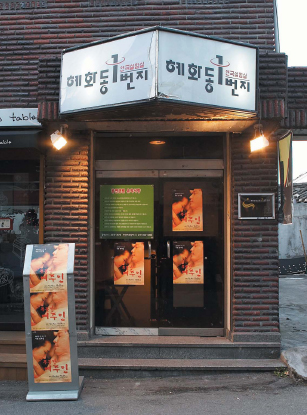
You can tell you are really at a Hyehwa-dong No. 1 production when you have to jostle the knee of the person next to you for prime viewing, you come to envy people sweating in sub-zero weather for no apparent reason, you seem to spend more time talking about a play after its over than you did watching it, you feel like you became a part of the production. Could it be because the spirits of so many theatre people are residing here? This spring, the directors who have passed through here for the past 16 years will start to stretch themselves once more in a festival known as This is Hyehwa-dong No. 1!
Theater Lab Hyehwa-dong No. 1’s 1st to 3rd waves of directors and performers will maintain the This is Hyehwa-dong No. 1! Festival from March to December 2010 non-stop, while the 4th wave simultaneously puts on Bloody Battle No. 1. In all, the 10-month-long joint festivals will feature the works of 17 directors. The idea originated from members of the 4th wave in 2008. Eventually, over the two-year planning phase, established and emerging directors connected to Hyehwa-dong No. 1 decided to return to this small theatre to direct. The first wave of directors departed in 1998, so more than 10 years have passed. No doubt their return will be emotion filled. Amid this background, we visited GI Guk-seoh, a first-wave director from Hyehwa-dong No. 1, to look back at the history of this theatre and its meaning in this century.
Until mutual goals form naturally
Initially, Hyehwa-dong No. 1 was the working space of the theater company “Moochun,” led by Director KIM Ah-ra. Then, as now, it frequently happened that there was insufficient financial support to consistently meet the company’s goals. For this reason, veteran directors who often hung out with each other naturally came to agree on the idea of jointly managing the theatre. In addition to Gi and Kim, directors-in-arms at that time were RYU Keunhye, PARK Chan-bin, LEE Byung-hoon, LEE Yoon-taek and Chae Seung-hoon.

“It wasn’t a solid intention from the beginning, but it’s true that the mutual goal was naturally formed later on,” Gi recollected. “Of course there was a financial consideration, but also we wanted to work on our plays free from box-office pressure. It became a place where we could experiment without burden. We weren’t following anyone’s objective or interest in particular, not at all. Of course, we didn’t need to wait for that kind of support, and actually we didn’t expect it either.
“At that time, we had few guiding principles for running our theatre, for example, no closing date, no saving profits for the next play, replacing programs with flyers, limiting guest seats. These are not really important considerations if you are free from the business side and don’t have to bring in as many paying customers as possible. We put the importance on the creative aspects of the play itself.”
However, in the beginning, this collection of distinctive directors united by mutual understanding didn’t really generate any public interest in the place. GI Guk-seoh himself guesses that’s because of the social sentiment of the late 90s. The concept of activism in the art scene was vague at that time, people might have just been waiting for the ultimate consequences. Many experimental works came and went during this phase without anyone making a record.
Propelled forward by the enduring spirit of theatre
Their work progressed with or without acclaim. And in 1998, a new generation of directors showed interest in inheriting the theatre’s legacy, namely directors KIM Kwang-bo, PARK Gun-hyung, Son Jung-woo, LEE Sung-yeul, CHOI Yong-hoon. It is thanks to this second wave of directors that we speak of senior directors, including GI Guk-seoh and the “first wave” and can enjioy these big festivals now.
“We didn’t even think about something like the 2nd wave. Such a development was never planned. Those so-called 2nd wave members are around 10 years younger than us, they still work together with us in the theatre world. They might have gotten some kind of reassuring stimulus from us because they might have felt that our intention was good. In my memory, we, seniors, didn’t make them to do this and that. People of a similar age with mutual interests gather around naturally while getting to know each other’s artistic inclinations.
“But it has actually become a kind of history because now the 4th wave has come out, and I feel proud about that. However, at that time, there was no intention of Hyehwa-dong No. 1 turning out directors at all. No intention at all to keep the theatre’s structure for that matter. We just initiated the idea to make one central place where we could work more freely, and our juniors just inherited that idea. I don’t visit that often anymore, but after seeing our juniors’ plays, I often feel that their works are freer than ours.”
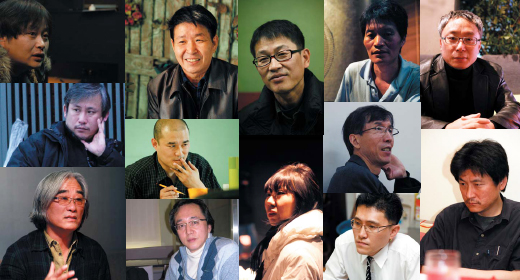
Later, the 2nd wave chose directors KIM Nak-hyung, PARK Jang-ryeol, Song Hyung-jong, YANG Jung-woong, OH You-kyung, and Lee Hae-jae Lee as the 3rd wave in 2001, and directors KIM Jae-yeop, KIM Han-gil, KIM Hye-young, PARK Jung-seok, Woo Hyung-jong made it to Hyehwa-dong No. 1 as the 4th wave. It seems like the innovative stronghold Hyehwa-dong No. 1 will not soon collapse because after this festivals ends, the 4th wave members will recommend directors for the 5th wave.
Theatre’s meaning in this age
Experimental plays are still staged there, and themed festivals are planned and executed every year. This theatre is leased at times, but mostly it’s used for young directors to debut works. In this way, they are pursuing a more significant direction than any other theatre in Daehangno. Nonetheless, there’s room to reconsider the meaning of Hyehwa-dong No. 1 in the present age. Questions persist about the experimental spirit at this age and the organic and systematic operation of waves of directors.
Director Gi believes the characteristics of Hyehwa-dong No. 1 have never changed: “There are countless theatres in Daehangno, but it’s very rare to find one run on an experimental attitude. The reputations of many theatres have faded, and those that are still respected are struggling financially. Sharing worries and putting heads together … it’s hard to see that kind of thing. Maybe that’s why I still feel my soul is liberated there. I can say that I feel easy there.
“It’s not unrelated to changed social sentiment. Now there’s no gathering of open-minded artists. There are many directors with their own characters, but there’s no atmosphere that encourages them to gather around to dismantle and re-arrange something together. They should be sharing their thoughts and gestures even if they are fighting. It shouldn’t be that each considers only their own artistic world and their own box office hit and struggle to survive alone.”
These days, our theatre industry is drowning the will to experiment with the excuse of various circumstantial limitations. However, it’s not like the experimental realm resides only within the content and formality of the play. The “experimental spirit” of Theater Lab Hyehwa-dong No. 1 should create a new movement by leveraging its space and expanding cooperation on works that contain a true creative spirit. The future of Hyehwa-dong No. 1 now rests in the hands of young theatrical people.
Festival Art Director KIM Ah-ra reportedly called Hyehwa-dong No. 1 “the place to fail.” Hearing this, I feel relieved that there is still a place left for failure among Daehangno’s crowd pleasers. Hyehwa-dong No. 1 might just be the last bastion of our theater industry. Don’t the many directors who matured here and the countless plays born and developed here prove that? Lastly, GI Guk-seoh passes along a request to young directors. He urges them to strive to put more passion into their work, raise controversial topics and create something that gives a refreshing shock. He says at the end of the day, one good work can change the world. Now, expectations are raised that the Hyehwa-dong No. 1 festivals can spur global change.
 PREV
PREV
.JPG)
.jpg)
.jpg)
.jpg)
.jpg)












;)


