





By KIM Seul-ki (soolsoolgi@naver.com)
Korean Theatre Review (September 2009)
After an exhibition play funded by the Creative Factory was performed at the Daehangno Arts Theater on August 21, critical questions concerning the showcase’s judging process emerged. The objective of the Creative Factory project, which began in 2008, is to nurture promising theatrical productions by providing sound support for exhibitions, screenplay contests, and outstanding plays. Winners of the screenplay contests are given an opportunity to produce an exhibition play the following year. They will also be included as nominees in the selection process for the outstanding performance support program. Crazy Drama by the Baeksoo Miner drama troupe and Gyeongseong Star by the Theatrical Street Group, which were co-winners of the screenplay contest a year ago, gave exhibition performances this year. Among the 24 new entries in this year’s screenplay contest, four screenplays were selected in the final stage of judging, and they were later performed as exhibition plays. The four winning screenplays were Yoon Jung-bin, Poisonous Beauty by C Virus, Your Sleep by Mirage Kaleidoscope, Passionate Chun-hyang by Seongbuk-dong Pigeon, and Cha-sook’s Home, 1-dong 83 beonji by Noldang. We will review the Creative Factory’s support for exhibition performances in 2009 in the Hot Topic forum and start a discussion on the objective of the showcase judging process.

Overview of Showcase Judging Process
Before we jump into the heart of the debate, let’s consider a fundamental question: Should the government support and nurture performance art? The direct cause of the low-profit-generating structure found in performance arts is its peculiar genre-specific characteristics. Critics have duly noted that plays were performed even in the days when government support was absent. There has also been sharp criticism that the enormous amounts of government funding have lowered the quality of art by creating opportunists that rely heavily on government handouts. Over the years, however, there has been an upheaval in the societal system and environment for performance arts. Thus, there is a broad consensus that the performing arts are necessary to society, and this has led to government programs supporting the arts and culture.
Meanwhile, a steady wave of criticism has been directed at the judging component of these government programs mostly due to the erratic selection process. The crux of the debate is what are the criteria used by the judges to determine which entries are worthy to receive government funding. When a winning entry, which received subsequent government funding, records dismal results with audiences, then many observers find the judging process to be questionable. Yet it is unfeasible to provide government funding to a winning entry contingent on its commercial success. There is a higher failure rate for plays that are rushed out the door without going through a gestation period that helps it weather the tough environment. Another matter of concern is that many promising artists will be overlooked and forgotten by a judging process that evaluates entries solely on the strength and merits of written applications. A new judging process that evaluates an entry’s “showcase” performance has emerged to address these issues.
Seoul Arts Center’s Freedom Youth Drama & Seoul Foundation for Arts & Culture’s New Artist Trend (NArT)
The Seoul Arts Center’s Freedom Youth Drama series marks the first theatrical productions in Korea chosen by a showcase judging process. This type of judging was first adopted for a drama contest in 2005. The purpose was to discover young talent and provide them with an opportunity to stage their plays. Two plays – The Crown Prince Incident by playwright Han Ah-ram and director Seo Jae-hyung and Novelist Koo Bo and the Gyeongseong People by playwright and director Sung Ki-woong – were performed at the Seoul Arts Center after they were chosen as the winning entries in a drama contest. However, no winner was chosen in 2006 because none of the submitted entries met the judge’s standards. Lamentably, the drama contest was then cancelled in 2008 and 2009. Though there must have been valid reasons for cancelling the contest, it is a disappointing outcome given that government funding was generously provided at the time.
The Seoul Foundation for Arts & Culture’s New Artist Trend (NArT) program also organized a contest in 2005. NArT focuses its funding on experimental works that feature fresh, creative ideas. The program’s funding targets a narrowly defined type of artist. Since previous government programs gave grants to established theatric troupes, the NArT program was introduced to support young artists that were overlooked by grant programs. Seven troupes have received a total of 370 million won in NArT grants as of 2008. Ultimately, most of the recipients had already achieved recognition for previous works, so they were not the fresh new talent that was the original target group. However, the NArT program did offer young, undiscovered artists new opportunities to show their work.
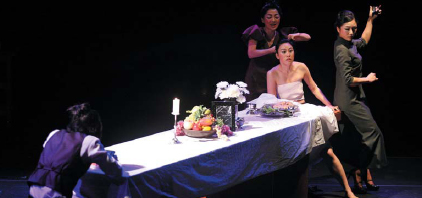
Support for Creative Factory Program
On the other side of the spectrum, there is the National Association of Cultural and Arts Centers and its Creative Factory program, which has an entirely different objective from other programs that adopt the showcase judging process. The Creative Factory provides long-term grants to works that are staggered into separate stages -- the final objective being to stage the plays at local arts centers. It should be noted that when a program has a clearly defined objective, as is the case with the Creative Factory, and when that objective is strictly imposed on the grant winners, then it will have a detrimental effect on the various creative qualities of performance art and defeat the whole purpose of nurturing art and culture. Furthermore, integrating the best features of the written application screening process, showcase judging process and follow-up evaluation into a unified system may discount individual characteristics of a work. The grant given to stage an exhibition play is the Creative Factory program’s second stage of funding but it has been criticized as well by artists who have participated in the showcase judging process administered by the Freedom Youth Drama and NArT programs. Let’s take a look at the issues.
What benefit does it bring to artists?
Most artists have given a warm reception to the showcase judging system. The system is especially appealing among young artists because it gives them an opportunity to promote themselves and achieve recognition. Even among established artists and those who have achieved a certain level of fame, the showcase system gives them an opportunity to test the waters with new works before they’re actually produced. So this group of artists finds the showcase system a source of support whether or not they win a grant.
However, it is necessary to receive input not only from the judges and agency that oversees the grants but also from the artists themselves in order to make the system a truly supportive force in the performance arts. Each competing team that participates in the showcase system is automatically given a budget of 3 million won and must build their set, perform the play and then dismantle the set within a limited amount of time to let the next team perform. This can be very taxing to the artists. The writers, directors, actors and staff usually put in a month of preparation to perform a 20-minute play. If they win a grant, then their efforts have not been in vain. But for teams that are not selected, losing can be costly. Quite a few artists would like the overseeing agencies to take into account the prevailing rates for hiring staff or provide a rehearsal stage at no charge.
Unlike other showcase competitions, the Creative Factory holds a closed judging system where the public is not allowed to watch any of the plays and participating teams are barred from watching competing entries. This leaves many entrants disappointed even though these rules are intended to maintain the integrity and fairness of the judging process. Artists would prefer that the showcase competition allow an opportunity to present their works to the public and their peers. Although the Creative Factory program will ultimately award just a few grants, the artists would like the showcase process to bring about a free flow of ideas among contestants, downplaying the competitive aspect of the selection process.
Purpose of the “Showcase” System Needs to Be Clearly Defined
Both the Seoul Arts Center’s Freedom Youth Drama and Seoul Foundation for Arts and Culture’s NarT have clearly defined the target group for their funding during their selection process and that has maximized their program’s effectiveness. On the other hand, it is not clear who the Creative Factory is aiming to support. In its requirement for entries, the program merely states that entrants must submit a creative theatric play that has never been performed before. Another controversial aspect of the program concerns its evaluation criteria where a play’s “mainstream qualities and the degree of appeal to general audiences” will be judged. The program should make an effort to clearly define the specifics of the showcase judging process. As it is now, the criteria seems an afterthought to rationalize the staggered method of doling out grants. The Creative Factory’s selection process in its current form does not address the shortcomings of the written application process nor does it attempt to discover unknown but talented artists who would likely be overlooked under a written application judging system.
When you look at the six teams that were selected through the Creative Factory’s exhibition play competition, the aforementioned issues become glaringly clear. The two grant-winning plays – Gyeongsong Star and Crazy Drama – both stood out as outstanding dramatic works. But was it necessary to organize a showcase competition just to evaluate works produced by well-established troupes - Theatrical Street Group and Baeksoo Miner, respectively - before bestowing them grants? Why were the other troupes that made it to the final stage of judging also established groups? Was it merely a coincidence? There is a need to address these issues in order to prevent the showcase competition from becoming a wasteful exercise for other entrants.
It is obvious why the Creative Factory has been pummeled with criticism for kowtowing more to the status quo than other programs. If their program’s evaluation criteria is not merely a cover to justify their lax judging standards and if they wish to make a meaningful impact on the performing arts, then the Creative Factory needs to clearly define the target group in their showcase competition and be more specific about what their objectives are. If they are merely doling out grants to “excellent works,” then for obvious reasons, the grants will go to experienced and well-established theatric troupes. The only thing preventing the Creative Factory from overseeing a grant program that discovers fresh, new ideas and creative works in the performing arts is the grandiose tendencies inherent in such a lofty goal.
Other issues such as the vague language used in the judging criteria, which states that the “the degree of appeal to general audiences” will be evaluated, may have been inserted for the sake of showcasing the plays in local cultural and arts centers across the nation. Then there is the issue concerning the way the grants are only channeled to well-established troupes. What about the technical and physical barriers that competing teams face during the selection process? Admittedly, all of the above issues have plagued most grant programs and do not solely apply to Creative Factory’s program.
One recurring comment among the artists was that performance arts should not become a forum for competition. However, it is impossible to provide grants indiscriminately. Inevitably, some groups will receive grants while others will not in any selection process. But it is dangerous to instill a sense of failure among artists through these grant programs. Arguably, there might not be as many plays being performed today without government support for the performing arts. Yet, it is also important to create a grant program that allows people to take pride in their work while fostering creativity. It should be noted that there is no obligation to award grants to the performing arts simply as favors to artists.
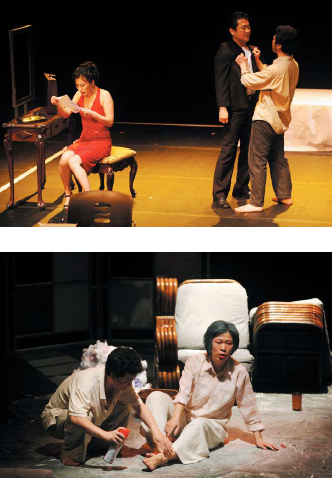
Photos provided by the National Association of Cultural and Arts Center
 PREV
PREV
.JPG)
.jpg)
.jpg)
.jpg)
.jpg)












;)


