





By CHOI Yun-woo (parodia@hanmail.net)
Korean Theater Review (July 2009)
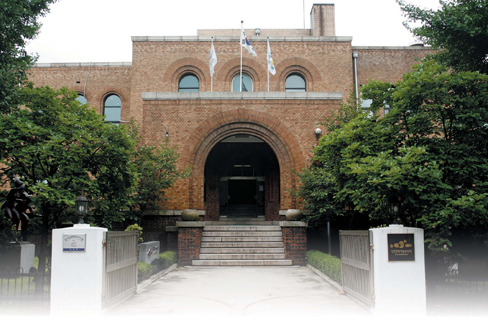
The Ministry of Culture, Sports and Tourism and the Arts Council Korea announced on June 17 the changes in the culture and arts support policy for the year 2010. The new policy features multilateral changes in the support system, which had been run largely by the Arts Council of Korea (Arko). The ministry’s announcement explains that the changes are more concrete, detailed versions of the four principles of support announced in 2008 as part of the new administration’s key arts support policies.
The origins of the currently used support system for culture and art can be traced back to the Culture and Arts Promotion Act of 1972. Passage of the act institutionalized the arts support system as public policy and created the official support organization, the Korean Culture and Arts Foundation, which was launched in 1973. Since then a wide range of subsidies have been made available for creative endeavors in theater, dance, and other disciplines of pure art and culture that possess weak self-sustainable bases.
Later in 2004, the Korean Culture and Arts Foundation was transformed into the Arts Council Korea as part of an effort to improve the effectiveness and fairness of Korea’s arts support programs. The transition from a state-led organization to a private one has removed bureaucratic intervention from the business aspect of the council’s operation. On the other hand, maximizing the policy participation and decision-making power of the artists has led to such problems as discipline-centeredness (only advocating one’s own discipline) and factionalism.
Support programs for culture and arts are no stranger to controversy. The means and objectives of support are bound to change with time and surroundings, and it is feasible only in theory to institute a support program that satisfies everyone involved. Like a double-edged sword, support programs have always stirred up various debates in the world of culture and the arts. But it remains indisputable that those support programs that have operated for the past 37 years have been the most important foundation of Korea’s cultural and artistic development. Against this background, the changes contained in the 2010 support policy for culture and the arts are assessed with a special focus on Korea’s theater community.
Four Major Principles Driving Policy Changes and the New Support System
Artists stand to be either the greatest beneficiaries or victims of the new support system. With some exceptions, most artists are not skilled in the inner workings of non-creative areas, such as institutions and administration. So it is not easy for artists to adjust to the rapidly changing support scheme. Adding to this disadvantage, the new set of 2010 support programs was announced even before those from 2009 -- which were modified due to a jurisdictional transfer issue -- had been fully assessed. It is, therefore, necessary to identify what precipitated such changes as well as the specific changes themselves.
The four principles that drove the revision of the support system are as follows. The first principle is the nurturing of professional art groups based on selection and concentration. The intent is to wean the culture and arts world from excessive reliance on public assistance, which has resulted from the oft-repeated arbitrary infusions of aid, and to create a self-developing and sustainable artistic environment. Second is the arrangement of a postliminary (as opposed to preliminary) support system. The new system plans to assist the gradual growth of cultural and art projects by establishing a support scheme based on postliminary assessments, instead of the current preliminary assessment system which selects subsidy recipients by their operation plans. The third principle is the expansion of indirect support projects. Direct cash subsidies for art groups have encouraged the sentiment of “no subsidy, no creation” and have even been accused of nurturing artists’ growing dependence on government subsidies. The new system looks to foster self-sustenance in the art world through indirect support for theaters, exhibition halls and other venues. The fourth principle is the creation of an environment that makes the arts accessible in everyday life. This principle was adopted to promote an environment in which a wide array of artistic activities are encouraged. This means that support is not given only to professional artists, but also to presenters who actively take part in the creative processes. These four major principles of assistance have driven the following changes in the culture and arts support programs for the year 2010.
Changes in the 2010 Culture and Arts Support Programs
|
|
2009 (Current) |
|
2010 (Changed) |
|
Support for Specialization |
Support for new artists (1.5) |
→ |
Support for new artist incubation (2) |
|
Support for international exchanges (5.2) |
→ |
Support for both inbound and outbound international exchanges (5.8) | |
|
Local culture and art promotion funds (4.8) |
→ |
Support for local cultural and artistic activities (8.8) ※14.8B in 2009 →17.6B in 2010 when local expenses are included | |
|
Municipal and provincial assistance (50) | |||
|
Indirect Support |
Support for writers’ work studios (0.23) |
→ |
Support for writers’ work studios (2.3) |
|
Specialization support for visual arts (0.4) |
→ |
Support for non-profit exhibition spaces in private art galleries (2.9) | |
|
Assistance for non-profit exhibition spaces (0.5) | |||
|
Support for performance venues and rehearsal studios (6.94) |
→ |
Support for performance venues and rehearsal studios (6.94) | |
|
Support for performance arts groups (3.5) |
→ |
Support for residential art groups at performance venues (8.5) * Assistance for the pre-selected groups included (2.2) ※When local expenses are included, a budget of 17B will be allocated to assist about 126 new performance venues. | |
|
Support for the production of performance art pieces (5) | |||
|
Postliminary Support |
Support for publication of literary works (0.8) |
→ |
Support for fellowships for noted writers (0.8) |
|
Assistance for the publication of new writers’ first works (0.3) | |||
|
Performance art specialization (1.2) |
→ |
Postliminary support for good performance arts pieces, etc. (2) | |
|
Facility Support |
Arko HRD Center (1.6) |
→ |
Transformation into a specialized performance arts education center (1.2) |
|
Support for a labor pool of stage production staff (0.3) | |||
|
Arko Art Center (1.15) |
→ |
Set up incubation program for independent curators and artists (1.8) | |
|
Insa Art Space (0.5) | |||
|
|
|
Newly establish the Daehangno art support center (1) | |
|
Nationalization |
Arko Arts Theater (3.3) |
→ |
Turn both theaters over to national treasury (merge and re-launch them as an integrated corporation) |
|
Daehangno Arts Theater (1.5) | |||
|
Arko Arts Library & Information Center (1.9) |
→ |
Turn over to national treasury (launch an independent national arts archive.) | |
|
Support for national play and dance festivals (0.9) |
→ |
Turn over to national treasury (merge with other performance arts promotion projects). | |
|
Support for nationwide events (0.5) | |||
|
Miscellaneous |
Conditional donations, etc. (6) |
→ |
Conditional donations, etc. (10) * Boost Arko’s fund-driving function. |
|
Review of artists
|
→ |
Introduce a professional reviewer system for art support. | |
|
Direct assistance projects from national treasury (performance arts promotion projects, etc.) |
→ |
Commission Arko for project operation. |
Changes in the New Support Policy
The following are the changes in the new culture and art support programs for 2010 that are directly related to the theater realm. First, an expansion of indirect support programs will nurture residential art groups belonging to performance venues. This project will aid 126 performance venues and art groups through a budget of 17 billion won, which includes local expenses. The project merges two separate existing support programs -- one for performance arts groups and the other for the production of performance arts pieces -- into one project intended to nurture residential art groups affiliated with performance venues. The Ministry of Culture, Sports and Tourism will provide cultural centers, small theaters, and other performance venues with such facilities as rehearsal rooms or business offices. For performance groups the ministry will provide support for repertoire development, performances and educational programs. Such assistance in the form of human resources and materials is expected to facilitate stable operation of both art groups and performance venues. Between 50 million and 100 million won in annual subsidies will be made available for each venue.
Second, postliminary assistance programs will be expanded. The previous system of selecting subsidy recipients through document reviews will be replaced by a postliminary support assessment conducted on works that have already been performed. Production-cost assistance will be provided to high-quality performing art pieces selected through on-site reviews. Production subsidies can be used flexibly in a variety of areas such as performance piece development, tour performances, or the creation of new works. Approximately seven works will be selected from each discipline (plays, music, dance, traditional arts) and each group stands to receive between 50 million and 100 million won.
Third, the new professional reviewer system improves upon the existing artist-centered review system. Professional reviewers who have no direct interest in the local arts scene will be invited to sit on the review panel. Unlike in the past when a one-time review was administered across the disciplines, the new expert reviewers will be evaluating works from their respective areas of expertise. New review criteria and methods will include media previews, reviews, and the percentage of paying audience members. This new review system will go into effect this year via pilot projects and will be expanded in phases to support programs for small theater leases, residential art group systems, and exclusive performance venues.
Fourth, an integrated body comprising the Arko and Daehangno arts theaters will be created. Four theaters – Arko Arts Theater, Daehangno Arts Theater, Wonder Space and the Sangsang Nanum Theater, all in subsidized property leased (at 30% of the commercial rate) as part of this year’s public lease project for small theaters in the Daehangno area – will be integrated into one corporation and placed under the governing umbrella of the Daehangno Cultural Foundation. The operation cost will be subsidized from the national treasury and a chief executive officer will be appointed as theater director. Each theater will have an artistic director, who will oversee the theater’s financial and artistic performance.
|
Category |
Arko Arts Theater |
Daehangno Arts Theater |
Wonder Space |
Sangsang Nanum Theater |
|
Main Function |
dance theater |
plays |
theater for lease | |
|
Seats |
main hall 608 seats /small hall 132 seats ※ 1 rehearsal room |
main hall 498 seats / small hall 133 seats ※1 rehearsal room |
183 seats |
190 seats |
|
Organization |
Operated by an integrated cultural foundation | |||
|
Annual Budget |
2.148Bn (fund) ※labor cost not included |
1.5Bn (fund) ※labor cost included |
1Bn (fund) | |
Lastly, the Daehangno Arts Support Center will be established. The building where the secretariat of the Arts Council Korea is presently situated will house the Daehangno Arts Support Center. Communal spaces such as studios, rehearsal rooms, seminar rooms, meeting rooms, and workshops will be set up there as well, and miscellaneous technical support programs will be strengthened. An assistance program for stage crew staff (audio, lighting, stage technique professionals, etc.) will be founded and the Arko HRD Center will be used as a short-term retraining institution for stage crew.
The Need for Concrete and On-site Execution Plans
The changes in the cultural and art support programs announced on June 17 were extensive to the point of being an all-out overhaul. Differing opinions about the changes are being voiced from in and outside of the culture and art world. For instance, some are calling for the simultaneous operation of both direct and indirect support programs instead of scrapping direct support programs altogether. There are also concerns over the possibility of the full postliminary support program limiting the incubation of new works and the planned professional reviewer system giving rise to an abundance of works that appeal only to the masses.
A large part of support programs thus far have been in the form of direct assistance. This has served to increase the quantity of works but has also certainly caused an oversupply, which has consequently undermined the qualitative growth of the arts and self-development capacity of the art world. Everyone saw that there was room for improvement and a need for more effective support programs. Nonetheless, some rough edges can still be spotted in the latest culture and art support programs announced by the Ministry of Culture, Sports and Tourism and the Arts Council Korea.
A nation’s culture and art policy can rock the very foundation of its culture or place it upon sturdier ground. It is uncertain how the new changes in the culture and art support programs for 2010 will reshape Korea’s cultural and artistic environment. It is also premature to expect tangible transformations in a short period of time. A policy’s merits, shortcomings and alternatives can be identified only after it has undergone the test of time. Above all, one must not forget that the greatest beneficiaries or victims of culture and art policy are none other than artists. Whatever the support programs may be, one can hardly expect to see effective results unless the programs appeal to artists in the creative frontline. It is clear, therefore, what the remaining challenges are.
Photography by SEO Dong-shin (Sowoo Studio)
 PREV
PREV
.JPG)
.jpg)
.jpg)
.jpg)
.jpg)












;)


