





[People] Artist Group Always Seeking Adventure
[PAMS Choice] Creative Group NONI
It takes a lot of determination to always be creating new things when producing theaters. Just ask Creative Group NONI (NONI), a group that has been strong-willed enough to abide by this principle for the last decade, standing before audiences with a different color and style every time. I met with the director of NONI, Kim Kyung-hee, who spoke candidly about the future direction of the group’s work.
A Range of Artists
Oem Hyun-hee: It has been a while since Creative Group NONI was first formed in 2006. How did it all begin?
Kim Kyung-hee: Our first work came out in the winter of 2005, which was called Kkok-Du. Most of our group members were students back then—one studying drama acting, another traditional performance, and ten were majoring in stage art (of the group currently remain director Kim Kyung-hee and traditional performance director So Kyoung-jin). They directed, acted, and created pieces while working entirely on their own, which allowed them to break away from their original fields, roles, and jobs and focus on taking on new challenges in the collaborative process. In the world of stage art, it is the conventional norm to do what is given in line with the system, but they wanted to expand to a realm where they could freely cross the boundaries in determination to become stage artists who can create something of their own and become active creators. Kyung-jin shared a similar idea and she was keen to make traditional performance more entertaining and fresh. We were the two pillars of this vision, and the concept eventually materialized into a group of a variety of artists, which is the current Creative Group NONI.
Q. So, the final result is about different artists trying something new?
A: I believe it begins with a new relationship or a structure. Many thought it was hard for something new to be created in the theater system, and NONI’s efforts at building a relationship in the attempt to create something new was not easy, and continues to be this way. NONI is a project group and, depending on the project, the group looks dispersed and clustered at the same time; individual artists do their own thing as much as they can, or try different things by eagerly playing different roles in the group. Most members play multiple roles, but playing a new role can be a bit awkward sometimes, so we are navigating between the two extremes as a way of finding what feels comfortable for us.
Q. It seems like the traditional colors are fading from NONI’s work with time.
A: That’s not necessarily true. I have always been fascinated by the potential imbued in traditional performance and trained bodies, and traditional performance was one of the ingredients. I have faith in tradition in the sense that there is an element of entertainment to it, and it can be seen in the base of every work in at least in some form. The traditional form is applied implicitly when it is combined with genres such as theater, parkour, and sound. I do try not to make it too obvious or familiar.
|
|
|
| Critic Oem Hyun-hee interviewing director Kim Kyung-hee ©Studio Jokwang |
Critic Oem Hyun-hee interviewing director Kim Kyung-hee ©Studio Jokwang |


Looking for that Common Initial Emotional Response
Q. You have been chosen by PAMS three times so far, with your previous wins having been for Kkok-Du (2006), Chaotic Twins (2013), and Things that Remember (2015). Between its start and now, NONI has frequently performed overseas—what is that like?
A: Kkok-Du was the most popular, and we went abroad a lot for that. We went to China, Germany, and India, and we toured around by grouping cities by festivals in the latter two. We were often invited to perform at foreign festivals, and we tried our best to incorporate workshops as well. In the initial stage when we performed Kkok-Du, NONI mostly consisted of traditional performers. Shows were often interwoven with traditional performances such as Korean mask dances, percussion, and narrative songs for the local audience. Trips overseas demonstrated that people still found Korea unfamiliar, which made me want to increase awareness by strongly drawing them into the performance while broadening the channels for closer communication.
Q. Do countries react differently?
A: Yes and no. Understanding how they react is a motivation for us to perform overseas. There are some cultural differences, and I find it intriguing when what people like overlaps. The moment a performance moves them, the raw emotional reactions they experience seems similar across different countries. It is as exciting as finding the third language, and we feel connected.
Q. So you value the point where people relate to each other in their untranslated emotion.
A: I think that the core underlying values of my work are communication and encountering. Otherwise I would be performing in a room with no audience. The moment people fit together perfectly, or every moment of encounter gives me great happiness. Finding that moment is part of our work, and we seek the point where languages meet and look into how the process takes place. In line with this vision, there are some really interesting aspects in work that involves global collaborations. In case of our previous piece, STATION, we worked with French circus artists. Elaborating our senses was fun but not exactly easy. We have to meet up frequently and comfortably to produce a positive outcome, but it was a shame that we had to part as soon as we began getting to really know each other better.
|
|
|
| Things that Remember at Culture Station Seoul 284 (Old Seoul Station) ©Creative Group NONI |
Things that Remember at Culture Station Seoul 284 (Old Seoul Station) ©Creative Group NONI |


The Story Lives within the Space
Q. Tell us more about Things that Remember
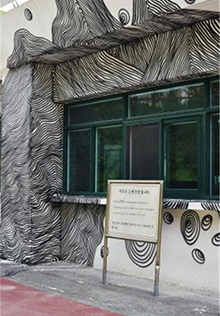
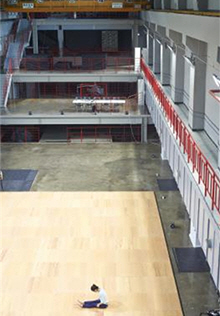
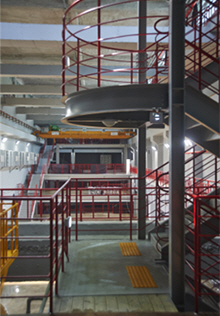
A: Things that Remember is mostly about my affection for space. Stories live within space. To help people see and feel the these stories as we [the NONI team] see and feel them, we have to expand that domain using tools like sound, light, and objects; we need the tools to give us direction. In a city like Seoul where space is dominated by uniformly and newly built skyscrapers, encountering space that harbors captivating energy is a rare event. Coming across places such as the Culture Station Seoul 284 (old Seoul Station), where we performed Things that Remember last year, or the Seoul Street Arts Creation Center (old Guui Intake Station) were both extremely lucky and exciting occurrences. We spent as much time observing the space as we could for these works. The vital point would be how the audience feels about the space, but this will be meaningful for everyone who is involved in the creation process. At the Seoul Street Arts Creation Center we performed TEMPest in 2013. Some of the parkour performers back then are joining us for Things that Remember, and I am excited to see what kind of influence the experience from TEMPest from 2013 will have on Things that Remember in 2015, or how they will be expressed this time. These spaces have been modified significantly by construction work, and the performers have also gone through changes and growth since.
Q. The material aspect of your work seems to have begun to carry some significance, especially since TEMPest.
A: As I work with the basic elements of stage art, I am familiar with the materials and I am drawn to them. I have long been charmed by the potential of dolls and objects. Up to MonKey D’dance, which we staged just before TEMPest, we tried to understand what our performers were best at, and those elements became the pillars of the production. From TEMPest, our focus shifted to the internal features of individuals. But since our first work, Kkok-Du, the recurring theme has been rituals related to death or exorcism. Death somehow makes humans return to being materials. All living beings will eventually meet their end, and at the same time they are also materials. MonKey D’dance expressed the kinetic aspect of these materials, while TEMPest was the starting point where we wanted to realize the kinetic aspect of materials through body and daily objects, drawn from the stories that arise from the relationship of space and substances. We are still working on exploring the relationship between life and death through the kinetic.
|
|
|
|
| The exterior of the Seoul Street Arts Creation Center (old Guui Intake Station) ©Studio Jokwang |
The interior of the Seoul Street Arts Creation Center (old Guui Intake Station) ©Studio Jokwang |
The interior of the Seoul Street Arts Creation Center (old Guui Intake Station) ©Studio Jokwang |
Do as You Like; Think Outside the Box
Q. NONI applies its vision to both the interior and exterior of a theater, whether it’s an outdoor festival venue or just the space outside of theater.
A: As a stage artist, the interior has boundaries, but at the same time it is a comfortable space because it is equipped with everything we need. Put simply, we go outside seeking something more entertaining and adventurous. We paint stories on a blank canvas when we perform in a theater, while the outdoor is a place with accumulated stories that is also filled with delightful things to discover. This is directly linked to the most crucial principle of NONI’s work, which is the artistic side, or our visual language. Audiences are the main reason why we perform outside, mainly because an audience located in the interior and exterior of the theater will differ in many respects. The two different spaces make us think about how we should approach a performance, which in turn can determine how the final piece will be performed. NONI does not like to adhere to a single genre, but viewers tend to like to categorize us. In fact, works staged outside of a theater are mostly held in public spaces, which are restricted by things like prejudice and limitations. Such restrictions impede the artist’s communication and ability to explain how their piece works with the related personnel of these public spaces. Outdoor theater, however, is not simply moving the interior to the exterior; it is about unchaining oneself from everything we originally thought was important Outdoor performances are increasingly being adopted by artists and are bringing about gradual changes in how the audience thinks about theater.
Q. What are your plans for the future?
A: We are showcasing STATION in France next spring, and we would like to be able to perform in a greater number of countries, including Korea, by next autumn. Our work is not about repetitive rehearsals in a predictable environment. We are a little different—we continue to transform in line with our thoughts and surroundings. My hope is to receive support that fits in with this particular aspect of our character. We dreamt of creating something entertaining in the early stages of NONI, and I hope that this continues into the future.
©Oem Hyun-hee
|
2015 PAMS Choice Selection : Memory of Space: Things that Remember Objects shelter stories by compressing the memories of space. Audiences search for objects by looking at a map and exploring space while seeing or hearing the stories of objects. When it is time, a giant machine starts to move as if a train has whistled or a clock has moved, and objects begin to wake up. The dispersed bodies come together to connect the dots in the space, which makes the entire experience a thing of the present rather than of the past. 2015 PAMS Choice Selection (Group) : Creative Group NONI Creative Group NONI consists of artists from different fields. Originally assembling in 2006, NONI’s works span twelve performance repertoires that can be classified into three units—traditional performance, and art—while cutting across a range of genres. Each performance includes varied activities that are carried out in concert with one another, helping each individual member to unleash their potential in their respective field. Small-scale research and creativity are experimented with and expanded in a multitude of forms to create the foundation of the group’s creative process. They have performed various works that include STATION; Things that Remember; It(Kinetic Theater); KkokDoGut; The TEMPest; Play of Tiger+Monkey; MonKey D’dance; Chaotic Twins; Playing Wind; Ignis fatuus Rin; and Kkok-Du. |
 PREV
PREV
.JPG)
.jpg)
.jpg)
.jpg)
.jpg)












.jpg','It takes a lot of determination to always be creat..');)


