





[People] Goblin Party, work in progress
[PAMS Choice] Goblin Party
Always striving for improvement, the young goblins of Goblin Party—selected for this year’s incarnations of Performing Arts Market Seoul’s PAMS Choice, the K-Arts Tour Program, and the Seoul Performing Arts Festival in succession—are preparing for greatness. KAMS was able to meet up with the leaders of the Goblin Party, who are preparing for the October 2015 Goblin Party, and found them to be bursting with “humanity.”
Choreographers That Consider Themselves Goblins
Q (Lee Yeong-chan): I’d like to sincerely congratulate you on being selected for PAMS Choice. Before we begin, could you please introduce yourselves as a group? The name of your team, Goblin Party, is amusing and leaves quite an impression.A (Goblin Party) : We are Lim Jin-ho and Ji Kyeong-min of Goblin Party. Goblin Party is a dance group that consists of five members: two other members that appear in “Soul Piercing” with us, and another friend based in Busan. It has been a while since the current members began to work together as a team, but we started using the name Goblin Party in 2012. When we were choosing our name, we didn’t simply want to follow the formula of having the choreographer’s name plus “Dance Troupe” or “Dance Company.” We wanted a team name that wouldn’t turn up in any search results. First, we came up with the word goblin, and then we added the word party, but used it in the sense that it’s used in “political party,” to mean organization. Sometimes Korean speakers will understand our name to mean “Monster Banquet” in Korean. We did think of that meaning of party too, and appreciate it, but the sense of it being a political organization is our intention. Things have been working out since we chose this name, so it seems we’ve picked the right one. From “Human’s Empire” and “Landing Error” to “I GO” and “Soul Piercing,” we’ve received positive evaluations from many people.
Q : You’ve been selected not just for PAMS Choice but also the K-Arts Tour Program, a tour of countries with Korean culture centers, as well as the concurrently running Seoul Performing Arts Festival. I’m guessing you feel pretty extraordinary. Could you please describe how you’re feeling about it?
A: To be honest, we feel a lot of pressure, and some fear. But at the same time we also believe that this is an opportunity for Goblin Party to grow, so we’re looking forward to that. We’ve received plenty of invitations to perform abroad in the past, but because we always had to take care of the airfare and other costs ourselves, the opportunities would sometimes fall through. Now it feels as though we can afford to worry less about those things as we move forward. When we first heard that we’d been selected for PAMS Choice, we were overjoyed; we felt like we’d been given wings. Although there is a lot of pressure, there are that many more opportunities to show the world our pieces. We’ll be working hard to ensure that we live up to expectations.
|
|
|
| <Soul Piercing> ©Goblin Party | <I GO> ©Goblin Party |
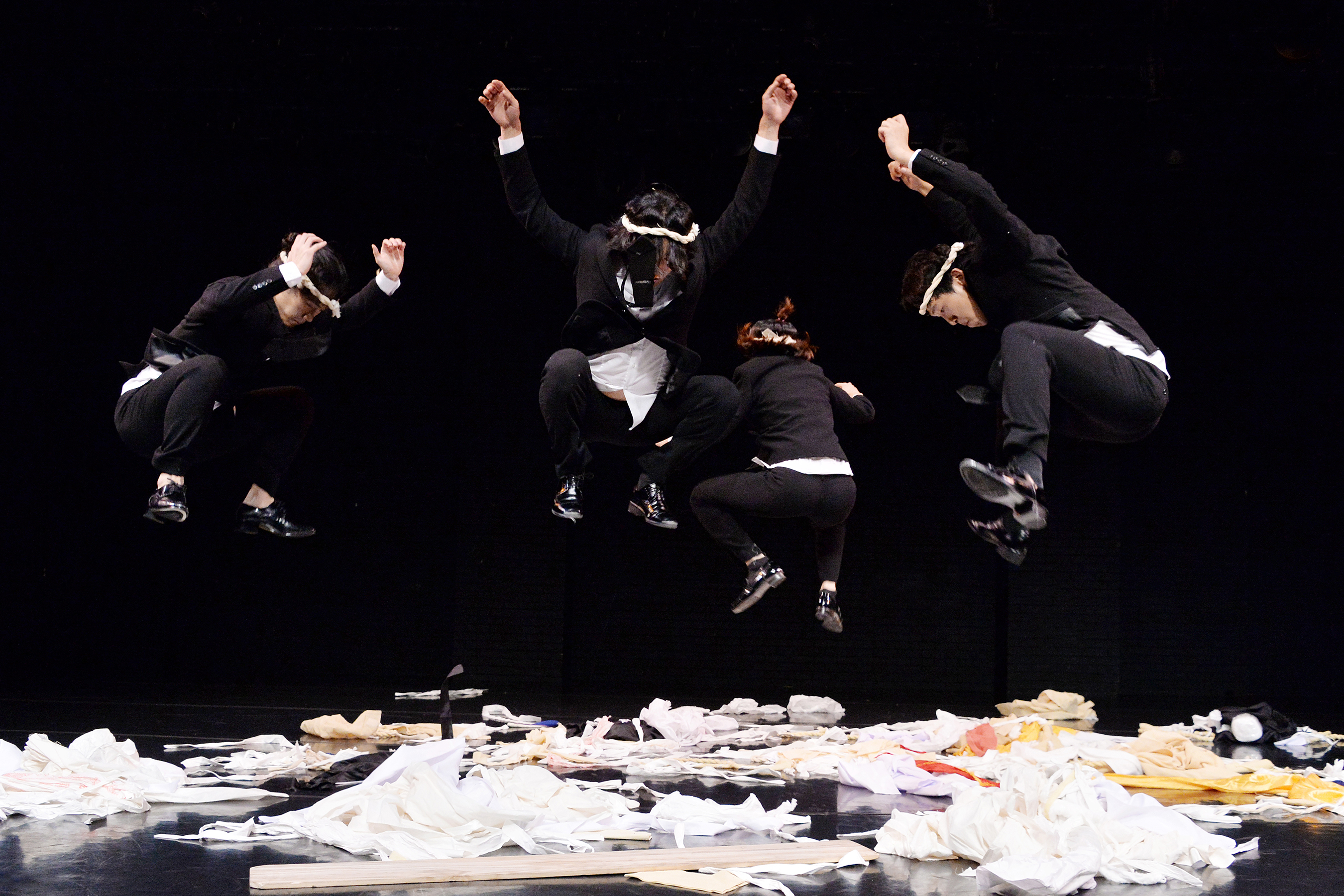
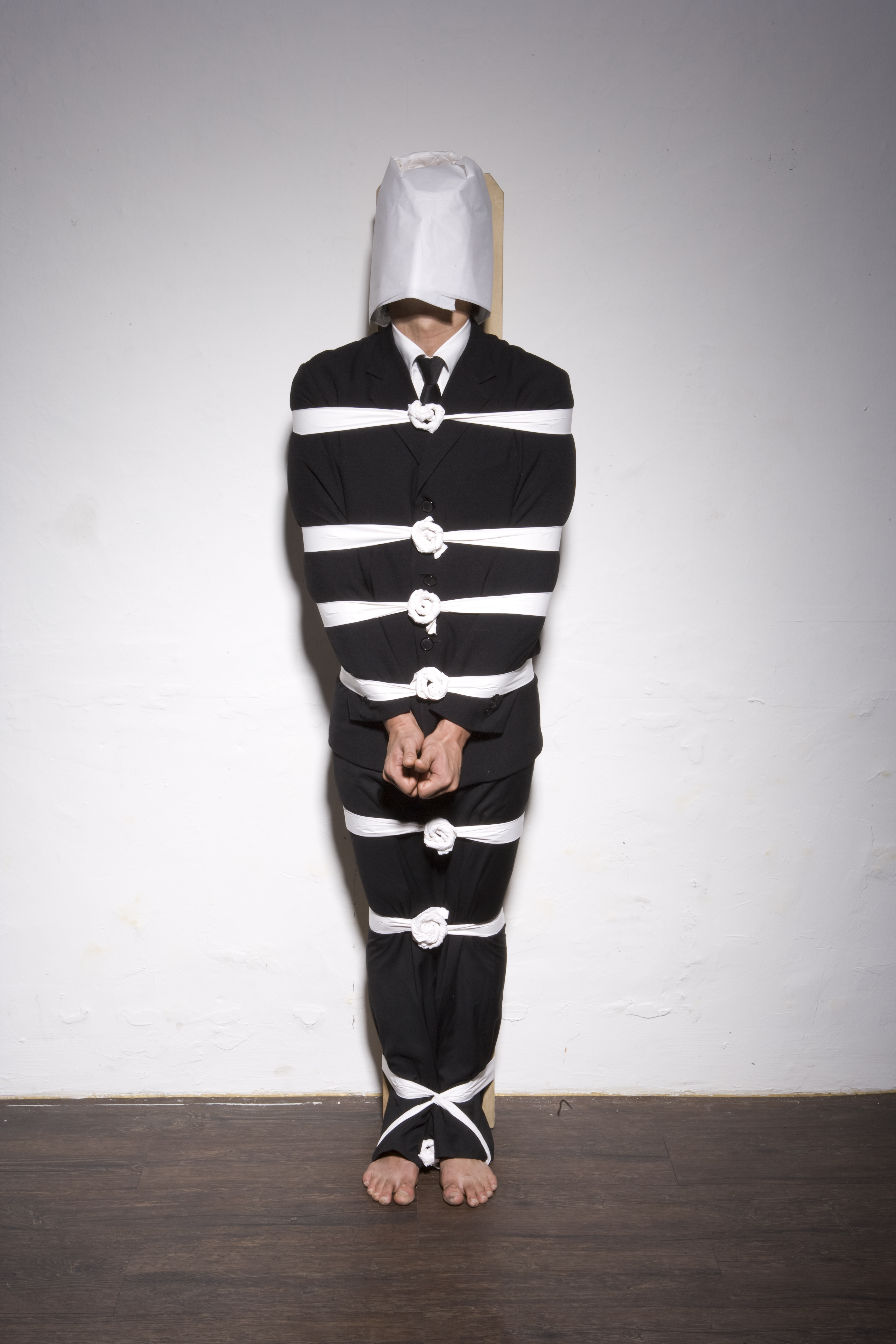
The Story the Dead Did Not Get to Tell
Q : I’d like to ask about “Soul Piercing.” How did you come to create such a piece?A: Our family business is running a funeral hall. Because of this, I’ve seen many funeral ceremonies since I was young, and when I was in grad school I practiced for performances and worked as a funeral director to pay for my tuition. Working as a funeral director, I met a variety of deceased people. I would wash the bodies of those who died of old age, and after shrouding them for burial, send them off with my best wishes. But it was difficult sending off those who had died through suicide, or because of an accident. It wasn’t because it was repulsive or horrible; it was because, as I washed their bodies, I felt that they still had stories to tell the world. I could feel it in their bodies and I felt sad for them. “Soul Piercing” is a piece that attempts to tell the stories that the deceased were not able to finish.
Q: And, of course, it’s inevitable that I bring up “I GO,” the piece that preceded “Soul Piercing.” How do the two pieces differ? It almost seems as though the two could be tied together in a single performance—if that happened, which piece would you want to show first?
A: First, we choreographed “Soul Piercing” through the “Tradition Reinvented” program at the Korea National Contemporary Dance Company. We seasoned “I GO” with the hues of Korean tradition, and developed the idea further to get “Soul Piercing.” This is why we use a lot of props related to the traditional funeral, and teuroteu music. Both “I GO” and “Soul Piercing” use death as their subject matter, but if “Soul Piercing” is about the deaths of those who died regrettably and without telling their stories to the world, then “I GO” is the opposite: It’s about those who left the world naturally. Death in that piece is like a dream. As a creator, I had a lot of regrets about “I GO,” but I was able to address these regrets through “Soul Piercing.” I was grateful for the opportunity.
It might seem as though the natural order of the performance would be to follow the progression of our thoughts, and how we thought about death. But it feels to me that “Soul Piercing” should come first, followed by “I GO.” There’s an underlying melancholy in the folksy feeling and morbid hues of “Soul Piercing.” Because of this, we attempted to be more cheerful in our execution, and the overall piece is not too heavy. On the other hand, “I GO” begins light but is heavy overall—there’s a bleakness to it. If I were to organize a performance around the theme of death, then that bleakness, I feel, would be a good place to end.
Q: When watching"Soul Piercing,"the expressions and the acting, such as the monologues, stand out in particular. And not just that—the structure of the piece itself is also reminiscent of a play. Is this dance theater? Please tell us a bit about your collaborations with artists from genres outside dance.
A: The structure is fractured and it’s hard to get a grasp of the flow, but it is definitely a piece that was created after visualizing dance theater. We didn’t pay special attention to the acting; I presume that happened naturally as we each tried to do our best in expressing ourselves in an entertaining way.
We strive for free and open creation, and we’re a team that tries to work together. Although on paper we have different roles, when we choreograph we all share our thoughts freely, and all of our opinions are reflected in the piece. If we all feel that incorporation of non-dance genres is something we want to do, it’s definitely not out of the realm of possibility.
Q: How do you plan to show “Soul Piercing” to overseas presenters at this year’s Performing Arts Market Seoul? The narration in the first half of the performance is in Korean, and there’s also a monologue from Ji Kyeong-min.
A: Because the total run time of “Soul Piercing” is 40 minutes, there’s no problem with having the piece itself serve as the showcase. We do need to consider how we can best take advantage of the structure of the theater, something we plan give more thought to before the performance. The narration in the first half is not a recording; it’s part of a song from singer Kim Do-hyang, so there’s no way to record it again in English. We plan to use the song as it is. Regarding the question of whether we’ll install a screen onstage to project subtitles, I’m against it because the screen will distract from the stage. We’re leaning toward distributing guides before the performance so that viewers can familiarize themselves with the content beforehand and enjoy the performance.
|
|
|
|
| Ji Gyeong-min | Goblin Party | Lim Jin-ho |
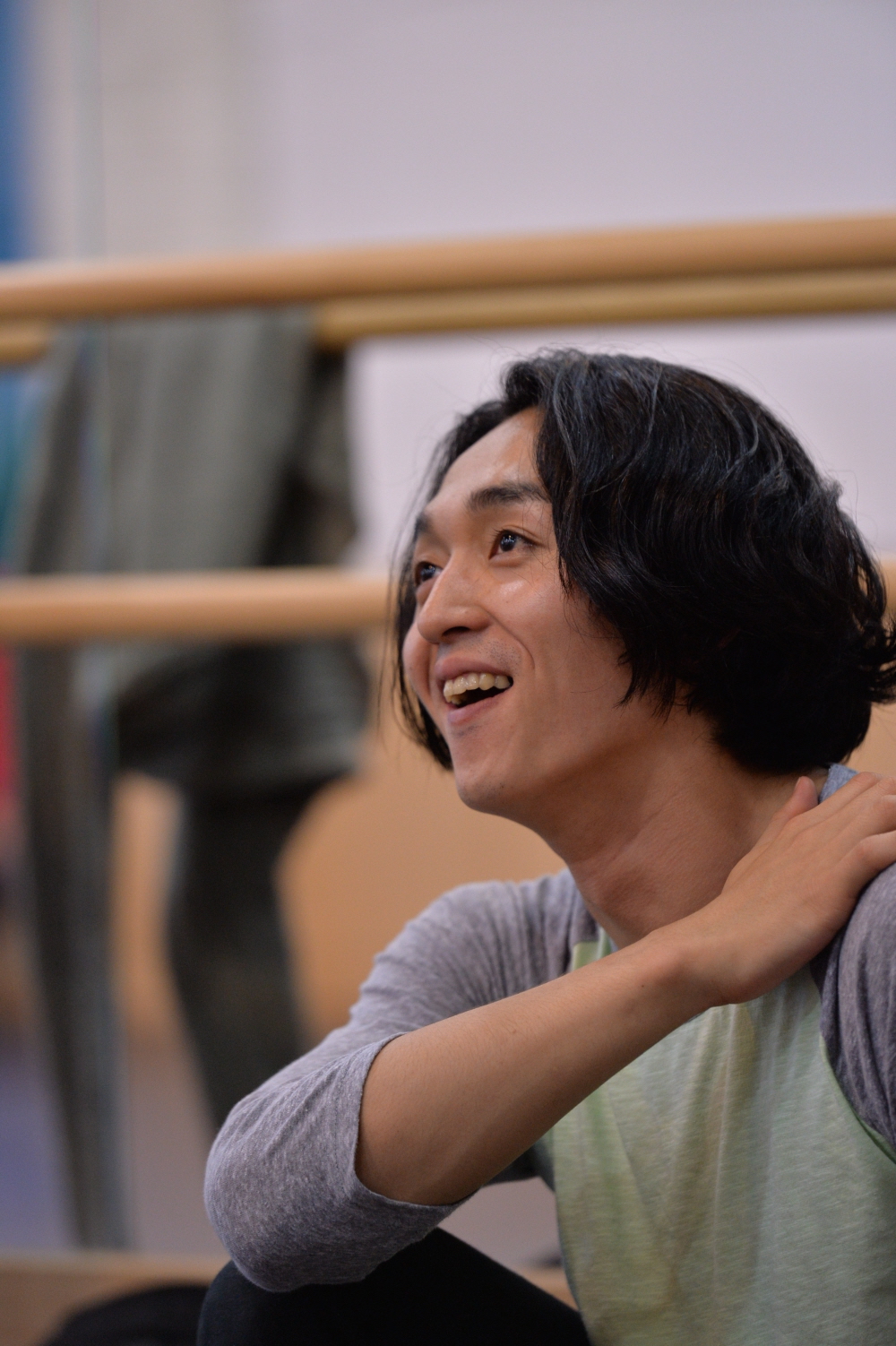
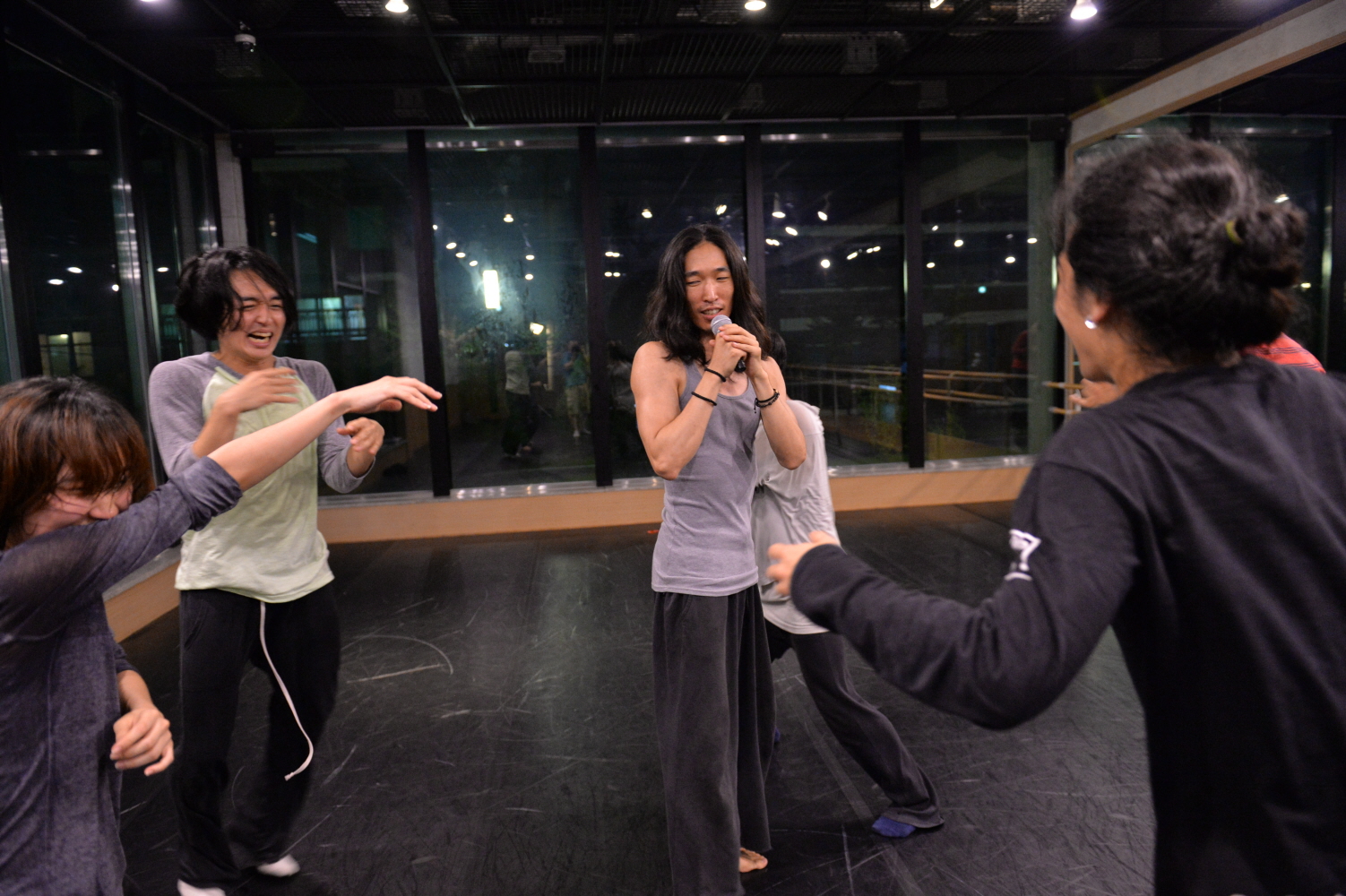
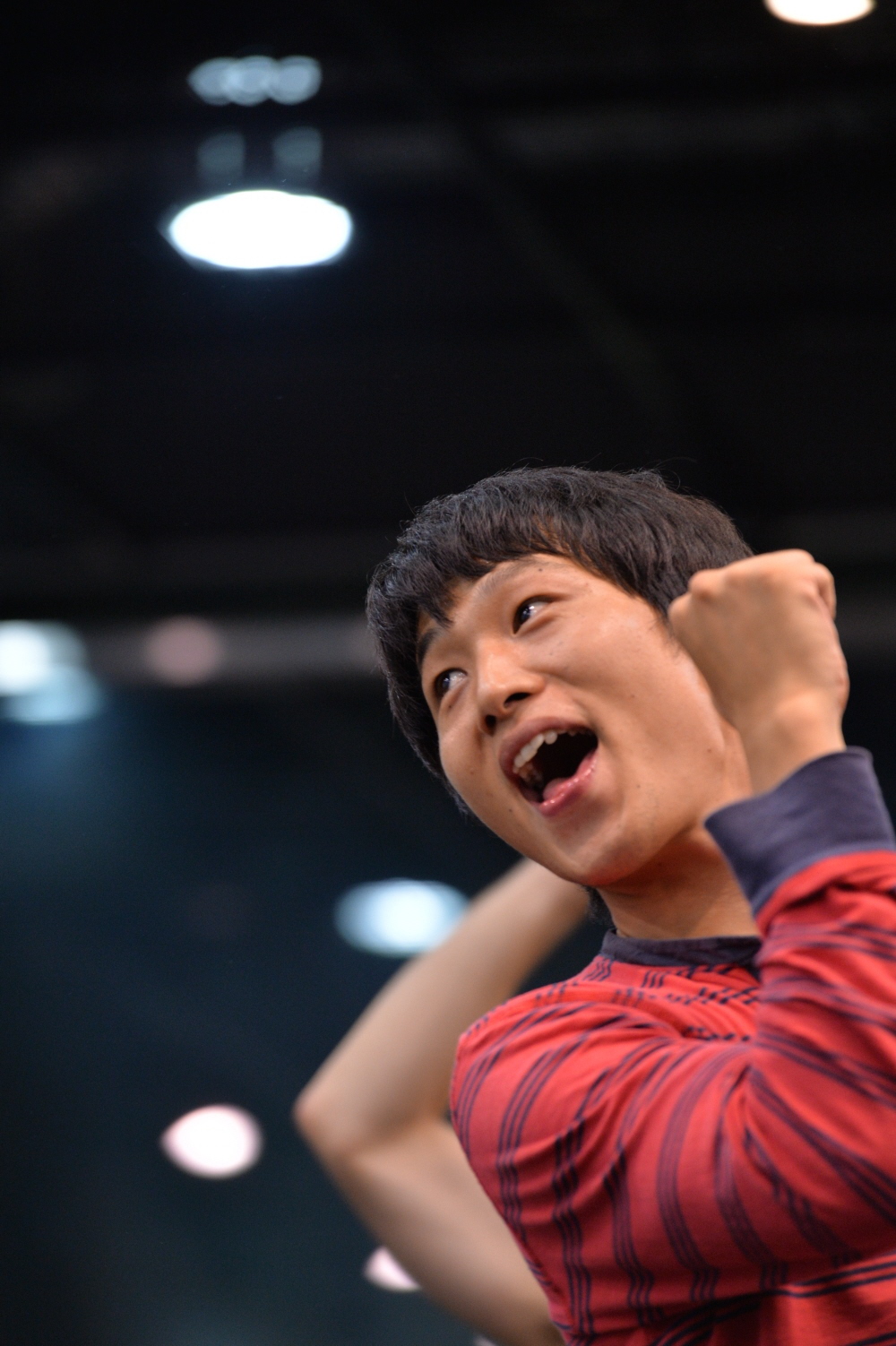
Q: What is the most fulfilling moment you’ve experienced while performing?
A: It feels great when we perform in Korea, in the regions outside of Seoul, and children come to us after the performance and ask us questions and take photos. Of course, it’s also great performing in big cities abroad, but we feel like we’d get a lot of satisfaction from performing in smaller cities too, helping run concurrent educational programs that might have a positive effect on the local community.
Q: What are your plans for the future? Any last words about Goblin Party?
A: After a tour of three cities in Spain in July with “Landing Error,” we’ll be performing at the Changmu International Dance Festival in July and August. In September we perform for the Korea National Contemporary Dance Company, and in October we have stages at the Performing Arts Market Seoul and the Seoul Performing Arts Festival.
Goblin Party is still a “work in progress.” We ourselves can recognize the flaws in our work, but we think the bigger problem is to recognize room for improvement and to not do anything about it. From the perspective of a choreographer, if the dancers change with every performance, it’s difficult to improve the piece itself because the new dancers must practice anew for the performance. But, luckily, our members both create the piece and dance it onstage together, so when we prepare for a performance, we don’t simply focus on practicing; we can also allow for time for creation, to develop the piece in a better direction. We change the piece so that it can become better while retaining its essence. Because of this, although it’s easier to speak with certainty about things that have already happened, we’re careful with any statements about future works because we’re always capable of evolving further. When we stand in front of our audience, we can feel ourselves grow. We hope that the stage at the Performing Arts Market Seoul this year will prove to be yet another chance for us to grow.
©Goblin Party
|
2015 PAMS Choice : Soul Piercing Goblin Party |
 PREV
PREV
.JPG)
.jpg)
.jpg)
.jpg)
.jpg)












.jpg','Always striving for improvement, the young goblins..');)


