





The Curators of Our Generation: Bridging the Gap Between Artist and Audience
[People] Philip Bither, Senior Curator of Performing Arts of Walker Art Center
We all know the Walker Art Center, in Minneapolis, Minnesota, as an art museum. However, it’s also known for its revolutionary performance arts program, making it a stronghold in the contemporary arts scene. We got to sit down with head of the program, Philip Bither, whose job requires him to weave between a plethora of genres, including contemporary dance, experimental theater, new jazz, avant garde folk, alternative classical and more.
Q(Gu Hyo-jin): The official department for performing arts at the Walker Art Center came to be in the ‘70s, which was 30 years after the center’s inauguration. Can you tell us a little about the background and context?
A(Philip Bither): I can give you a little history of how the program developed at the Walker Art Center. We are now celebrating 75 years as a multidisciplinary center, so it was quite long time ago that the director decided that we should be a center for more than just visual arts, but for concerts, education, and so on. But it was not until the 1960s that we actively presented work that had a particularly contemporary perspective. That came out of a group of volunteers who were knowledgeable in the community. Some were professors, some were artists, and some were wealthy donors—they just had a passion for jazz, poetry, and dance. They would recommend things, they would help build proper things that they thought should happen in Minneapolis through the Walker Art Center. They were all attached in some way to the Walker, and that evolved into a professional being hired to coordinate the program. Being ambitious and passionate, she raised a lot of money and built a program that would bring artists to Minnesota who were at the forefront of progressive and avant-garde actions in live theater, dance, and music too.
At the same time, we began an opera program, which was dedicated to connecting contemporary visual artists with opera design and staging. In many ways, that was very much part of the ‘60s movement of trying to find new ways to connect visual art to opera and performing arts. That ended up spinning off and becoming what is now the Minnesota Opera. So the Walker also played an active role in seeding a lot of other cultural activities all over our city.
|
|
|
| Walker Art CenterⓒWalker Art Center Website |
William and Nadine McGuire TheaterⓒWalker Art Center Website |
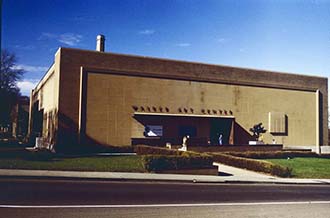
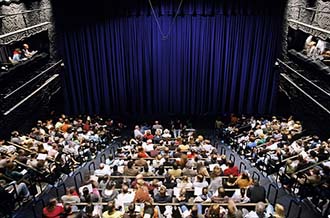
It was from the mid-‘60s on that some of the great artists of our time, particularly American artists such as Philip Glass, Robert Wilson, Lee Breuer, Merce Cunningham, (dance group) Grand Union, Steve Paxton, and Trisha Brown, all came to the Walker and established a very high standard. The Walker was not only inviting artists that had been already well received and recognized, but actually committed to young artists at early points in their careers. This led to great loyalty by those artists: As they became more famous internationally and continued to innovate their work, they would often come back to the Walker because we felt their works were still interesting and innovating and they felt loyalty to the Walker. Because we are mid-sized American city, we felt we had a true obligation to the audiences of the Midwest and to the general public, so we worked very hard from 1970s on to nurture and develop a home ground for creative artistic community—contemporary dance, experimental music, and new forms of theater. Whenever we could, we would find ways to develop that locally, even when the bulk of our work was inviting artists from different parts of the world to Minneapolis.
I would say that, after we established this program officially in 1970, each decade we saw several other organizations in the U.S. create similar models that were the combination of visual arts, performing arts, and media arts: the Wexner Center for the Arts, the Museum of Contemporary Art Chicago, the Institute of Contemporary Art, Boston, and many others. There are now about 12 organizations in the country. Many of us, the curators in the performing arts, currently work together on supporting or finding another project that we find interesting. I came to the Walker in 1997. I felt that I inherited a program that I had a great belief in and really respected its history, so I wanted to create a place that was very open to combining ideas and approaches to work from different disciplinary orientations. We were not just booking the shows but invested in artists by having them in residence and co-commissioning.
Q : What was the spark to led you to be a curator in the performing arts?
A : I was thinking about your question about the origins of the Walker performing arts program, and I think it’s interesting. It was a group of volunteers who did it out of passion and for the love of it, because now it has become an industry and professional mechanism. That’s why for me, personally, I was driven my work in the arts. I came as a lover of music and then contemporary dance; I did not train intensively or academically around the arts and learned kind of on the job. I started a jazz festival in college where I studied journalism and wrote criticism about art, and I moved to New York to join BAM’s Nextwave Festival. I was there at an early stage when we were trying to decide what to do with this festival. With Joseph Melillo, the current producing director, I helped formulate what the Next Wave should be. The president of BAM at that time had a vision that we should be a home for all great American artists who were innovators working in the avant-garde, (and) who had to go to Europe to be supported for their work and then increasingly be a home for international artists that were doing radical and interesting work. That was my training as well, because I knew music the best. I became the music curator and the associate director of Next Wave for the first eight years of the festival.
Later, I moved on to Vermont to join the Flynn Center. I wanted to see if my ideas around contemporary art and expression could work in a smaller city and connect with audiences in an authentic way. What was good about my years in Vermont was it really made me feel like I had to understand what works for an audience who did not have daily exposure to the avant-garde. How do we take the passion of the most forward-thinking artists? How do we make it actually connect with the people who are everyday people? It was about the introduction of ideas. Now at the Walker, I have been running the performing arts program and I am very committed to investing in the creation of new work, being a partner with the artists, and helping enable them to make better work and to take chances both in the contents of the work as well as the formal questions that they are looking at and shaping their work. We also have a very strong commitment to the global esthetic: who are working with in interesting way—not just in Europe but also in Asia, Africa and Latin America? For this, I try to travel a couple of times each year outside of just Europe and New York.
|
|
|
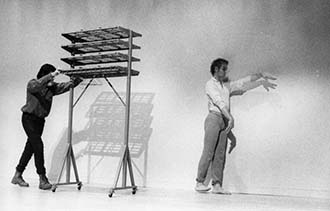
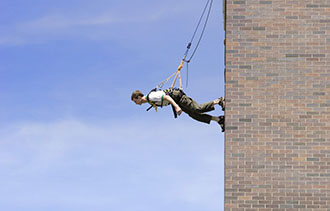
| Merce Cunningham and John Cage performing <Dialogues>ⓒWalker Art Center Archives | Trisha Brown’s <Man Walking Down the Side of a Building at the Walker>ⓒGene Pittman |
Contemporary art: It is about people who constantly think how to destabilize their practice and how to push oneself into a brand new, maybe a failure, but a new situation.
Q : How do you define contemporary arts?
A :Well, that’s really a pertinent question because I think we are now used to defining everything and nothing. I specifically define contemporary work as what is relevant to our times and what is looking to the future around where both art forms are going and where this society is going as a global place. That’s a very general definition, but I think it’s really about people attempting to work in new ways, but at the same time making work that feels like the current time.
We are careful about maintaining a balance between what we consider master artist, mid-career artist, and then new voices and people that we have not yet presented or maybe have never even been to America yet. How we determine curatorially whether to stay with an artist or to move on is based on how we feel—how inventive, adventurous, and risk-taking their work continues to be within their own practice. Artists are really challenging themselves even when they become famous and established. I could point to artists like Merce Cunningham and Trisha Brown as real examples of people who constantly think about how to destabilize their practice and how to push oneself into a brand new—maybe a failure—but a new situation.
Q : From this definition, I thought we could define which relations need to be maintained with artists and audiences, and how to persuade the audience of what we are doing.
A : I do think too often that, in the visual arts world, the notions of the impact that contemporary arts can have on our society at large is not as fully appreciated because it’s such a refined and scholarly approach to the curation of visual arts exhibitions and work in general. Sometimes it feels to me that art is being programmed and the exhibitions are being made just for other curators, scholars, or museums to see, which is important, but I know what drives me personally: It is that (type of art) when it’s very contemporary and at the same time can actually be read and have impact on people who don’t necessarily live in the art world solely. So the only way that one can do that is by providing mechanisms for context and develop ways that artists and general public meet one another, and ideas can be framed in a way that makes some sense—some that certainly have to do with the history of forms. So we do spend a lot of time at the Walker offering programs for the general public about where this contemporary dance comes from and what this work is about.
One of the things that I love and am proud of is, if you go to the media tab on the Walker website, we have something called Walker Channel. Whenever we commission a work, I or one of my staff have long conversation with artists and try to make it not so heady that people would not understand what they are talking about. Rather, we try to talk with artists about where the ideas came from, what they are trying to achieve from the work, and the moment and time. It has an archival purpose, but it also serves as a media contextual tool so the audience can listen to an artist.
One of the platforms that we also developed is called SpeakEasy, which is like a book club format. After the show, we open our bar and host a circle conversation. The artist is not invited to come, even though some of them want to be there to listen. We found that in traditional question and answers after performances, which we do as well, people are too intimidated around contemporary and avant-garde artists to ask. In SpeakEasy, people are very open with one another. They hear one another’s ideas about what they saw in the work. Especially with abstract works, it’s so helpful. They live with a whole different appreciation because they hear others’ perspectives on it and what they read of it.
|
|
|
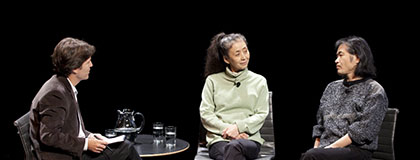
| 75 YEARS OF WALKER COLLETIONSⓒWalker Art Center Website | Bither (left) with artist duo Eiko & Koma (right)ⓒAndy Underwood-Bultmann |
It’s important for curators to be present in front of the public so that people feel like there’s a real person, not just a big faceless institution.
Q : I was quite interested in the Walker’s curators’ meeting, which is open to public. Could you please tell me more about it?
A : That was little unusual, I would say. We really value the partnership with organizations small or large, many grassroots and community organizations. We try to work with people with a great level of respect. We respect their knowledge, not just about their communities but also about arts and culture. So we try to have certain level of humility, otherwise I think we will be viewed strictly as the elite academic knowledgeable people that people don’t feel any connection with. That’s the background of how the idea of open curating table came out.
I try to be open to a public. I do the season presentation at the start of each year and tell stories about each of the artists that I am excited about and why I think this particular project will be interesting. We have 200 people come out to hear me talk about the season, then I open it up for questions. That is really responsible. It’s important for curators to be present in front of the public so that people feel like there’s a real person, not just a big faceless institution.
Some of the most interesting works come out of artists doing things that seem very implausible and potentially ridiculous.
Q : What inspires you in your work?
A : My favorite part of my job is the direct involvement with the artists themselves, and that’s why I avoided taking a directorship position. I deeply converse with the artists about why they made the work the way they made it, what drives them and so on. Then I help provide resources that I can extend from mediums of other curators within the Walker, such as use of our archives and video equipment that they need for their work.
Q : How do you define your role in relation to them?
A : I am very careful not to try to personally shape an artist’s work. This is a big debate in America: how much responsibility should we take in being dramaturges or directors. In the world of contemporary performance, it’s very important to allow artists to make the work that they feel they need to make. I think some of the most interesting works have come out of artists doing things that seem very implausible and potentially ridiculous. But of course, if they ask me and if it seems like they are lost, I try to make myself very available to be seated in rehearsals, give my perspectives, and give feedback after a show. Nevertheless, I try not to face unintentional consequences that will send the artists into a more conventional direction, and not to over-insert my perspectives. I also do like dealing with general public, explaining artistic work to people and hearing them. Hopefully it’s a genuine sense of curiosity both with the artists and with the public, which is what I feel I can bring to my work.
Q : It sounds like all we need first is trust. Curators put trust in artists, artists put trust in curators, the public puts trust in curators.
A : Yes, I think the reason I decided to go to the Walker was partly because so many artists told me that it’s their favorite place to go. They trust my vision; they really believe in what I am doing.
We look to the artists who lead the way.
Q : What are you looking forward to in the future?
A : We are set up in departments, but are increasingly evolving from a multidisciplinary into a much more interdisciplinary organization. Following the leads of artists, who are really central to the Walker Art Center, we look to the artists who lead the way. Artists have started to emerge based on the way that they work, and within the disciplines they no longer define themselves as just a visual artist or dancer. We have taken that as a sign for us to work more as a team curatorially, to collaborate together and to bring visual artists and performing artists together in new ways, while maintaining the expertise that individual curators have developed within those different disciplines.
I am also interested in having new interfaces with artists and the public. Artists are reinventing space and changing the modes of expression that they are working in. Despite the fact that we have a big building and new beautiful theatre, I am interested in supporting artists to upend notions of architecture so that they don’t see my institution as a hinderer where they have to make work that fits in. I think lot of artists are questioning, do institutions matter anymore? Do arts organizations really help or hinder their work? Now people can create work for the Internet and work on a small and intimate scale. Artists have the ability to make work without organizations, but I do still feel that institutions, if they are driven by the right mission, can play a central role in the lives of artists. For this, it has to be recognized that life and the sustainability of the institution is not the primary goal. Sometimes institutions become really driven by their own existence and by gaining a great deal of ego and self-importance. I try to keep in mind that we do have a lot of power, but that power has to be recognized—that we have it and it has to be distributed fairly and with great humility.
|
|
|
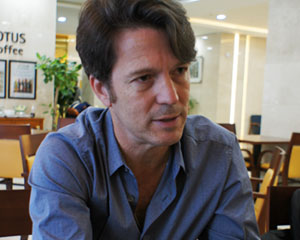
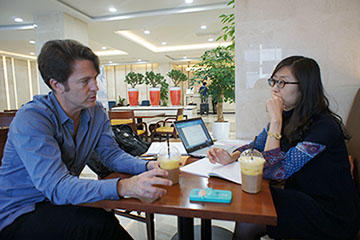
ⓒWalker Art Center Website
The Walker Art Center is a catalyst for the creative expression of artists and the active engagement of audiences. Focusing on the visual, performing, and media arts of our time, the Walker takes a global, multidisciplinary, and diverse approach to the creation, presentation, interpretation, collection, and preservation of art. Walker programs examine the questions that shape and inspire us as individuals, cultures, and communities.
Philip Bither
Philip Bither has been the Walker Art Center’s Senior Curator of Performing Arts since April 1997, overseeing one of the country’s leading contemporary performing arts programs. He has overseen helped lead significant expansion of the Performing Arts program, including the building of the McGuire Theater, an acclaimed new theatrical space within the Walker expansion (2005);, the raising of the program’s first commissioning/programming endowment;, the commissioning of more than 100 new works in dance, music, and performance;, and the annual presentation/residency support of dozens of contemporary performing arts creators, both established and emerging. Presenting and commissioning innovative performances since 1940, the Performing Arts program offers a season that spans contemporary dance, experimental theater, new jazz, avant-folk, new global, and alt-classical music, and the multiple hybrids of forms in between.
 PREV
PREV
.JPG)
.jpg)
.jpg)
.jpg)
.jpg)












.jpg','We all know the Walker Art Center, in Minneapolis,..');)


