





Communicating with the World through Pansori : 〈Pansori Hamlet Project〉
[PAMS Choice] Korean Musical Group TAROO
Works created by Korean Musical Group TAROO are young and vibrant. A group that has made various attempts to dismantle people’s prejudice against traditional Korean music is challenging Shakespeare this time. In TAROO’s
TAROO’s Work is in Progress
Q(Park Byung-sung): The Korean Musical Group TAROO was established in 2001. Was there a catalyst that triggered the group to be formed?
Jeong Jong-im(henceforth Jeong) : TAROO was first conceived as a type of club among young pansori sorikkun(narrative singer), players of traditional Korean instruments, and producers and organizers of traditional performances. Many young people think of pansori as obsolete or un-chic, but when they actually engage with a performance, they find it enormously entertaining. It’s the kind of music that people can enjoy once they discard their prejudices and embrace it as it is. I wanted to let people know the joy of pansori and draw them in to enjoy it together. We’ve created performances through collective creation and gradually developed into a professional performance group in2006, when we performed 〈PANSORY, Eats the Applegreen〉 for three weeks. Nowadays, we are no longer limited to the genre of pansori musical alone, buthave grown into an organization that creates diverse content based on pansori, which ranges from educational programs and concerts to children’s pansori musicals.
Q : When I look at works done by TAROO, I can see your efforts to communicate with young people. What would you say are the characteristics that are unique to TAROO’s works?
Jeong : So far, we’ve been focusing on expressing modern materials through pansori. Once, we created works using the myths of Jejudo Island as the material, and later we dealt with the story of Jin Chae-seon, the first female to be the master singer of pansori in Joseon Dynasty. In the Pansori Hamlet Project, we are using one of Shakespeare’s works as material. The common denominator in our—TAROO’s— projects is that we use pansori as a means of shaping the stories. We have studied different languages as a way to express pansori effectively, and developed forms of accompaniment that can existin harmony withpansori. We don’t just stick to using drum accompaniment alone, but have also attemptedtointegrate Western instruments in with Korean instruments. We’ve tried diverse things using pansori, but I think it’s still too early to give a clear-cut definition of what characterizes TAROO. I think we’re at a stage of searching and finding out what we are.
|
|
|
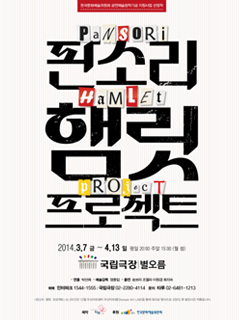
| 〈Pansori Hamlet Project〉 performance Poster | Korean Musical Group, TAROO |
Q : TAROO uses the catchphrase “Korean Musical Group” to describe itself. What is different about the musicals created by TAROO?
Jeong : In our musicals, people who majored in pansori songwriting, and sorikkun themselves, write the original pansori. Writing their own songs is very important to the performers, who are usually TAROO’s owns sorikkun. Each sorikkun has his or her own vocalization technique and different way of expression, thus allowing each of them discover the voice and song that best fits him or her. There is a huge difference between learning the singing techniques and songs that were practiced and written by others as a pupil and wrestling to answer the questions of why they are singing and how they would sing the song themselves.
Park Seon-hee(henceforth Park) : I would say that collective creation is the most important defining characteristic of TAROO. As the members are sorikkun themselves, it is inevitably up to them to find their own voice and technique.
Q : What characterizes the collective creation of TAROO?
Jeong : Once the script is done, we work collectively to decide what narrative songs and lyrics we should write in the pansori part. Synergy is created when we work on pansoricollectively. As each sorikkun has different vocalization technique, collective work is difficult, but we have learned the process of collective creation through our diverse experience.
Hamlet Created by TAROO
Q : TAROO expressed Hamlet through pansori. What sort of charm does TAROO’s interpretation possess?
Park : We understood the story of
Q : Four female sorikkun appear to play the part of Hamlet. How did you come up with such a unique format?
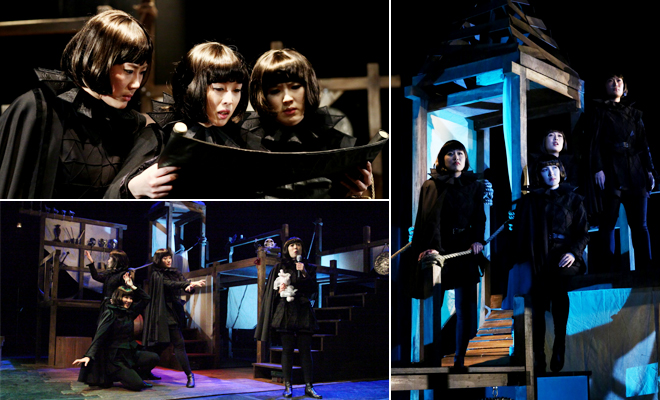
Park : The concept for the whole format is that Hamlet tells his own story; this overlaps with the structure of pansori. Even if one performer switched between first person, second person, and third person, in a pansori, it would n’t be awkward at all. This is a structure not found in Western drama. We could have gone with the monodrama format, but we thought that it could n’t sufficiently convey Hamlet’s anguish. We thought that Hamlet’s agony was the result of his split self, and thus adopting four characters and having the story take the form of chatter between them did the trick. We didn’t need any other characters; in pansori, sorikkun can play diverse characters, in between him or her doing the explanation through aniri(stylized narration). We were concerned that our audiences might not understand the format very well, but they did.
|
| |
| 〈Pansori Hamlet Project〉 on stage | |
Q : Although TAROO is said to be a performance group centralized around sorikkun, or narrative singers, in 〈Pansori Hamlet Project〉 the dramatic quality seems to emerge more prominently than the musicality. Why is this so?
Park : Our members think that the audience might not like their traditional pansori-style singing, so they try to perform in a lighter and merrier fashion than what they would do in a more typical pansori. I think it is a transitional period.
Jeong : Sorikkun tend to think that the voice and song that they prefer is different from that which the audience prefers. However, we are slowly and carefully changing our thoughts to the direction that if sorikkun could deliver a piece well, then the audience might also like the voice and song that the sorikkun like.
Q : The scene where Hamlet pushed Ophelia away seemed to convey the emotion that was age-appropriate and natural for the character.
Park : I believe that was one of the scenes in which TAROO’s strengths shine through. The language used in that scene sounds archaic, and at the same time crude. When we give the lines to the actors in our creative process, they write the songs that befit their style. They not only write the melodies but also adopt the language that is necessary for the songs. They participate in the creative process without forcing it. The director’s role in a TAROO performance is to let the sorikkun play freely. Not only that scene, but we also transformed the last scene where everybody dies into a 14-minute authentic pansori scene. In this case, the lyrics and melodies were also written by the sorikkun themselves.
Q : In the last part, you expressed the dramatic sense of Hamlet’s revenge only through thesori(narrative singing). That scene seemed to set TAROO’s Hamlet apart from other versions of the play. Could this be the foretelling of TAROO’s style for future works?
Jeong : In the future, we intend to try creating works that put the musicality at the forefront. We would like to actively experiment with the incorporation of pansori into different music genres; it would be fascinating to produce works in which jazz, flamenco, or fadovocals are interwoven with pansori vocals to create a drama. There were works that incorporated traditional music and pansori before, but they usually stopped at the musical level. TAROO’s work would combine pansori with other music genres to create drama.
|
|
|
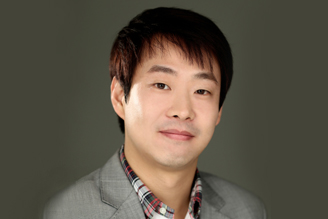
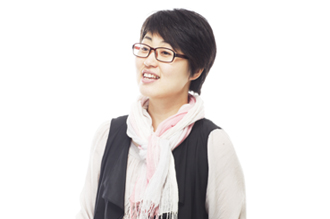
| Jeong Jong-im | Director, Park Seon-hee ⒸKim, Jongbum |
ⒸTAROO
|
2014 PAMS Choice 〈Pansori Hamlet Project〉 〈The Pansori Hamlet Project〉 sets four characters to play Hamlet’s four different personas to maximize his internal anguish. In this pansori project, Hamlet is allowed to tell his own story, one in which the young man’s tormented journey to find out the truth behind his father’s wrongful death and overcoming his internal agony is revealed in detail. Hamlet’s lengthy soliloquy is told as a dialogue between Hamlets; Ophelia’s lines are expressed in song; and the highlight of the story, the final dual between Hamlet and Laertes, is constructed as a pansori, which is conveyed in a vivid and thrilling fashion. The weight of Hamlet’s internal struggle in the classic drama is reflected faithfully, yet the gravity of the canon is lightened, so as to show that Hamlet is no different from any one of us. TAROO TAROO is a performing arts group that was established in 2001, which has created gugak musicals(Korean traditional musicals) that integrate diverse artistic genres while into Korean traditional music. Armed with youthful sensibility, contemporary approaches, and delightful wit, TAROO has been recognized for both its popularity and artistic quality by carrying on the legacy of traditional pansori, while producing bold and whimsical works that could speak to contemporary audiences. By recreating the Korean traditional music to fit today’s tastes and sensibilities, TAROO tries to make a name for itself as Korea’s representative performance brand that produces works with its unique touch. |
 PREV
PREV
.JPG)
.jpg)
.jpg)
.jpg)
.jpg)












.jpg','Works created by Korean Musical Group TAROO are yo..');)


