





The National Gugak Theater and Its Reincarnation of Hong Dae-yong
[People] Kim Hae-suk_Director General, the National Gugak Center
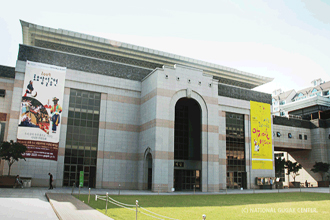
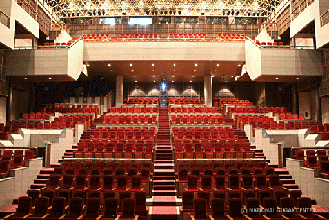
Anyone who’s ever visited or is familiar with the National Gugak Center(NGC) describes it as being located "next to the Seoul Arts Center" - an apt summary of the NGC’s image in the minds of Seoul citizens. The NGC first opened in Busan during the heat of the Korean War in 1951 and stayed there until it moved to its current location in Seocho-dong. All throughout its initial years, the NGC’s size and reputation hardly lived up to the institution’s official name. But in time, with governmental support, interest from the people, and hard work from the people in the gugak industry (Korean classical music), the institution grew to encompass not just court music but also folk music, and proportionately grew in capacity. Arguably the heart of the gugak world, the NGC comprises of the Small Theater, Umyeon-dang, the Main Theater, Yeak-dang, the Gugak Museum, and two new additions made in 2013, the recital hall, Pungnyu Sarangbang, and the outdoor stage, Yeonhee madang. It is open nearly all year long, and even offers introductory level Saturday Premium Performances that are held every weekend.
|
|
|
| ▲The National Gugak Center, Yeak-dang(Main Theater) Internal and externalappearance ◎ Photo sources_ The National Gugak Center | |
Gugak and International Exchange
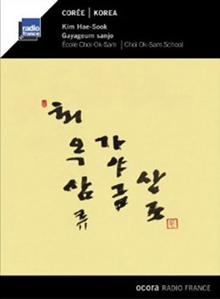 |
Produced by Ocora Radio France, the French record label that has produced over 600 types of world music, and distributed by Harmonia Mundi, NGC’s first album was released in 2011, titled Jongmyo Jeryeak (royal ancestral rites music). Its second album, Coree: Gayageum Sanjo - Ecole Choi Ok-Sam (performed by Kim Hae-suk), was released in 2012. It is worth noting that NGC’s for second album,of the many schools of gayageum out there, it was that of Ecole Choi Ok-Sam that was chosen. Choi Ok-Sam (1905-1956) was the exclusive dance accompanist of the leading Korean modern dancer, Choi Seung-hee (1911-1969), who had already been touring the United States, Europe and Latin America as early as the 1930s. Choi achieved commercial success and great popularity in all her foreign performances, perhaps excluding those in the United States, from the very early stages of her expansion into the international market. Director General Kim Hae-suk pointed out the problem of how such successes such as this could not be properly capitalized in the past, and repeatedly stressed the responsibility of organizers and planners and the importance of distribution. |
| Choi Ok-Sam Ecole Gayageum Sanjo ◎ Photo sources_YES24 |
Director General Kim Hae-suk pointed out the problem of how such successes such as this could not be properly capitalized in the past, and repeatedly stressed the responsibility of organizers and planners and the importance of distribution. I asked her whether she was interested in taking the problem into her own hands, to use her experience to analyze how organizational techniques have failed to improve, always going back to square one, or how the field always seems to be one step behind in the distribution of the performing arts market. In response to the argument that if the NGC, possibly the field’s most representative player, hosts free shows overseas, that other private actors could not get paid their worth in the foreign markets, this is what she said.
"It is true that the four performance groups of the NGC tour for less than what they deserve. So far, they have been traveling, not to showcase themselves on artistic stages, but as part of national events, to play music for the occasion. The Ministry of Culture and the Ministry of Foreign Affairs must consider how best to present Korean culture with class when sending off national performing arts organizations."
"Young artists have their airfares subsidized by the Korea Arts Management Service(KAMS), and the hosts pay their travel expenses and performances fees. Thus, the National Gugak Center should have a standardized system for reimbursing travel costs and performance fees, at the very least. When the NGC has all its expenses subsidized by government revenue, it upsets those hard at work in the private markets."
The National Gugak Center in 2014
 |
Unlike the National Theater of Korea, which became the talk of the town with its introduction of the repertory system, the NGC had a quiet year in 2013. For the performing arts, which often have difficulty just managing to stay afloat, the repertory system is one of the few available channels that may actually turn a profit. For this reason, in many countries where the performing arts have long-established traditions, publicly funded organizations are strictly forbidden from adopting the repertory system, and are encouraged to pursue experimental, one-off projects instead. The kinds of performances that may appeal to the masses, such as those of the repertory system, are left as the domain of the private sector. In the current Korean market, where private actors, unable to remain self-sustaining, are pushed into doing highly experimental, one-time performances to catch the public eye. National theater actors are praised for their work in highly commercialized productions, which isn’t right. The theater itself may become financially richer, but at the expense of the overall health of the field. |
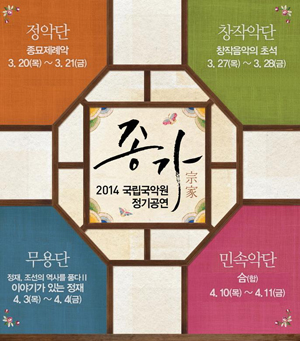
| ▲Poster of Subscription Concert Contemporary Gugak Orchestra ’JongGa(宗家)’ ◎Photo sources _The National Gugak Center |
"Though 80% of the NGC’c projects are performances, it engages in other areas such as education, it engages in other areas such as education, research, and training. Because schools and the public fail to teach the things they should, the NGC takes it upon itself to share that burden as much as it can. It’s hard to see the immediate effects of such education in the arts, however."
“Of the shows planned for this year, the four groups of the NGC (Court Music Orchestra, Folk Music Group, Dance Theater, and Contemporary Gugak Orchestra) will perform subscription concerts as well as planned performances. In the past, the NGC did a lot of Yoenryeak pieces from the Joseon Dynasty.The original plan had been to do King Sukjong’s giroyeon, but I changed it. Giroyeon is the ceremony in which the king holds a feast in honor of his aged vassals, but today, people worry about living past their prime. I didn’t think it fit to perform something that doesn’t work for today’s society, regardless of its traditional value. Instead, I wanted to host shows for which the four groups of the NGC could be the center, and concerts which could include young gugak teams, from both Seoul and the provinces, to be held three to four times a week. I wanted there to be an opportunity for the NGC to demonstrate all the traditional music that it had, and for other performance organizations to do the same, where everyone could examine and discover gugak and other traditions that could be revived and shared. That was my goal and still is."
Can the National Gugak Center Navigate A Turning Point?
At the press conference,Kim Hae-suk, newly appointed Director General of the National Gugak Center, said that while some changes will be minor, the NGC’s shows for the end of the year will definitely take on her own unique brand.
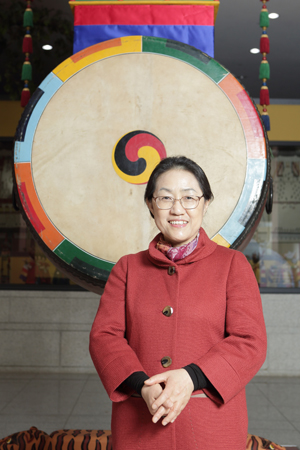 |
“I heard rumors circulating last year, before I took this position, that the NGC’s end of year performances would center on General Yi Sun-shin. Any story about Yi will have to feature Japan as the antagonist, and considering the diplomatic troubles between Korea and Japan, the story seemed untimely. Rather, I think it is the NGC’s responsibility to facilitate the relationship between the two countries through cultural diplomacy, so as to benefit Korea as a whole. So instead, I thought of Hong Dae-yong (1731~1783), a scholar of the realist school of Confucianism, who founded the techniques for playing the yanggeum. Hong sought to create beauty through music, the type that can be felt and tasted. "In the early Joseon Dynasty, music was not thought of in terms of its effect on the sensibilities, but merely as an aid to ritual and enjoyment. That changed in the dynasty’s later period. Hong played an instrumental role in this transition, as he introduced the idea of music as a measure of beauty and taste. This was a pivotal moment in the history of Korean music." |
Before, music was an instrument of rule through which Joseon sought to manage ritual and play. Hong Dae-yong, who lived in Namsan, was a key figure in the transition of music from a means to an end to an enjoyable end in and of itself.
| “For the NGC, the idea of music as an apparatus for power may be an uncomfortable notion, but it must be understood in the context of the times. For the monarchy to enforce its rule, the rigidity of ritual needed to be offset by the enjoyment of play, and the latter existed to counterbalance the former, not to satisfy the people’s musical sensibilities. That changed in the late Joseon period, when people started to create music as a means with which to assuage the people’s musical desires, eventually giving rise to folk music." "The NGC started out with the objective of preserving royal court music such as Yeonryeak (royal court banquet music) and Jeryeak | 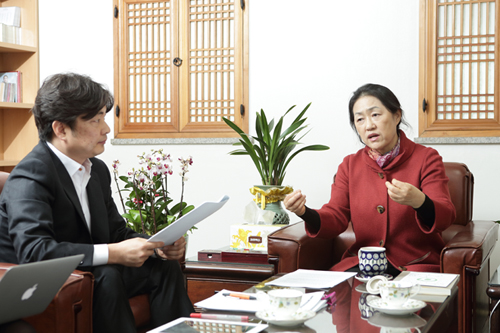 |
(royal ancestral rites music),and within the NGC, the a Court Music Orchestr is the body in charge of the preservation of such music in its original form. The Folk Music Group is concerned with the music of the late Joseon dynasty. They protect different types of music, all equally important. The Contemporary Gugak Orchestra focuses on more current music; and then there is the Dance Theater. Eventually, the NGC became a national organization that is in charge of works from the whole Joseon period, aswell as more contemporary pieces, boasting the most comprehensive system for the preservation of traditional music in the country. One problem that remains, however, is the rivalry and antagonism between the people of court music and those of folk music, fueled by an imbalance between the two. Court music of early Joseon and folk music of late Joseon are equally important aspects of Korean culture, genres independent of each other and both of critical historical worth. There needs to be a balance between the support and investment in the two, and more effort to bring contemporary music to the fore."
Yours and Our Gugak
The director general begins his or her two-year term with a general blueprint already in mind, thereby rendering it impossible to completely overhaul the existing system of the NGC. Instead, the focus should be how should the NGC’s programs be presented to the public, and how can they be improved to give broader appeal to the masses. I think that such relatively little considerations can result in massive changes in reality."
If there was one thing that felt unfortunate, it was the sense of obdurate resistance to change that could be felt throughout the NGC, resulting from years of accumulated indifference and thwarted hopes. To be sure, the NGC has seen many attempts to change over the years, and as Kim Hae-suk joked of herself, she is an "idealist," who probably has her own vision of an improved future for the NGC. Let us hope that the failures of the NGC’s past become stepping stones instead of stumbling blocks in Kim Hae-suk’s future efforts.
◎Photography_Kim Young-tang
 PREV
PREV
.JPG)
.jpg)
.jpg)
.jpg)
.jpg)












.jpg','Anyone who’s ever visited or is familiar with the ..');)


