





Drama As the Diagnosis of an Era
[People]Kim Yun-cheol _Artistic Director, National Theater Company of Korea
Change and Evolution In The National Theater Company of Korea
In 2009, the Ministry of Culture, Sports and Tourism announced the separation of the National Theater Company of Korea (NTCK) from the National Theater of Korea (NTOK), and the termination of its repertory troupe program. Part of an overhaul meant to revitalize the organization, the move ruffledmany feathers in the country’s theater crowd. Though the intention —to build a new system that would aid the company’s growth into a representative art organization — was noble, some saw the decision as hasty and made without properly examining the 60-year-old company’s history and future, which added to the confusion. Amidst the ensuing uproar, company members were dismissed on April 30, 2010, and a series of public statements followed from different corners of the arts community. The letters raised some important issues, including the need to secure the budget, artists and a theater for the NTCK to become an independent foundation, as well as a demand to abandon the widely rumored plans to hire a foreign artistic director. It was a controversy that polarized the theater world, which was partially resolved on July 15, 2010, with the official launch of the company as a foundation, and came to an end on November 8, 2010, when Sohn Jin-chaek was named the new Artistic Director. The company developed under Sohn’s leadership for its first three years.In February 2014, the NTCK became yet again embroiled in disagreement when Jin-chaek Sohn left the company after his three-year contractand his position required refilling. At the core of the disputes were familiar questions about the role and responsibilities of artistic director, as well as the NTCK’s identity as a whole. The parties involved issued another round of statements, with opinions clashing as much as ever. Whether these squabbles were ridden with emotional hand-wringing or stemmed from a lack of communication, they left both sides of the debate feeling injured. If there was one upside, it was that the negotiations ended before too long, the result being that all parties agreed to keep a close eye on each other. Aside from the obvious task of embracing lessons learned from previous experiences, what remains is the challenging process of redirecting energy spent on opposition and worry and supporting the NTCK’s healthy reinvention.
From the Individual Sphere to the Public Sphere
It’s worth remembering the NTCK’s standing at this point. The company is not privately owned, and thus, numerous responsibilities rest on the shoulders of the person running operations on the ground. Above all else, however, regardless of what entity might oversee the organization’s operations, at the center of all the company’s activities stands the artistic director. It is he or she who stands at the front lines and defines the worth of the company through his philosophies; their thoughts and views are the determinants of the company’s season. The newly appointed artistic director, Kim Yun-cheol, is well aware of this matter, a responsibility he should rightly contemplate. Kim’s thoughts on the drama and art he has consumed during his career are more important today than ever, as his inspirations and influences are about to shift from defining his individual universe to shaping the public sphere.|
|
|
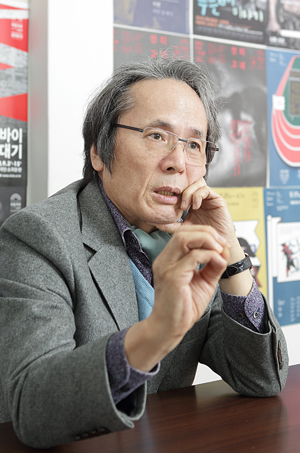
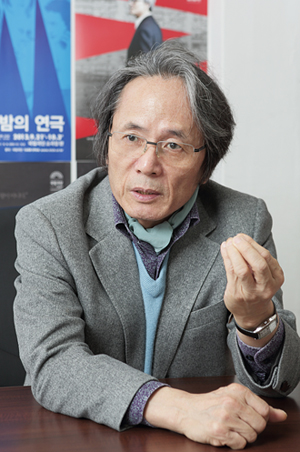
Q(Choi Yoon-woo) : I’m sure you’ve been bombarded with questions lately, but maybe not questions of this type. What, in your definition, is drama?
A(Kim Yun-cheol) : Art is the exploration of humanity and life itself, to question and define these concepts. Whether one’s approach is classic, modern or contemporary, what matters is that drama sheds new light on life today. I think drama is the investigation and diagnosis of life and the times, but from a different, new perspective.
Q : In your forty years in theater, have you developed particular criteria by which you judge drama?
A : Yes, and that is whether its subject matter deals with an issue appropriate for the times, employing the communication aesthetic of its era. For example, some shows appear to be of high production value but belong in the museum, and others that are far from impeccable can speak to the soul. The majority of dramas out there today are for the museum archives, what Peter Brook called "deadly theatre";they are not lively channels through which one can experience the full spectrum of life. So, even if many productions are based on the same preexisting work, the way they reinterpret and readapt the themes, and the aesthetic sensibility and understanding of life they demonstrate, these are all important metrics by which I critique theater.
Q : Timeliness and being appropriate for the ages are also important traits, surely, but it seems like works of that type are harder to come by these days.
A : I think there is a difference in the degree to which different shows meet that standard. Ultimately, the audience member’s individual reception of a performance is what completes the work, and so the extent to which it feels relevant to the times depends partially on how relatable that work is. Additionally, the zeitgeist of the age plays a part. The reason that no single work seems representative of today is that this is an age without a single dominant ideology. In the period of modernism, the world was united by a common ethos. In the postmodern era, individuals all have varying issues of concern; what is important to one person is not to another. This is the kind of time we live in, and that’s why there does not appear to be a show that is illustrative of the status quo. Fortunately, however, Korea is a language-driven society. The problem lies in the misconception that to condemn and removelanguage is to be up-to-date. Rather, to be experimental and cutting edge is not to oppose language, but create new ones. The definition of drama changes through time, as it rightly should. There is not enough reflection on its implications, however.
A More Accessible NTCK And the Greater Need for Depth
Funnily enough, this paper actually interviewed the previous artistic director Sohn Jin-chaek three years ago when he was newly appointed. His management philosophy was to "return the NTCK to the people." His idea was that art should break free from existing framework, which led to a great boost in the number of shows performed by the company. Although some were critical that the increase in performances led to a decline in production values and had questionable outcomes, the renewed flow of visitors might have been just what the NTCK needed in the aftermath of its relocation to Seogye-dong. The company’s new artistic director, Kim, fully agrees with this assessment. His goal for the increasingly popular NTCK is to inject it with greater depth.|
|
|
|
2012 Memorabilia of the Three Kingdoms Project, | |
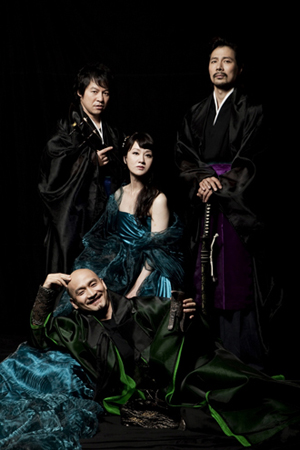
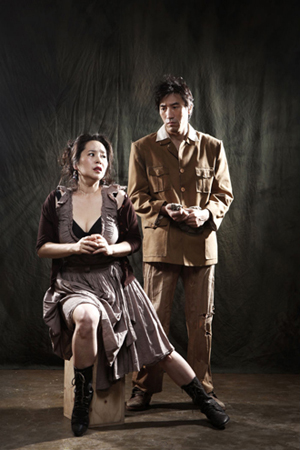
Q : Considering the past three years at the NTCK, the Memorabilia of the Three Kingdoms Project in particular, it seems that no one else could ever pull off what NTCK has done. .In light of this shift, it is meaningful to see a project that attempts to derive cultural significance from Korean traditions. Hence, the NTCK is held up to a higher standard: to lead Korean theater into the future, which it would do well to keep in mind in its future projects.
A : I agree that the Memorabilia of the Three Kingdoms Project was something no other company but the NTCK could do, and the NTCK has a responsibility to take on these projects that would be difficult for the private sector to do. The problem is that, because many performances were completed in too short a period of time, there arose inevitable problems in contemporizing the stories. The project is not over, however. Based on our current schedule, five episodes are to be shown in the second half of the year, but I am going to take as long as is needed to prepare before presenting the work. At the very least, a show needs to have its scripts completely ready before it can be appreciated for its full potential and made into a performance. It takes time for drama to be understood and prepared.
Q : What are some of the basic guidelines for the NTCK?
A : I have a great personal thirst for good stories, and thus plan to rediscover modern and contemporary classics. I want to make previously overlooked works into a series, and produce Korean works that deserve recognition or have been missed, but are relevant to the times — I want to introduce these to the public, but with an added twist. Also, I think the core of what makes any drama work are the actors, and this is the strength of theater; that audiences view a real live actor at work. The NTCK will put on actor-centered productions that allow viewers to connect on a visceral level to the truth of theater itself.
Q : Recent announcements by the NTCK have included ambitious plans: to foster up-and-coming artists, produce classic and contemporary works and establish a repertory system. Each would demand extensive planning.
A : On the one hand, it’s necessary to promote the development of original plays as well as rediscover forgotten classic ones, and on the other, it’s important to Koreanize and contemporize world-famous texts. My hope is to devote 30 percent of the NTCK’s resources to classical works, 30 percent to modern and contemporary works, Korean or otherwise, 20 percent to future investments and the final 20 percent to plays for young people. Korean theater has always followed international trends, but now it is time it to take the lead, and I want to set the stage for the type of experimentation that will put it there. That’s about the gist of it. Of course, there are probably many ways to go about it. There are plans to hold shows with foreign-invited directors as well.
Q : Looking at the NTCK’s recent experience of [Büchner’s] “Woyzeck”, it seems foreign collaborations are not always the recipe for unmitigated success. As much as they are anticipated, they are also fraught with risks.
A : It’s really a matter of communication. For the majority of cases involving foreign collaboration, the Korean side of the production merely functioned as interpreters, and did not have the enough of a role to play. Both parties in such a scenario need to understand each other; the Korean language and sensibility and the production’s intended vision. Sometimes, the partnership is riddled with a rivalry between production concepts and actors. I think the way to overcome these problems are for the Korean half of the team to fully own its role, as not just interpreters but as joint creative directors.
Q : The repertory troupe system was under discussion well before the NTCK’s start as a foundation. People both inside and outside the field were divided over the idea, and even though the previous director, Jinchaek Sohn, tried to adopt the system, he was thwarted. At last, the system’s foundations will be laid out within the first half of this year. In truth, the NTCK and Myeongdong Theater’s decision to expand the audition system has significantly widened the window of audition opportunities, especially for actors. While there are complaints that the leading roles for a production are already arranged, the system certainly ensures benefits such as determining the actor’s pay according to their age and experience, and allowing the continued opportunity for him or her to carry on with the show if reviews are good enough. In this sense, the NTCK plays a significant role in the process. What do you think should be its guiding principles and goals?
A : During the early discussions on the future directions for the NTCK, I had also argued for the benefits of the repertory system. For it to be effective, there needs to be at least 60 troupe members, or an audition system that can secure the necessary personnel. At the moment, when preparing a show, the producers bring their actors along, effectively resulting in a de facto private show hosted under a public banner. While there are budget constraints and regulations to consider, I intend to initially hire around 25 actors for the short term, after which the actors will have to compete with each other for longevity. Of course, 25 actors are not enough to do all the works I intend to do. Jinchaek Sohn successfully revived the NTCK from a dying brand. Now the company needs to become a healthy channel that produces shows it can be proud of. The first task on my agenda is to invest more of our budget per performance, prepare each piece for a longer period of time and create higher quality plays. A large part of the process will rely on the audition system, so this isn’t a complete overhaul of the status quo. I don’t want the repertory troupe system to be a defensive wall, but rather the center around which the open audition system will work — this is how the NTCK will find itself.
|
|
|
| 2014 | |
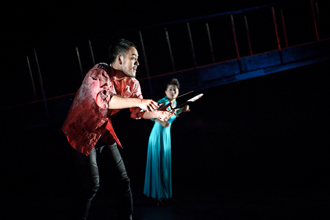
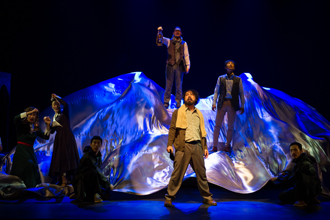
Q : The NTCK plans to establish 3-year-long repertories, two of which will include a classics series for the 450th anniversary of Shakespeare’s birth, and then a more historic theme relating to the 70th anniversary of Korean independence. Period themes may or may not be themes that speak to their times. You talked earlier of the need for plays to be contemporarily relevant. Do you think that the two topics mentioned will resonate with today’s society?
A : That is the plan. For the 3-year-repertory, its fundamental focus is on the theme of "liberation." This isn’t only in the political sense, but that from the countless values and ideals that bind us, such as materials, ambition and selfishness. And for people to set themselves free, they must first accomplish self-reflection, after which they may then move on to other challenges. Not that this is a magic solution for everyone, but this is the fundamental conceit of the NTCK.
Good Plays Are Welcomed Anywhere
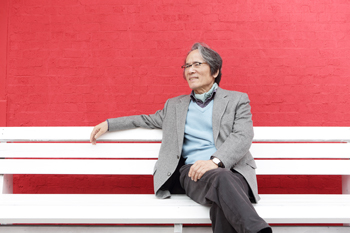 |
These were Kim Yun-cheol’s final words as the NTCK’s newest director. He is right: Whether a performance is pantomime, documentary or classical or contemporary drama, or if the show’s structural form is simply chosen by its creators,the choice of format is not indicative of the quality of the show itself. An institution or system, likewise, is the same. While they are designed to add to the final effect of the show, they cannot be the end goal. The NTCK, with its six-decade-long history, is off in a new and interesting direction, following its evolutionary journey over the past three years. In the process, we saw many heated controversies, some of which are still ongoing. |
While it is easy for us to have an intellectual debate about what constitutes good drama, at the end of the day, the audiences can tell the difference. The NTCK has been successfully revived in the public eye, and has attempted to break away from existing conventions. May Kim Yun-cheol’s hopes — to create works he may be proud of through the healthy channel for creative expression — be fully realized.
|
Kim Yun-cheol Kim Yun-cheol is the Artistic Director for the National Theater Company of Korea, a professor at the Korea National University of Arts’ Department of Theatre Studies, President of the International Association of Theater Critics and the Editor for the organization’s web journal, CriticalStages. Hewasthedirectorforthe Korea National Archives of the Arts, dean for the Korea National University of Arts’ School of Drama, the founding president of the president of the International Association of Theatre Critics-Korea, the and professor of Sejong University’s Department of English Language and Literature. In 1995, he won the first Theater Critic of the Year award, and in 2005, the Yeo Seok-ki Theater Critic Awards. His published works include Why Are We Headed To An Age of Fallen Values? ,Between Chaos and Hybridism, and An Analysis of Contemporary American Plays Volumes I and II, and has translated an Introduction to Drama, and Respect For Acting. |
 PREV
PREV
.JPG)
.jpg)
.jpg)
.jpg)
.jpg)












.jpg','In 2009, the Ministry of Culture, Sports and Touri..');)


