





The National Theater of Korea, the Stage for the Contemporary
[People] Ahn Ho-Sang _ CEO of the National Theater of Korea
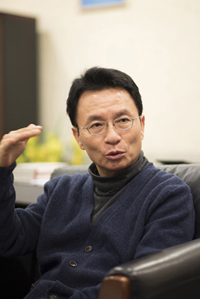
I visited Mt. Namsan in the winter, when the day was turning to a dim twilight. Mt. Namsan is rare oasis of natural beauty, one that rewards visitors with cherry blossoms, acacia flowers, luscious foliage and autumn leaves throughout the year. This haven in the city conjures images of rustling flowers in the spring, the lively tune of daegeum in the summer, and falling ginkgo leaves and movement of swaying dancers in the fall, all of which adds to the place’s peacefulness. Perhaps for this reason, this timeless location has lacked visitors, stuck in time and moving neither forward nor backwards. But one man has drastically restored temporality to this site, and that is Ahn Ho-Sang, who was appointed CEO of the National Theater of Korea (NTOK), began the repertory theatre system, and turned the situation around 180 degrees, to the point where the theater now regularly receives complaints about its lack of parking space due to the overflow of visitors. This is a man who has done what was commonly thought impossible - to reintroduce contemporaneity into traditional art - and transformed Namsan into the center for the field of performing arts. I met with Ahn to listen to his stories regarding NTOK and his theories on arts management.
Q(Hwangbo Yumi) : You’ve been busier than ever in the past year. How was 2013 for you?
A(Ahn Ho-Sang) : Those always tend to be the most difficult questions (laughs). Though the past year was hectic, it was certainly an auspicious one. For the theatre, 2013 made up two seasons, those of 2012-2013 and 2013-2014. We introduced the repertory system in September 2012, allowing the audience to become familiarized, gauging their reactions, and assessing what was within the theater’s capacity. In April 2013, the theater raised the curtain with Seopyeonje, Dan, and Medea, and started gathering crowds. It was even before we knew what to do with ourselves that the popularity began, and for us it was a tense and bewildering moment. After a break began the 2013-2014 season, which included Chum, Chunhyang Seopyeonje, Mukhyang (the Scent of Ink), The Divine Comedy, and The Feast as well as special performances like the Youn-sun Nah Concert and the New Year’s Eve Concert. We sold out show after show, and saw extraordinary results. It made me wonder if it weren’t a dream; it was a happy year, but an anxious one too.
To Share and Breathe an Era Through Performance
Q : The shows you just mentioned are ones most talked about amongstindustry insiders, and it’s essentially right to say that every one of NTOK’s shows last year was a hit. What do you think was the biggest factor in drawing such responses?A : The most fundamental feature of NTOK’s materialsis the Korean aesthetic. Korean dance, changgeuk, pansori, and gukak are all Korean art forms that were formed through our sensibilities, but which people felt were distant and uninteresting. We presented these performances refined and fine-tuned, which surprised people who thought, "So this is what’s Korean!" and "Korean theater, too, can be refined and polished!" I think the audience saw the potential there, and such rediscovery of Korean culture and art has in turn cultivated pride and self-esteem, which led to anticipation for the shows.
|
|
Q: I heard that you are strongly urge shows to add a contemporary twist, either in choreography or direction, that you urge contemporary dancers to work with professionals from the National Dance Company of Korea, and for outside theater directors to collaborate with the National Changgeuk Company of Korea.
A : The truth is, in the 60 years of NTOK’s history, for the early half, the theater stood at the center of the performing arts scene, but in the last 30 years, it has been edging toward the periphery, its presence barely noticeable. I gave an honest look at why this was, and one of the problems was that while NTOK is a theatre that deals with contemporary content, people thought of it as engaged only in traditional content. And this is why I began with restoring NTOK’s lost contemporaneity. When NTOK artists only worked among themselves, they lost the opportunity to collaborate on a greater level with other artists. Artists in NTOK are outstanding national cultural assets, but one reason that wasn’t conveyed to the audience was because they lacked a leadership that would elevate them to another level and persuade audiences to look. Another is that NTOK could not capture the contemporaneity that it needed as the national theater. We needed to find a medium through which we could connect to the audience. That directors such as Yoon Hojin, Han Taesook, and Seo Jiyoung, were called upon, was also for this reason, because I believed them to speak the language of people today. The dance of Ahn Seongsu and Chung Kuho intrigued the audience, because they saw traces of something new in them. People at NTOK have finally gotten their attention.
Q : What are your plans for 2014?
A : This is just the beginning. A few good shows do not make a theater. NTOK, as a production theater, needs to put on shows consistently so that audiences may come and see a show whenever they like. NTOK is a theatre not only for its nationals, but also for the foreigners who visit Korea, so they can see the shows that are representative of our country. For that end, a few good shows are not enough. While it is impossible for people who come to Seoul from outside of the country, or from the regional provinces, to meet with more than a certain limited amount of people, they can, however, come into contact with the larger era and the problems that pervade them through theater, and this is the role of performances today. So the number of shows that NTOK puts on needs to double and triple. The Changgeuk Company used to perform one to two shows per year, and now they show seven to eight, but, really, this number needs to be around twenty. Because budgets are constrained and members limited, I think that it should focus less on premiering new shows and more on the artistic elements and lighting for each show, in order to appeal to the audience. Additionally, it needs to include not only members of its company, but artists from outside, to communicate and participate in our programs. The company has the responsibility to create shows of diverse spectrums, from those for teenagers to adults, and I believe it is fully capable of doing so. But for that reality to come to pass, it will take a while, and so it is from now that we should work to increase quantity and maintain our level of quality. This is going to be a harder process than before. The audiences were generous because prior to this, they had nothing, but from now they will be less so and more selective. All the more reason to make greater shows.
|
| |
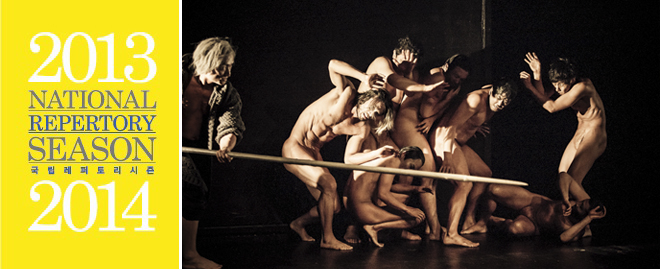
| L) ’2013-2014’ National Repertory Season, ◎photo by The National Theater of Korea R) 〈Divine Comedy〉, Dante, ◎photo by The National Theater of Korea | |
Q : What things outside of performance concern you?
A : The theater’s hardware is unspeakably poor. At first, I saw the wretched conditions of the practice halls and got depressed. I couldn’t believe that this was the state of a national company. Regardless of its national or private nature, because I had been to their equivalents in the Seoul Foundation for Arts and Culture and the Seoul Arts Center, to see that room, which was essentially worse off than the hall of a regional elementary school, was depressing. Not only are the facilities old, but that they are absolutely lacking in numbers. Currently, we are borrowing practice halls from the Blue Square Musical Hall. Because the National Dance Company performs two to three times a month, the company needs extra space in order to practice. If the lobby is closed off for practice as a desperate measure, to accommodate the Changgeuk Company, the Dance Company and the orchestra barely fit in, leaving at least one company without even space in which to wait and rest, and this is why we the Small Hall Dal is being renovated. The stage and lights exist to show the actors and their performances, but right now it’s the reverse. The hall’s proscenium was only 5.7meters tall and 11meters in depth - impossible to show works of quality. Fortunately, the practice halls were funded, and this year construction will start belowground level and be completed come early next year. And that’s the minimum that NTOK requires. In the Main Hall Hae, the audience’s view of the stage gets obstructed by the heads of those sitting in front. Also, the lack of a cafeteria was an issue, so we built one behind the lounge. Another problem, now that we have full houses is the lack of parking space; we simply don’t have enough for the crowds we attract.
Q : Any personal aspirations?
A : Because I’m at NTOK, I want to popularize the genre of changgeuk to the level of musicals. I think Sacheon-ga’s Lee Jaram got through to the younger generation, and Song So-hee became a star on television, because at its core, pansori and the Korean language share common DNA. The most effective way to convey the Korean language is through pansori. When it comes to musicals, however well we translate and contextualize them, they feel awkward and foreign, but pansori inexplicably evokes exuberance and moves the soul. Truthfully, pansori and changgeuk were deliberately pushed away under the impression that they were outdated and unsophisticated. But remove such misconceptions, and there is no other means through which Korean is better expressed. It’s high time that we forget those notions already. When gukak is understood in opposition to Western music, it undermines the integrity of gukak itself, because Western music is what is acceptable, what is learned in society, and what society must pursue. Hence, gukak is laid to the wayside. Today, it’s different. Gukak, as categorized among the genres of world music, is "Korean music." For the older generation like me, it is still perceived to be less scientific and unrefined. But the younger generation has acquired an artistic tolerance to understand gukak as an independent genre among many other music types, and this is why I see the potential in changgeuk as well.
Never Follow In the Footsteps of Another
Q : What do you think is the biggest task for the culture and arts scene in 2014?
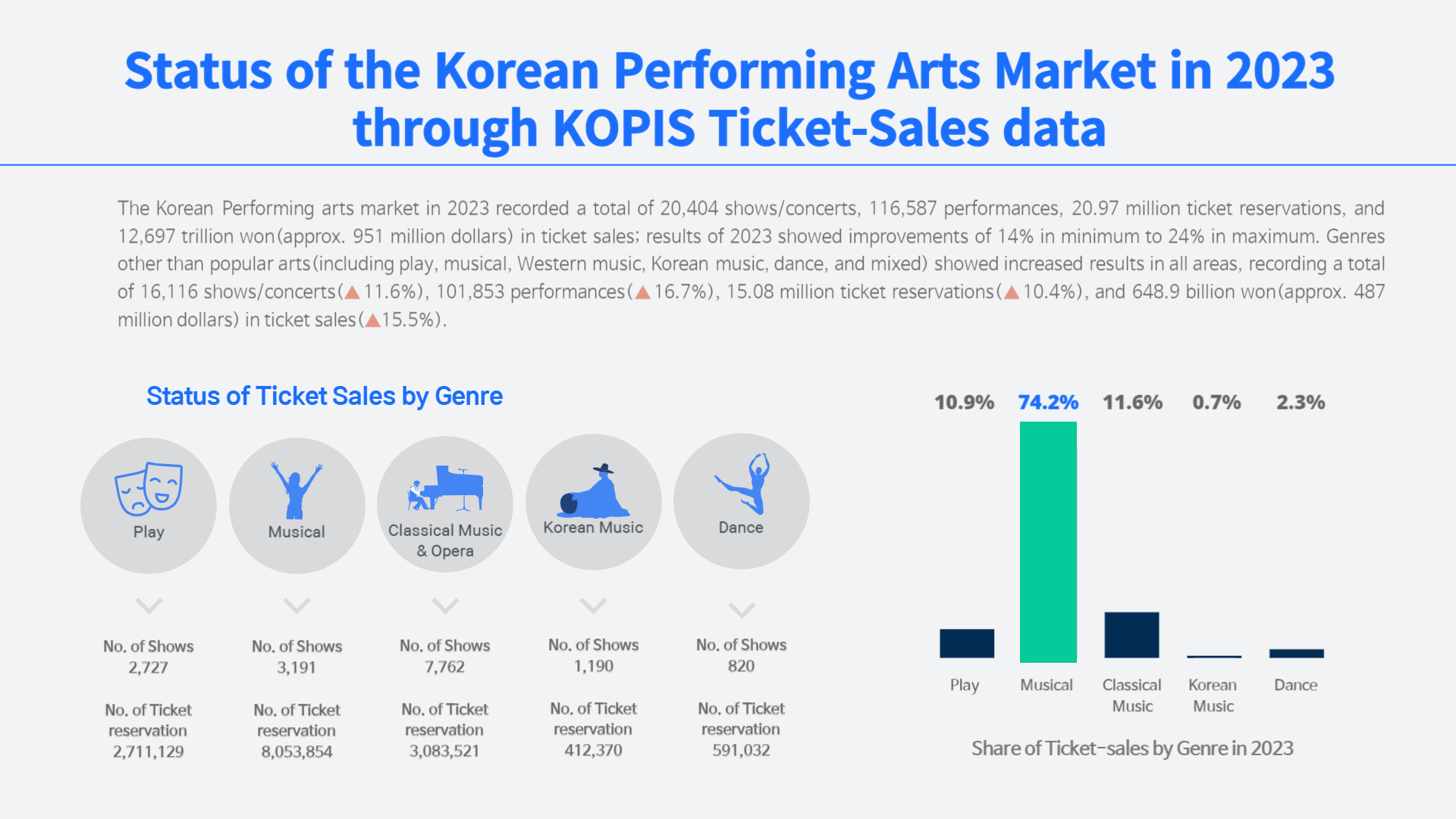
A : I think there is a gold mine of demand that has yet to be tapped, from not only Seoul and the young, but also in the regional provinces and the older people too. But there still exists a gap between the demand of the audience and the types of performances provided by the suppliers, leaving musicals to monopolize the explosive rise in demand for culture. Classical music concerts, operas and ballets are also doing well, but these are geared toward the higher-end audiences, which leaves their potential for expansion minimal. The question is how to spread this rise in interest to other genres, and how to popularize the high arts of ballet, opera and classical music. When the New York Philharmonic and Berlin Philharmonic come to perform in Korea, they command ticket prices of KRW 300,000~400,000 minimum, which makes it nearly impossible for average people to enjoy them. Therefore, it is up to the likes of the Seoul Philharmonic, KBS Symphony Orchestra and Bucheon Philharmonic Orchestra to raise their standards. I think the same responsibility falls on the NTOK, to lower the prices of our orchestra and ballet performances to make them more accessible, not just in Seoul but everywhere else in the country. It is only then that the people’s demand for culture can be met in supply, and this requires a solution on an institutional level. People in Jejudo island, Haenam and Gangwon-do Province all want the best type of culture available, not just the mediocre. There needs to be action taken to make this a reality, instead of empty talk. And for this, those in production need to acknowledge this issue as a glaring problem. This is probably how to resolve the musical’s monopoly - it’s the most popular because it’s relatively cheap and easy to enjoy.
|
|
Q : What, in your opinion, is "cultural prosperity," and how can this be a reality?
A : In Seoul, there are many platforms on which art of high quality can be enjoyed at low costs, but the further away from the capital, they tend to be of lower quality and thoroughly commercialized. Cultural prosperity is when culture can enhance people’s quality of life, restore their peace of mind, and imbue society with its value and role. The first step to getting there is to make good cultural experiences more widely accessible. National companies are doing a lot better off now, so it is necessary to support them in their activities nationwide.
Moreover, there needs to be institutional support for regional cultural spaces such as museums and performance halls to secure professional staff. In Seoul alone, new arts management specialists graduate in the thousands every year, and most of them are working in less than adequate working conditions. None of them want to work in the provinces. There must be a reason they all flock to Seoul, so through such an institutional support system, those arts managers could be directed to the provinces, and in turn be the mediums through which good art and art spaces can be created, which would naturally attract audiences. Seoul became the cultural capital of Korea because venues such as the Seoul Arts Center, the LG Arts Center and numerous musical halls appeared, drew in arts management specialists, which gathered audiences, and continued the virtuous cycle. Not that there weren’t artists or audiences in the past, but the channels through which they could meet were absent, and when that was remedied, people could go see art. Lots of people want to break into the arts management industry, but Seoul as a market is saturated, so if there is enough assistance for them to work in regional provinces in better conditions than those in the capital, art organizations will follow, and overall spur the market. People in the regions take well to programs that are designed for them. Just because a program is popular in Seoul does not mean it’s guaranteed success elsewhere.
Q : Do you have any principles of arts management that you live by?
A : I have several as a manager, but I’ll mention just a few. First, avoid the safe road. Second, never follow in the footsteps of another. I think that’s a fundamental in the nature of art itself. When people consume culture, it’s to experience the unfamiliar and thereby feel things they otherwise could n’t in their everyday lives, and derive enjoyment from that sensation. It’s to remind themselves of their own potential through the experience of art, which is difficult to create with tired, hackneyed things, and impossible to do by copying the work of others. I began the repertory system, because no one else was doing it at the time. Why do it if everyone else already is? Third, I try to quantify my goals in terms of numbers, and demand my employees to do the same. It may sound strange, but it can be anything from planning a performance while limiting its performers to less than a certain figure, or directing my employees to state their objectives for number of tickets sold by a set date: how many tickets to sell in how many days, how much profit to make and how much costs to incur, etc. I set everything in numbers, and follow up in the same method. Four, the most important resource for a manager is time. Particularly because the performing arts is a battle against time, it is absolutely critical to spend time well and not waste a minute. However difficult the circumstances, I feel relieved if there is enough time, but conversely, however smooth the sailing, missing a deadline puts me on edge.
I think audiences are invented. People ask, "Is there a repertoire?" or "Will there be audiences showing up to your shows?” ? but I think if I believe it, it will happen. The younger generation is bolder and more open to the culture they consume compared to the older generation, and it is because of them that genres such as ours can be made and shown. If a performance director limits himself to existing audiences, his possibilities will be severely suppressed. Even competing with others will ultimately result in being similar to the competition. This is why I believe it’s possible to create a new audienceand do things that have not been attempted.
|
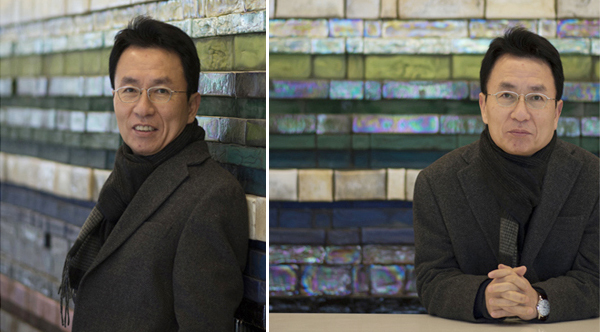
Ahn Ho-sang After graduating from Sogang University with a degree in political science and diplomacy, Ahn Ho-sang got a job at the Seoul Arts Center during its first round of hiring, and he has been immersed in the world of performing arts in the thirty years since then. He served as the president of the Seoul Foundation for Arts and Culture from 2007 to 2011, and he also received the Presidential Award at the 43rd Korean Culture and Art Prizes in the category of general culture in 2011 and the Minister of Security and Public Administration Prize in 2013. Currently, he is the head of the drama department at the National Theater of Korea while also serving as a member of the executive committee of the Musical Awards, the director of the International Society for the Performing Arts (ISPA), and an adjunct professor in the department of performing arts management at the Graduate School of Culture and Technology at Sangmyung University. |
 PREV
PREV
.JPG)
.jpg)
.jpg)
.jpg)
.jpg)












.jpg','I visited Mt. Namsan in the winter, when the day w..');)


