





Until the Day When Everyone Will Be Proud of Ulsan, the City of Music
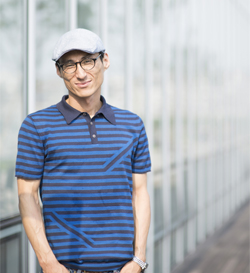
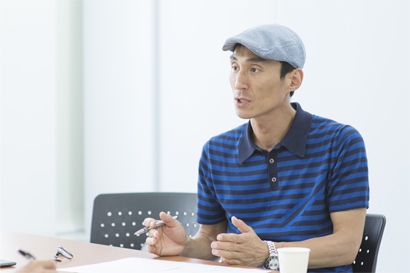
[K-festival Directors] Lee Jung-hun, General Director of the Ulsan World Music Festival & APaMM
World Music was a makeshift term. In the 1980’s, the record industry came up with this term to refer to all music that is not traditionally Western. To be more specific, “world music” means a mix of at least two cultural traditions: each global region’s traditional music and non-traditional music that is close to the traditional one. It was once called “third-world music” as well. As globalization continued, the audience and range of world music has been expanded. The term “world music” is an ongoing one. Hybrids of its subgenres such as “world fusion,” “global fusion” and “ethnic fusion” have also emerged. Each of them implies new awareness. No other genre would bring such “newness” as world music does. It is comparable to discovering beautiful fishes under the sea. The thought of meeting with world music always generates great expectations. Korea also has a festival that serves as a bridge between world music and the audience every October. The festival is called the Ulsan World Music Festival (UWMF). Behind the origin and success of the UWMF, which celebrates its 7th year, were the efforts made by Lee Jung-hun, general director of the UWMF and APaMM.
After stydying cinematography and teaching film direction and criticism at university for 17 years, Lee first entered the performing arts scene by working on performance planning at Ulsan Culture Art Center in 1999. Lee, who had always loved music, created the JJ Beach Jazz Festival with acquaintances. From its third year, the name of the festival was changed to the Ulsan Jazz Festival and this year marks the 14th Festival. Although it is small, the Festival is very proud of having contributed to the development of Korean jazz by awarding musicians with prizes during the Competition of Korean New Jazz Bands over the past six years and by releasing the records of the finalists who are announced by the December issue of MM JAZZ. In June 2006, Lee had come back from New York where he had enjoyed himself and he was teaching at university. It was at that time he came across a notice looking for the Secretary-General of the Cheoyong Cultural Festival.
“I thought that I could organize the Cheoyong Cultural Festival in a bit different way. At that time, I didn’t know anything about world music. Mr. Jae-hong Kim, jazz critic based in Ulsan, went to the same high school as mine. He gave me a few CDs and I was amazed by Petru Guelfucci’s Corsican polyphony and traditional gypsy music. I thought, ”Has there been this kind of music in this world?“ In Korea, the Pentaport Rock Festival had already been held and the Jarasum International Jazz Festival had also started; there had been rock and jazz festivals but no world music one. So I made up my mind to create a new world music festival.”
Lee started preparing the Festival three months before the event so he couldn’t dare to invite foreign artists. Instead, he invited all Korean musicians who could be regarded as playing world music, particularly latin jazz. Since October 1 is Ulsan Citizens’ Day, the Cheoyong Cultural Festival had been held from Thursday to Sunday during the first week of October. However, in 2006, the Korean lunar Thanksgiving holiday period was in that week so the World Music Festival was organized during the last week of September. Then, an unexpected visitor came to the Festival: a hurricane. The bad weather ruined the outdoor performances. Musicians performed for just one day and the rest of the Festival was totally gone. This was how the 1st Ulsan World Music Festival ended.
The 1st Festival Ruined by the Hurricane and the 2nd One Reaching a Wolrd-Class Level
After frantically finishing the 1st Festival, Lee finally calmed down and thought about how to organize the next Ulsan World Music Festival. He read Korean and international books on world music and met with many people who had written such books or who were hosting broadcast world music shows in Korea. Many of the documents explained that WOMAD, which had started in 1982, was the most famous among all world music festivals. He then went to the UK in December 2006 to meet with those in charge of world music.
“I asked everyone I met to help me organize a world music festival in a place called Ulsan, Republic of Korea. I was desperate.”
He asked a French agency to recommend those who will be touring in Korea or Asia. Consequently, the 2007 Ulsan World Music Festival was able to be held under the theme of “Cheoyong Meets the World,” mostly inviting foreign teams. The Festival invited about 200 artists from 18 countries: 11 foreign teams including Quimantu, a music group from the Andes, Antonio Chainho, a fado guitarist, Carmen Souza, who is now a great jazz musician, Gipsy.cz, a group performing a new genre called “gypsy hiphop” and Ska Cubano and seven Korean teams, thus becoming a world-class international world music festival.
The 2008 Festival in Which Contemporary Stars Participated as Headliners
I first visited the UWMC in 2008. I was able to see famous world music starts such as Bajofondo, Rodrigo Leao and Christina Branco. Music lovers talked about the 2008 fall in Ulsan for a long time. Lee saw Bajofondo, a band encompassing a variety of elements including tango, rock and electric music, at WOMEX in Sevilla in 2007. After saying to himself, “This is the team I have looked for!”, Lee contacted the band. Bajofondo then performed at the Ulsan World Music Festival in 2008 as well as well as the Yeosu Expo and the AX hall later on. It all began with the band’s first and strong stay in Ulsan. Gustavo Santaolalla, the leader of the band, is also a master of film soundtracks including those from The Motorcycle Diaries and Brokeback Mountain. Meanwhile, Christina Branco, a new queen of fado after Amalia Rodrigues, sang noble and mournful songs comparable to a ray of light in the darkness. As part of the audience, I wasn’t aware of it but the it was far from being calm backstage. Lee says that the staff had to keep dealing with urgent situations.
“Gustavo Santaolalla was soon to be 60 years old and he bewildered us by lighting incense and having a rite. As it would be in other countries, everyone tried to stop him because a fire may break out. He then said that he would not perform. We begged him to perform and he finally accepted our plea. Moreover, at the grand theater of Ulsan Culture Art Center, the audience were not allowed to come on the stage but Santaolalla made them all come up. On the other hand, Christina Branco had been pregnant for eight months and she was very sensitive before the performance. She refused to perform saying that the piano hadn’t been tuned properly. The waiting line of those entering the theater was more than 70 meters long. So the performance was delayed by one hour and 20 minutes and I had to lie to the audience to reassure them, ”Branco has been pregnant for eight months and she feels under the weather. Please understand it because she is pregnant.“ Branco decided not to perform but she saw the chief of the overseas invitation team shedding tears and she finally performed. She performed greatly, making us all wonder if she had refused to perform before.”
|
|
|
| Ulsan World Music Festival (UWMF) | Asia-Pacific Music Meeting (APaMM) |
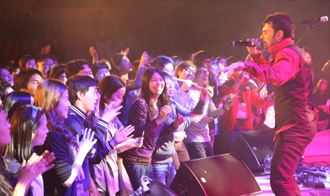
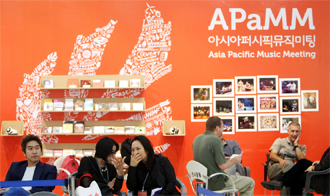
Financial Problems Addressed through the Support from the Government and Sharing with Other Festivals
While watching world music stars perform in one place, I became curious. How is the Ulsan World Music Festival run? The budget for the Cheoyong Cultural Festival is about 1 billion won provided by Ulsan City and of this, the budget for the World Music Festival is about 240 million won. To invite 12 foreign teams, it’s not a big budget. The words that Lee has uttered most to overseas world music agencies are “airfare support.”
“In the case of world music artists who don’t belong to big agencies, their airfare is bigger than or similar to their appearance fee. So getting support for their airfare is very important.” It is true that to invite this year’s headliners like Bajofondo and Savina Yannatou, no such “airfare support” was available but for more than half of the invited musicians, the governments provided support or other festivals such as the Jeonju International Sori Festival and the Jarasum International Jazz Festival shared the airfare or performance fee.
“The government of New Zealand has lent active support. A public institution called ”Creative New Zealand“ supports us under the condition that musicians from New Zealand perform on at least three stages.” So if they perform in Korean TV shows like “Space” on EBS and “Nanjang” on Gwangju MBC, they are more likely to be eligible for government support. Particularly this year, the government of Barcelona, Spain offered airfare support to as many as three teams. Plus, Canada, France and Portugal has also given active support. As for Portugal, not its government but the Camões Institute (named after the poet Luís de Camões) has been generous in providing fado musicians with their airfare. I always thank the Portuguese Ambassador to Korea, too.”
Expectations for APaMM
Supported by the Korean Ministry of Culture, Sports and Tourism since 2012, the Asia-Pacific Music Meeting (APaMM) has been held along with the UWMF. APaMM is composed of Korean and Asia-Pacific music market and showcase. The first year, the budget for APaMM alone was only 200 million won but this year, it increased to 350 million won.
“Three years ago, I went to the Ministry of Culture, Sports and Tourism to say that we need to organize a music market. Setting an agenda of globalization of the Korean wave and that of Korean music,” the Korean government started APaMM and MU:CON (Seoul International Music Fair) for the first time last year. MU:CON is focused on K-pop and K-rock and APaMM. on gugak (Korean traditional music), world music and jazz. Working together, these two events contribute to the globalization of Korean music.”
As the saying goes, you must not expect too much at your first attempt. You must learn through trial and error and your weaknesses. The question is how much of Korean music would appeal to overseas buyers. Since Korean traditional music teams and world music teams are rapidly growing, the probability would be quite high. Indeed, the teams that were showcased during the first APaMM in 2012 were invited to overseas festivals one by one. Among the teams, su:m performed during the showcase of SOTX which took place in Beijing, China last April and it was also invited to the showcase of WOMEX in Cardiff in October. Meanwhile, Windy City, which performs Korean-style reggae, was invited to the Sierra Nevada World Music Festival, the world’s largest reggae and ska music festival which took place near San Francisco last June and the team drew great attention from the audience. The 20 foreign musicians who were invited to APaMM in 2012 were from international music markets such as the AWME (Australian WOMEX), Sounds Aoteroa (New Zealand music market). SOTX (China), MMVV (Spain) and IOMMA (music market of the Indian Ocean) as well as from EFWMF, Hong Kong Arts Festival, Sziget and the Fuji Rock Festival. This year, the number will reach 30 by adding to last year’s major invitees those from Asia’s major music markets including WOMEX, Glastonbury, BWME and Indiearth Xchange (India) as well as the London Jazz Festival. The number of Korean invitees will be 40 and they will mainly be gukak and world music artists, related institutions and organizations as well as major media groups.
In the future, the Asia Pacific Music Market Association (APaMMA) will be formed in an attempt to contribute to the development of APaMM, to discover artists in Korea and Asia-Pacific, to strengthen the network among its members and to enter bigger overseas markets. The initial members of APaMMA are planned to be APaMM, AWME, Sounds Aoteroa, SOTX, BWME and Indiearth Xchange. Starting from next year, the APaMMA will have as partner members festivals, markets, theaters, record companies, institutions and organizations located outside the Asia-Pacific region. This is the beginning. Lee says that it would take about five years before people are aware that in Ulsan, they can watch, buy and trade traditional music, world music and jazz from Korea and Asia-Pacific and that they can network with others.
Korean Artists Participate in WOMEX and Major Overseas Festivals
To create the Ulsan World Music Festival, Lee visited many music festivals including WOMEX, WOMAD, Sziget (Hungary), Sfinks (Belgium) and Eurosonic to learn from them. One of them is Belgium’s Sfinks which boasts its long tradition since 1975. This festival has four stages so it is not very big. Patrick De Groote, the festival’s director, is a mentor to Lee. EFWMF, which was founded by De Groote, is the world’s largest music festival forum which has 50 festivals from 25 countries as its members. It started as a European forum but UWMF became its only Asian member. Brazil’s Mercado Cultural, a festival serving as a market, is also its member.
“Last year’s Korean and international documents explain that pop music including dance and rock music, accounts for about 80 percent of the global market and world music, jazz and classical music represent 5, 6 and 7 percents respectively. The record industry is undergoing a downturn while the performance market and festivals are growing. In my view, world music is particularly growing fast. Major festivals such as Glastonbury, Sziget and Roskilde have at least 15 stages on average and the number of world music stages and participating musicians is also growing. Plus, a number of Latin American genres including reggae and ska are also considered world music and many of recent world music pieces are electronic because electronic music is today’s trend. The trend will also change, of course.”
Lee Jung-hun says that the recent rise of gugak teams reminds him of the discovery of diverse world music genres in the Western music scene 20 or 30 years ago. Since then, Europe and the US have had enough of gypsy, African, Caribbean and Brazilian music. They have looked for something new and their focus has shifted to Asian music (e.g. Korean, Tibetan, Mongol and Chinese music), New Zealand music and Australian music as well as South Pacific music from Solomon Islands and Tonga, a mysterious and unknown world to many.
The Korean government’s support has greatly encouraged Korean artists to enter the global scene. If they are invited by a foreign country, Korea Arts Management Service and Arts Council Korea, which are affiliated to the Ministry of Culture, Sports and Tourism, provide them with airfare and overseas festivals and agencies are well aware of such government support. Behind the global success of Korean world music bands playing gugak including Deulsori, Noreummachi, the Geomungo Factory, Gongmyeong, su:m and Jambinai was this support given by the Korean government. Lee says that he is excited about seeing two Korean bands selected by this year’s showcase of WOMEX: su:m, which participated in the 2012 APaMM and Jambinai, which was selected for this year’s showcase of APaMM.
|
|
|
| Opening Ceremony | Performance of su:m |
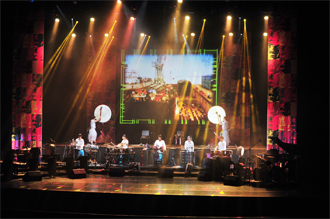
The 2013 UWMF Will Shine with Bajofondo, Savina Yannatou, Muzsikas and Celtic Music
The Ulsan World Music Festival, which will take place during the first week of October this year, too, will have three headliners: Savina Yannatou, Bajofondo, and Muzsikas. Savina Yannatou and Bajofondo are well known to world music lovers while Muzsikas, which was formed 40 years ago exactly, is an iconic and legendary Hungarian band. Meanwhile, traditional Celtic artists have never performed in Korea. (Secret Garden, which performed in Korea, has “Celtic-style” sound.) But this year, Breabach, a Scottish Celtic band composed of five members, participates. Lee Jung-hun says that Breabach will provide the audience with a precious moment by playing the bagpipe and fiddle.
“Celtic music artists are active not only in Scotland and Ireland but also in Galicia, Spain, Bretagne, France and Quebec, Canada. Last year, Breabach was the hero of Celtic Connections, which is held in Glasgow every January, and the Edinburgh Festival Fringe. I saw the band during the showcase of AWME last November and came to invite them to Ulsan.”
Lee Jung-hun hopes that the Ulsan World Music Festival and APaMM will make a soft landing so that the image of Ulsan can be enhanced and the citizens of the city can be proud of the Festival. From October 3 to 6 in Ulsan, you can enjoy Korean and Asia-Pacific world music, traditional music and jazz for free.
|
|
|
| Director, Lee Jung-hun | |
 PREV
PREV
.JPG)
.jpg)
.jpg)
.jpg)
.jpg)












.jpg','World Music was a makeshift term. In the 1980’s, t..');)


