





Arts of Creativity and Innovation Transcending Time
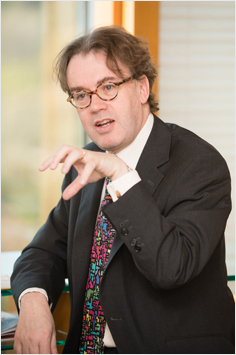
[People] Jonathan Mills, Artistic Director of the Edinburgh International Festival
|
|
"Storytelling," Rather than "Transmitting a Fact," Should Be Developed
Myung-ju Jeong ("Jeong") Is this your second visit to Korea?
Jonathan Mills ("Mills") No. It might be about the 11th visit. I first visited Korea in 1998 and later on, I came to Busan Biennale two or three times. I forgot the title but I came to see a performance choreographed by Eun-mi An that took place on the east coast. I visited not only Seoul but also a couple of other Korean cities and I really liked them. This is not surprising for Australians because they know about Korea well, they respect it and they consider it a country that closely cooperates with Australia and a trade partner.
Jeong Last time you visited Korea, did you see any dance and music performances?
Mills Of course. It is my fifth visit to Korea since I was appointed as the artistic director of the EIF. To invite a performance, one visit isn’’t enough. I first visit a country for a general study of its performances and next, I visit it again to look closely into them. Finally, I go there third time to negotiate with those in charge of the performances. But in the case of Korea, I came to invite Korean performances to the Festival right after my second visit. I already invited a Korean performance in 2011 and this year, it is the second time to invite one.
Jeong I didn’’t know that you know about Korea so well.
Mills I can’’t say that I know about Korea well. I know Korea in proportion to what I observe with interest. It is also true that I visited the country for a long period time to the point that I can feel the changes that were made in Korea. Since the turbulent period in the 1980’’s, today’’s Korea has undergone a huge transformation. The country improved in many ways, though such development always comes with sacrifice. In the cultural industry including design, architecture and film, Korea was always strong in music in the past. But now, the quality of other art genres is improving to the level of music.
Jeong You came to Korea first time in 1998. Compared to that time, what do you think is the biggest change that was made in the country?
Mills There could be many changes but first of all, Korea became richer and Seoul became bigger. It is obvious that Korea greatly developed. Of course, development is not always a good thing because it also causes side effects such as air pollution. But it seems that Koreans came to have more self-esteem, particularly, a very strategic self-esteem. In other words, on the front of policies, the country has established a great cooperation network of individual planners, government agencies and art organizations. This is something to be noted by global policymakers. Training talents through education is also very clearly seen in Korea. Schools start training talents from their adolescence so that they can become orchestra players, professional actors and dancers. In the field of the fine arts as well, students begin to be trained at their young age and they grow into professionals. Recently, more and more Korean arts professionals have engaged in overseas activities.
25 years ago, Korea was globally strong only in the field of music thanks to its artists like Sumi Jo. But today, Korea is training global artists not only in film, the visual arts but also in the theater. A case in point is Tae-seok Oh, a director who was invited by the EIF in 2011. While participating in the existing theater scene (for example, the National Theater Company of Korea), Mr. Oh continues to work with young actors through his own troupe, training a very interesting pool of actors. They will be able to grow into very interesting actors by experiencing a variety of genres, like the British actors Glenda Jackson and Judi Dench. They first started their career at the Royal Shakespeare Company to learn the traditional theater. They then moved to the commercial theater scene of the West End and then to TV sitcoms and films. At the same time, they also appeared in experimental theater works while participating in Hollywood movies. In this way, Korean actors are also having opportunities to widen their scope of acting in their own Korean language, while searching for their own entertainment genres.
Jeong Mr. Oh looked a little upset saying that film directors come to see his performances to take all the good actors with them...
Mills He is just praising the good actors. Film directors never takes actors with them unless they are good. I can guarantee it. Of course, this is not about "taking" but about "borrowing" them because the actors also return to the stage and contribute to the theater. But looking at Korean modern dance, it is not weak but it seems that there aren’’t many excellent choreographers yet. As for traditional dance, there is a small but fixed audience. K-pop isn’’t to my taste but it has very popular nature. But frankly speaking, modern dance that is between the two doesn’’t seem to have a clearly unique voice.
Jeong That is because developing a creative field takes time.
Mills Yes, you’’re right. That is just what I wanted to point out.
Jeong Plus, there are many excellent dancers and many of them also engage in overseas activities.
Mills It’’s true. These dancers will be able to be trained as good choreographers. I mean that there are good choreographers but it seems that there aren’’t many great ones. Of course, it is difficult to get concrete results immediately because creation requires a wide understanding. This process is enabled by the education system throughout several generations. The same is true for engineering and technology. For Britain’’s future 20 years of education policies, the country has set four priority fields called "STEM": science, technology, engineering and math. But education experts like Livingstone say that one more field should be added to "STEM," to make it "STEAM."
Jeong "A" for arts?
Mills Yes. Rather than design or cultural narrative, in other words, transmitting a fact, storytelling should be developed. In Korea, very interesting fields have developed these days. One of the fields is the design of neckties by the designer Sang-bong Lee. I’’m also wearing one of his neckties. After the London Olympics, the designer had a fashion show at the Victoria and Albert Museum. We all thought that this was a very attractive work. Like this, in the area of design, Samsung and LG are making beautiful products and the same is true for fashion design. This is also directly linked to the visual arts. In Brisbane, Australia, an exhibition of modern art is held every three years. On that occasion, I have seen showcases of modern works by excellent Korean artists. The works that were introduced during the exhibition have allowed me to be aware that Korea, Japan, Indonesia and Vietnam now boast dynamic works of art, curators and gallery experts. Compared to 25 years ago, the Asian visual arts have a great quality so it is no longer necessary to turn only to Europe.
|
|
Interpreting Specific Era and Society through Materials
Jeong Changing the topic, can we now talk about the EIF? This year’’s theme is "Innovation and Technology."
Mills We’’re not talking about just "innovation" and "technology." Rather, going back to the time before "innovation" and "technology" even existed, we want to reflect on how the artists made works of arts using the materials of that time. An artist and a work of art could have a political context as well as local and linguistic characteristics but innovation is also enabled by the tools he or she uses. For example, many say that Beethoven was a musician of innovation. In particular, his piano sonatas are innovative. But in fact, his piano sonatas were made mainly thanks to the metal-framed piano that began to be developed in that era. Before that era, wooden-framed instruments didn’’t have such great power to sustain their strings. Consequently, after each performance, they had to tuned again. But the metal-framed piano, which is bigger, stronger and more durable, appeared and enabled piano pieces to make a great leap forward.
Hearing that this year’’s theme is "Innovation and Technology," many people think that I’’m planning to show only new works during the Festival but it’’s not true. The Festival will encompass the works that were innovative 50, 150 or 500 years ago and that still stand out with their innovative characters. For example, Beethoven’’s Piano Sonata No. 29 (also known as the Hammerklavier) was outstanding in that era but today, 200 years from then, it is still a very original work. Davinch’’s paintings still look amazing and even avant-garde 500 years from the artist’’s era. In the same vein, Nam June Paik’’s works were created 50 years ago but they are still original today. That is why "history" is a very important factor of this year’’s theme. The Festival’’s theme is "Innovation and Technology" but its deeper meaning consists in observing how the technologies artists use for their creation are reflected by their works.
Jeong It is an interesting theme...
Mills I call it "material thinking" which is about interpreting a ceratin era or a society through specific materials. A good example is Beethoven’’s sonata I’’ve just talked about. We can interpret how Beethoven’’s piano sonatas changed with the transition from wooden-framed instruments to metal-framed ones. Here, the "materials" could be building materials or those used for instruments. The harpsichord that was made in 1764 was used by composers like François Couperin to play great music reflecting the society of that time. Many concerts using such instruments will take place during this year’’s Festival. For example, using the glass harmonica that was made thanks to the invention of glass, Mozart’’s classical music and George Crumb’’s modern music will be played to try "material thinking." A Mozart recital playing the basset horn is also linked to this thinking. Meanwhile, as an example of showing how instruments developed, the French pianist Pierre-Laurent Aimard’’s concert will be held at the Queen’’s Hall.
In general, this year’’s program will shed light on "innovation" that continues beyond history through great artists. Through the inventor Davinch, the Festival will show that even modern technology is still following his. It will also have an exhibition of the Korean artists Nam June Paik, who was at the same time a great philosopher, painter, musician, installation artist and our era’’s thinker. 50 or 60 years ago already, Mr. Paik predicted the issue of modern society: its obsession with video. He already knew that we would be attracted by the abstract nature of film and photography. He expressed social and political aspects by means of objects that look like robots while also showing his originality of uniquely arranging objects that had been thrown away. In particular, he accurately predicted that modern people would be bedazzled by recorded images.
|
|
|
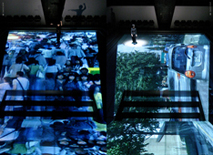
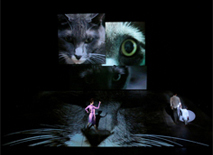
Jeong How did you come to know Mr. Paik and the video artists who were invited to the Festival, Hyung-su Kim and YMAP (Hyo-jin Kim)?
Mills I learned Mr. Paik’’s works at school. It was about 30 years ago because I came to know about Mr. Paik while learning Merce Cunningham and John Cage. I came to know Hyung-su Kim and YMAP (Hyo-jin Kim) during an online search. I found them while looking for video artists who are excellent in technological terms and sophisticated in esthetic terms. Many artists are esthetically great but weak in using technology. Or, they have great technology but they lack in esthetic ideas. I believe that Hyung-su Kim is a rare artist striking a balance between the two. After fixing the Festival theme, I started looking for artists that would be fit for the theme. In this process, I invited a variety of artists who would join the journey prepared by the Festival, regardless of their popularity. The Festival also offers a wide spectrum transcending time which includes Philip Glass’’ concert using the films of Jean Cocteau who passed away long time ago and the Wooster Group’’s work that was made by means of a video recording of Richard Burton’’s Hamlet performance.
Jeong I heard that next year, you wouldn’’t be the artistic director of the EIF any more.
Mills Yes. The next artistic director has already been appointed: the Irish theater expert Fergus Linehan. He will start working with me for this year’’s Festival. I’’ll give him the information I’’ve got in numerous countries and I’’ll also let him know what works and artists he should focus on. Of course, it is up to him to accept my advice or not.
Jeong What are you planning to do after finishing your job as the Festival director?
Mills I’’ll write operas because my major is composition. I may be performing in Korea. I’’d like to ask you to invite me then (laughs).
Jeong To wrap up the interview, do you have any advice for artists?
Mills Never try to make works to please others. Don’’t try to please others but do what you love. Be sure to do your own thing!
 PREV
PREV
.JPG)
.jpg)
.jpg)
.jpg)
.jpg)












;)


