





[K-Festival Directors] Activist Traversing the Frontlines
[Who&Work] Inza LIM _ Artistic Director of the Seoul Marginal Theatre Festival
The Seoul Marginal Theatre Festival is a unique performing arts festival which has its own artistic color. Keeping a distance from traditional theatrical approaches, the festival functioned as venue for communication with the audience in contemporary theatrical language, stimulating them in a fresh way. Inza LIM became the youngest artistic director of Korean performing arts community in 2010. Her life’s journey is similar to the one of Seoul Marginal Theatre Festival. She is always in progress of delivering contemporary issues via performing arts, focusing not just on results, but on process itself. Following her own compass, LIM is pushing the boundaries of Korean performing arts. We sat down with LIM to learn her dynamic story.
 |
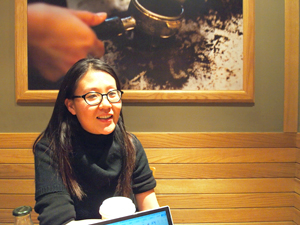 | |
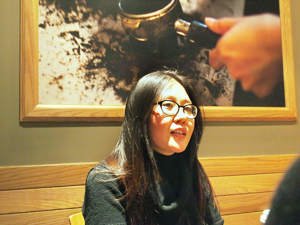
| Inza LIM | ||
Q: The Seoul Marginal Theatre Festival celebrates its 14th anniversary this year. The festival has considerably contributed to expanding the landscape of Korean performing arts. Please tell us about the Seoul Marginal Theatre Festival.
A: It avoids traditional and conventional theatrical approaches. First in 1999, such minded young directors formed a festival, and it was the origin. Usually, it takes place in September, and introduces about a dozen of works. Works are selected through open call, and curating. Domestic projects almost dominate the festival. We don’t want to shop for overseas performances, and try something new. So far, I’ve done lots of studies on overseas works and markets. With that, we will try to produce co-productions with overseas festivals or companies. In that context, we plan to participate in the project Our World which is organized by Danish Aarhus Festival. In this project, various performances will be simultaneously performed all over the world. We’re working on details. In addition, we are planning a co-project with a Danish television station.
In 2004, I started to work as a programmer for the Seoul Marginal Theatre Festival. At that time, pursuit of formalistic esthetics seemed to stop at just being formal. That I felt sorry about. The way of adopting ideas, and esthetic criteria for selecting works at the festival seemed too conservative as well.
Art for the sake of art, of course, that matters. But that’s not all. So, we tried a street theatre project in 2005. It was titled Special Citizen in Normal City. In it, we wanted to disseminate what really matters is the energy and power of the Seoul residents. In 2007, under the theme I Have a Question, I put on the front the questions about major social issues and our lives. I tried a similar attempt last year as well. Inspired by the animals slaughtered for foot-and-mouth disease, we explored the relationships between humans, and humans and ‘non-humans.’ That was why we set the topic as "Pig and Myself: The Relations and Questions about Cognition".
Q: The word “marginal” connotes something outside mainstream, or on fringes. What does that word exactly mean? What does your festival pursue?
A: Being marginal esthetically implies being on the frontline. Substance-wise, it’s a venue for throwing questions. Our festival is intended to locate and show what’s in cracked fissures of the society in the form of questions. We’re also mulling over the matter of how to communicate. We want to throw questions not from the existing perspective, but from the perspective of first person. Moreover, we’ve got to keep trying to figure out what my perspective is. Our festival looks after theatrical works that can arouse the awareness of contemporary people. But it’s not saying that all of our sought-after works are political in nature. We seek for those that are artistically perfect as well. That’s why our presentations sometimes become avant-garde. If we deliver our message in a direct way that everybody easily understands, it would be like spoon-feeding arts to people. What we need are maximum beauty of art, and experiments to realize it, along with good causes for those experiments.
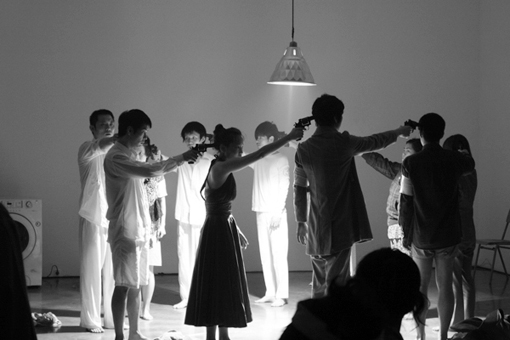 |
| Be Mobile in Immobility (the materialized memory) by Green Pig |
Study Before Everything Else
Q: Other than working for the festival, you reportedly work as independent producer, working with a variety of artists or locating new artists. Is that correct?
A: The budget for our festival is very limited, and we don’t have enough money to pay artists enough. So, we have tried helping them indirectly, say, by providing information or supporting their marketing activities. These contacts have put me on good terms with young artists, and offered lots of ops to work with them.
For example, I have worked with director Whajung KANG who is acclaimed for her own uniqueness, director Hansol YOON of Green Pig who is well known for his bitter satire on society, and Visual Theatre Company CCOT. Meanwhile, we played Geumhyung JEONG’s Vacuum Cleaner which was premiered at the Seoul Marginal Theatre Festival in 2006 at the Exprementica 07 held by the Chapter Arts Center in Whales, and toured the Whales area with another JEONG’s work 7ways in 2009. In 2010, I produced Urban Move Research or Theatre Let us move your sofa with Creative VaQi. This piece won an award in the new concept theatre section at the 2010 Dong·A Theater Award.
* Dong·A Theater Awards : Established in 1964, Dong·A Theater Awards is the theater award ceremony with the longest history in Korea. This ceremony selects full-length plays performed in Seoul from January 1 until December 31 in the current year. The four major awards presented in the ceremony by the end of the following January are: Best Work Award, Best Direction Award, Best Acting Award, and Best Director Award. On the one hand, the New Concept Theatre Award was established in 2003 and this award is given to individuals and groups who broke from the existing play concepts and sought to present plays with novel forms and sense.
Q: How do you meet and work with artists, and through what processes?
A: I’ve done a lot of legwork to discover artists. I watch domestic or overseas performances as many as possible. I watch approximately 20 performances a month. I think artistic language is the tool facilitating communication with artists. The first priority in working with them is studying artists. And then, I meet with them, exchange ideas with them, and develop the ideas into performances. Other times, however, artists themselves propose their own methods to develop their works. Let’s take Geumhyung JEONG. She develops in her own language. For artists like her, I help them communicate with programmers about why their works have to be performed and their artistic status. To work with artists, you have to speak two languages, or language of arts and language of arts administration.
Q: What really stands out among your projects is your delving into space. I think Creative VaQi’s Urban Move Research or Theatre - Let us move your sofa which was performed in the Gwanghwamun, center of Seoul in 2010 must have been quite a challenge to you as producer.
A: Urban Move Research started with the idea of placing couches at the urban heart. The simple idea blossomed into an inquiry about the meaning carried by the city. We first looked into Gwanghwamun Square from the macroscopic perspective. Then, we divided it into public space, private space and the spaces between them. Finally, I viewed it as something in-between. Looking at it from these different perspectives, I got to figure out the meaning of city. Holing up in a McDonald which remains open around the clock, we continued studying space. Through it, we got to see what’s behind appearance. Our finding develops into a story about institutionalization, or the invisible fine mesh net retained by the city.
The Gwanghwamun performance was riddled with constraints. It is open to public, but individuals can’t use it at will. So, it was difficult to get the permit for use. One of performers earned the nickname of Monster Girl, and it topped the online most searched word lists. Actually, the attention wasn’t intended. Anyway, the interest from media was really high.
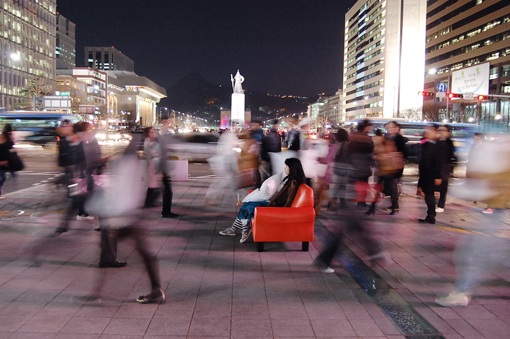 |
| Urban Move Research or Theatre - Let us move your sofa by Creative VaQi (2010) |
Art for Art’s Sake is Beautiful, but Insufficient.
Q: You’re reportedly highly interested in contemporariness. What does it mean to you?
A: I was born to a poor family. When in high school, the government gave out garbage bags free. That small support made me realize how happy a person may feel at a meager assistance. I began to think public power is important. During my middle school days, a pro-democracy movement was taking place in Gwangju. On my way to school, I saw a poster showing a dead person who was horribly murdered. I was really shocked by it and wondering why such a tragedy happened. Contemporariness is caring not only about oneself, but also about other people and things. We have to think about what we should do as human beings living in this society. Working for a small festival, I got to pay attention to the things that would have passed unnoticed, had I worked for big organizations. I began to ask questions about historical experiences and social issues. Arts for arts’ sake themselves are beautiful, but insufficient. Arts should take on contemporariness.
Q: You’ve been dynamic about international exchange lately. What are you pursuing in international exchange?
A: I recently visited Kunstenfestivaldesarts in Brussel, Home Works in Lebanon, Tanzplattform, Mexico Encounter, and the Tokyo Performing Arts Market (TPAM). I will go to the Push Festival this Feb. on invitation as well. My purpose in international exchange is not to locate business partners, but to do research on performances and artists. I just wanted to watch more performances. That was why I first went over. Meeting with artists, I can feel I’m communicating with them and feel happy for that.
Q: What are your plans for 2012?
A: We plan to talk about physical and mental states of diseases and disorders at the festival this year. Visiting Auschwitz in Poland recently, a question dawned on me, “Why did this terrible tragedy happen?” This realization stimulated. At this year’s festival of ours, the performances dealing with physical illness and mental conditions like internal isolation through new art formats will be presented. We plan to hold the festival this coming June. As producer, I am preparing overseas tours for the artists I’m working with, and working on an interview project “Dialog” with film director Hyun Jung LEE. The film will record interview clips of 2nd to 4th generations of Korean-Japanese people living in Osaka. In the end, the documentary will demonstrate their confusion about identity. To expand the project to other Asian countries, we’re looking for funding sponsors and partners.
| [weekly@예술경영] 국문 임인자 인터뷰 보기 GO
 PREV
PREV
.JPG)
.jpg)
.jpg)
.jpg)
.jpg)












(0).jpg','The Seoul Marginal Theatre Festival is a unique pe..');)


