





Finding your identity and making yourself independent
[Who&Work] Juhong Kim, Artistic Director for Noreum Machi
Noreum Machi shares a number of links with the Korea Arts Management Service(KAMS). Since the group’’s selection for the "PAMS Choice" showcase at the 2008 Performing Arts Market in Seoul, they have worked together through various KAMS support efforts, including a 2009 appearance at the APAP showcase in the US, a 2011 performance at France’’s Babel Med showcase, and a 2012 collaboration with Australia’’s Strange Fruit. This last is being supported by the Korea-Australia Connection Initiative, a project jointly organized by KAMS and the Australia Council for the Arts.
We met with Noreum Machi’’s artistic director, Juhong Kim, ahead of a collaborative workshop with Strange Fruit, which was in Korea at the invitation of the 2012 Yeosu Expo.
The Korea-Australia Connection Initiative is part of KAMS Connection, which was launched in 2010 to support the development of mid- and long-term international collaborations between Korean and overseas performing arts professionals. There are two stages of support for Connection projects: a preliminary research stage and a project development stage.
Q: I’’m curious about the meaning of "Noreum Machi."
A: "Noreum Machi" is term that originated with the Namsadang troupes (itinerant performance groups that performed popular song and dance routines during the Joseon era). It combined the word nolda, meaning "to perform," and machi, which has the sense of "to complete." So it’’s the person who "completes the performance"---in other words, a master of performing. We typically use it to say someone is the best around at whatever it is they do, but we might also use it when someone has performed above their everyday level of capabilities on some particular day. In that case, we’’d say that the person "was the Noreum Machi today." Or maybe you’’re eating your lunch and the pickled vegetables are better than other dishes. You’’d say, "The pickled vegetables were the Noreum Machi of lunch today." So you can use it in a lot of different ways.
Q: How did Noreum Machi get started, and how is it run?
A: The group was first formed in 1993 when Lee Kwang-su, one of the original members of Kim Duck-soo’’s Samulnori group, broke off with them and put together a group of younger musicians and students. That was the first Noreum Machi. There was a situation in 1995, and I ended up inheriting the directorship as the youngest original member of Noreum Machi. The main focus of the original Samulnori had been on percussion, but we added the human voice and dancing as a way of bringing more performance elements onto the stage. I don’’t think it’’s enough to just have music there. You need to have a lot of different elements coming together, so that a kind of functional, philosophical value is really visible there on the stage.
The group right now is the fourth incarnation, with five members, including me. We also have a staff member working on planning. Two of the members are students of mine that I taught back in their high school days. We don’’t have all that many members, but we pay them a salary. Pay is based on seniority: the more experienced ones earn more, and the less experienced ones make less. And then the members keep what they earn through their individual activities.
|
| |

Inspiration and commonality
Q: Noreum Machi is famous for the strong bonds between its members. Could you let us in on the secret behind this? Is there anything you think is particularly important when dealing with the members of an ensemble, or with people in general?
A: Even when you have a couple who’’s been together forever, it’’s difficult to maintain a stable relationship. There needs to be something that you share to avoid splitting up. There has to be a shared vision of what each person wants, and if there’’s anything left over, that needs to be shared, too. You can’’t perceive yourself as a victim. Members of any kind of team will take off the moment they start seeing themselves as victims. In the past, we didn’’t have the means to share financially, so it was important to instill a sense of motivation. We were inspired by the other members and tried to find common ground. In Korean, you can reverse the order of the components in the word for "inspiration" (gamdong) and it gives you "commonality" (donggam). So it’’s important to acknowledge them for what they are. We respect people who are talented, regardless of how old they are.
There are two ground rules that we have in dealing with band members. One is that we need to share a vision, and the other is that we should pay well. (laughs) When friends share things, they can move forward as one. With friends like that, you can divide up the pie as it grows. We’’re ready to wait any length of time for anyone if they prepare like a pro. If you don’’t prepare adequately, we don’’t have the time to meet you. The same goes for money. We have no choice but to give according to what you do. Whenever someone needs me, there’’s obviously going to be a corresponding compensation given. If you trust in each other, then you should have the courage to say something doesn’’t work when it doesn’’t work.
Q: How did you get started with international exchange?
A: It wasn’’t something we planned on from the start. It was really a kind of kismet. I was 25 years old when I became president in 1995. I’’m a "receiver," not a "generator." I like to hole up and keep to myself. I just practiced and practiced over and over in the basement. And the whole time, group members were coming and going. It was rocky for a while there. Then, in 2007, my German friend, Rudiger Oppermann, said they were looking in Europe for someone who did Samulnori, and suggested we come over. They would pay for the performance, but we had to cover the airfare. We had no experience with international exchange at the time, so I thought that the invited group had to handle everything related to invitations. I did hear about cases where other Korean groups had gotten corporate support for their overseas performances, but I don’’t think kind of process that had ever occurred to me during my time rehearsing there in the basement. In the end, I got the airfare to Germany paid for, too. (laughs)
Now, the friend has been working with Summermusikfest, and is still doing exchange efforts today. The program we ended up taking part in was the result of collaborations between world music artists from different countries and local artists in Germany---they were developing works to tour different theaters in Germany. So it was a kind of workshop festival, with 600 to 1,000 amateurs and professionals getting together to hold a workshop in about eighty classes. Sometimes the music developed in these classes would be performed on stage that very night. It went on like that for ten days. We are invited to the festival this year too.
My experience in Germany came as a fresh shock to me. The kind of music we were doing was ordinary to us, but it got a very strong reception from the local German audience and artists. I think they were amazed at the music we were doing, which was something different to them. The world started to look a bit different after that. We discovered that there were people out there who might like our music. I thought that if we made good music, we could generate some curiosity and touch people around the world, in Japan or the US or wherever.
|
| |

Q: It was in 2007 that Noreum Machi first started thinking about reaching overseas audiences and developing a new market. This coincides with the period after 2006 when KAMS began expanding its support programs to aid Korean groups in getting opportunities to perform overseas. My understanding is that you’’re receiving both inbound (PAMS)and outbound (overseas traditional arts market and overseas performance) support, and that you’’ve recently been taking part in the KAMS Connection project to promote a new form of mid- to long-term international collaboration. How did you get started collaborating with the Australian group Strange Fruit?
A: Strange Fruit took part in the 2010 PAMS, and as they were looking around for a Korean group they might be able to collaborate with, they happened to stop by our booth. We got to talking, and they ended up proposing a collaboration. They’’re a group with a strong visual impact, so we thought they might clash with us in some ways. The reason we decided to go ahead with collaborating anyway was a combination of the feeling that it might be a fun process, together with the belief that something special might emerge from pros working hard together. I also think their extensive network will be a lot of help, since it’’s an area where we’’re a bit lacking.
Q: How has it been collaborating with an overseas group?
A: Collaboration is a difficult process. The crucial thing is that Noreum Machi has to establish a unique identity. We have to be able to develop an exclusive Noreum Machi program where audiences can enjoy themselves, at least for an hour and a half. Once you’’ve established a specific, distinctive image, it goes a long way. The ones who try to get together with other people to collaborate without establishing that first won’’t see any real results. They’’ll end up playing second fiddle to the ones who already have that well established. You need to be independent. And when you’’re collaborating internationally, there has to be a real-time exchanging of views and decision-making process. It only works when both sides truly know what they want. Otherwise, you could end up with a halfway situation where one side doesn’’t really want to collaborate, but needs to go ahead with it because they’’re getting funding. The performers are important, yes, but you also need planning staff. So it’’s crucial to have education programs producing experienced professionals. That experience needs to be there. It would be nice to be understanding and give second chances for the kinds of mistakes that inexperienced people make when they’’re learning something, like they do in school. But those mistakes can cause economic losses or have a direct impact on the ripple effect. So there are limits to the ability of groups to teach and train them.
|
|
| ||
| workshop |
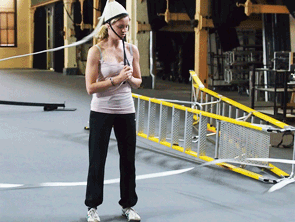
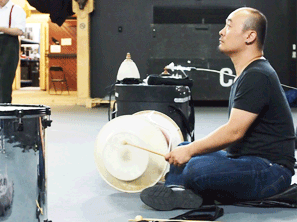
Q: It seems like any time a group is involved in a lot of different efforts, there would be a kind of conflict between the group’’s growth and the claiming of a market. What kind of issues are you experiencing?
A: Last year, we focused on overseas work, even if it left us bruised and battered. (laughs) Since last year, it’’s been our aim to focus more on Korea than overseas projects. It’’s nice to enjoy the work you’’re doing, but it’’s also important to approach it with artistic authenticity. We’’re also considering a more selective approach to overseas exchange. We want to catch our breath and focus on making good work that is faithful to our identity.
Q: Do you have any advice for people who are interested in doing work not just domestically but overseas, too?
A: The answer I’’ve found is "identity." Whether you’’re collaborating or improvising, your identity has to be clear. The meaning of "collaboration" or "combination" involves two identities coming together to create a whole new one, and that just isn’’t possible when you don’’t have an identity of your own. Whatever the situation, you just need to have a clear identity. You need to be independent. When you’’re independent, other people will want to work with you---because you’’re distinctive, and because it makes sense. So things like "finding your identity" and "making yourself independent"---these are crucially important tasks. Once you have an identity established, you don’’t have to worry when it meets and mixes with something else. Now, Noreum Machi’’s identity is still a work in progress, but the roots don’’t change. So I can sing a song in a different tone and it’’s not a problem, because I have that belief in the music I’’m making.
 PREV
PREV
.JPG)
.jpg)
.jpg)
.jpg)
.jpg)












.gif','The Korea-Australia Connection Initiative is part ..');)


