





Strong subjectivity is reason
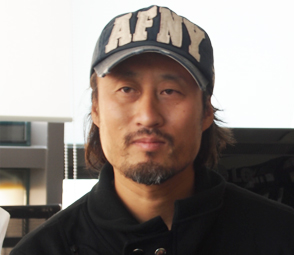
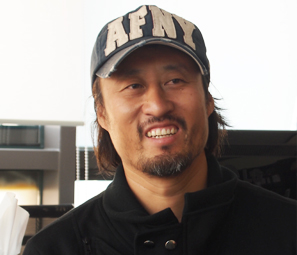
[Who&Work] In-soo YOO, Representative of Theater Yeon Woo Company
"Every work that is created cannot be 100 percent successful. But the important thing is to minimize losses and it is a matter of taking the profits created and investing it in a weak area in the right way. It is when one minimizes the depletion through good management and continue to create works, a base can be created where artists, actors, and staffs can make a living."
On the way to meet Representative In-soo YOO, I wanted to hear about the past of Theater Yeon Woo Company (hereafter Yeon Woo Company) which is known to have a long history. I also wanted to hear how the Theater is being passed on and how it is being managed in this difficult environment, and maybe I was expecting a kind of story that brings tears to the eyes. There were also advices from others that I should refer to the book published by the Yeon Woo Company which contains the development story of their original plays. It is probably because the Yeon Woo Company has produced so many famous works. The story I heard from In-soo YOO, who I met for the first time, wasn’’t about Yeon Woo Company’s past. And of course, it isn’’t about the future of the company either. It wasn’’t about the Theater itself, but about what the producer In-soo YOO is interested in and what he wanted to do. My expectation and bias that production of musicals is a strategy for survival, was off the target. Let’’s set aside Yeon Woo Company for now and focus on the producer In-soo YOO!
Creating new models beyond the crisis
Representative In-soo YOO started acting in plays in the drama club at his college. And in his late 20s of fairly later stage in his acting career, he first began his ties with the Yeon Woo Company. As he was acting, there were future contemplations about setting clear goals of making a living. He was already in charge of planning tasks of the company when he was acting and because he took the role of being the Head of the Company, he naturally switched over to a producer. The appeal of the producer attracted him because above all else, a producer can select the work one likes and with the right perspective, one can personally create great works.
"When I was active as an actor at the Yeon Woo Company, many theater companies were already in the period of change. It was a time when the existing member system was collapsing, and Yeon Woo Company also went through several financial crises. In a situation where the Company wasn’’t producing any profits, the fixed operating expenses of the company was a financial burden and the members wanted to constantly create new works, but the conditions did not support their wishes. Actors tend to avoid planning work, but planning wasn’’t difficult for me and it wasn’’t something that I disliked. So naturally, I served as the head of the company while I was acting. Even the security deposit on the Company’s property was frozen in the beginning, but the Family Theater which was produced when I began to serve as the head of the company became successful and just then, the cultural welfare for the underprivileged and audience development support system was created, so we were able to pay off the debt."
He left the Yeon Woo Company in 2002 and produced the Marionette Puppetry as a freelance producer, and had very successful ticket sales. And since then, another crisis surfaced at the point when he once again became active in the Yeon Woo Company as he co-created another Family Theater with them. As he became involved in the process of resolving the matter and seeing the light at the end of the tunnel, he was offered the representative position from the predecessor. With the condition that he will manage the Company in his own style, he became the representative in 2005.
|
|
| ||
"Fortunately around this time, several support programs were launched by the Arts Council Korea and they became a big help in overcoming yet another crisis. But, I didn’’t take my position to just overcome the crisis and keep the status quo. I wanted to create a new model in terms of new works and management. This was already the period when the management of standing theaters was difficult. It was a period where one had to choose between an artistic work by enduring pay-cuts for creators and actors or works that were popular. The vague idea that ’’if I create a performance that I like, the audience will naturally follow’’ wasn’’t going to work out."
He decided that the Company’’s management had to change into a cyclical system. He thought the system where the senior members got exclusive opportunities and left the small roles for the younger members had no future. First, he allowed the workshop performances to be performed centering on younger members, and changed the member system into a practical system. The first 2 years as a sub-member after joining the Company, one was prohibited from other activities other than from Yeon Woo Company, and from the 3rd year to the 5th year as an official member, one would be allowed to participate in outside activities under the agreement of the Company. After the 5th year as a ’’free member’’, the system allowed the person to freely devote to outside activities, but required the person to participate in roles upon request by the company.
Taking time in production
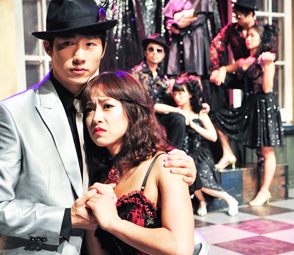
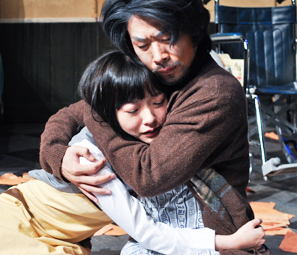
The works that came about after the reconfiguration of the Company’’s system were Oh! While you were sleeping (hereafter Oh!) and Haemu (The Sea Fog). The Oh! that premiered in 2005 recorded sold out tickets for the following 5 consecutive performances since its premiere and was awarded the Best Musical at the 2006 The Korea Musical Awards. Currently in April 2012, Oh! is still being performed in its 18th season as the performance without a set end date. Oh! which was performed in a small theater, without depending on stars, and performed with live singing and instruments was a rare original musical at the time.
|
|
| ||
| Oh! While you were sleeping |
"I think I was able to jump right into it without fear because I really didn’’t know about musicals. The production structure of musicals itself costs a lot of money. We were still not making any profits even for the repeat performances in the following year, let alone the premiere. A lot of additional costs occurred even for the repeat performances such as sound equipment and we were still yet to make a profit. We invested all the profits made from the Marionette Puppetry performances and payments from my movie appearances into the initial production costs. Fortunately that year, as the support aim of the Seoul Foundation for Arts and Culture changed to ’’selection and focus’’, the support funds were relatively substantial for small theaters and we were able to get out of the crisis. Only after 2 years of continuous sold out tickets and the Award from The Korea Musical Awards, we were able to get some attention from private enterprises. As funding and sponsorship followed, we were finally making surplus, but the amount wasn’’t very significant. Nevertheless, we dragged the performance without setting an end date. Because the foundation of original musicals was weak in Korea, this was an attempt to raise the level of actors through training and continue to discover new actors through auditions. Our auditions are still infamous for being picky. Then after a long period of training, one can finally get on stage."
Although there were many interests and proposals from enterprises and several proposals for new works from creators, the company didn’’t jump into the next production right away. Representative In-soo YOO wanted to modify the work through time and patience, and wanted to develop and cultivate the actors. On the other hand, enterprises and artists often wanted to create works and showcase them on stage right away and in those cases, the company introduced other theaters with such production systems. He says he wants to show works that are well made even though it may take a long time.
The Haemu (The Sea Fog)which was selected as the ’’2007 best 7 Korean plays’’ was born through 2 years of meticulous script modifying work ever since its first draft was completed. The preparations began in 2005 and it was finally on the stage in 2007 as an anniversary performance for the 30th anniversary of Yeon Woo Company. Haemu was prepared from the beginning with its movie production in mind. Thus, the appropriate structure for the movie was pre-conceived and when the performance moved from a small theater to a larger theater, a lot of efforts were put into sound and visuals. Even the poster was made in a movie style. Currently, a co-production between a movie production company and Yeon Woo Company has been decided and they are in the final stages of its scenario work.
Values that are kept for being ’’Yeon Woo’’
"As a private production company since 2009, I was able to make a clearer direction for the company in the production sector. Mid to large-scale works are now the area of public theaters. I came to think that artists themselves should be in charge of works that revolve around artists and directors, and public theaters should be in charge of big performances. Commercial entertainment works are also not my concern. Of course, there are values that need to be kept for being the Yeon Woo Company. The works of Yeon Woo Company are the creative works that also connect to the audience."
|
|
| ||
| The Haemu (The Sea Fog) |
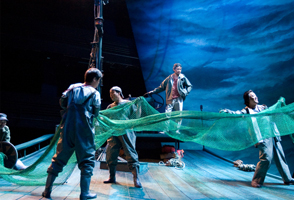
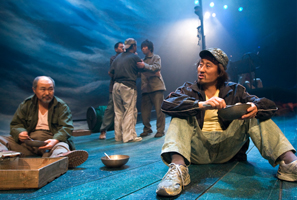
Even though the company is showing off different colors than the former Yeon Woo Company, it seems there is also deep consideration to be vigilant of the boundaries created by the name, Yeon Woo. Above all, the value of creating original musicals has been of concern. In addition, the company continues to show interests in small theaters and tries to produce new works as long as there are good works and a breathing room financially. This is why, the small theater of Yeon Woo leaves its door open for more creators, and plans to manage the company as a space for supporting artists.
"Every work that is created cannot be 100 percent successful. However, it is important to minimize negative costs and one must contemplate how to invest profits from one area to the weak area. When the depletion is minimized and works are continuously made, the foundation where artists, actors, and staffs can make a living can be created. There are cases where a single artist can leave several masterpieces, but it can be difficult to even produce a single masterpiece in a whole lifetime. In a sense, the foundation that enables activity for a long time is also important."
It is difficult to organize the trend of works that he selected with standards other than that the works were ’’well made original musicals’’ and were ’’works that captured the love of the audience’’. The virtue of the works that he created in his standard is from the subjective selection of choosing what he wants, and he believes this standard is the most reasonable for people in theater. The important thing is that Representative In-soo YOO is very clear on his philosophy as a producer. For the works that he goes after, he respects the opinions of the artists but he is also very passionate about expressing his own opinions, and he doesn’’t go after the works that he cannot choose.
A thought coming back to the notion of the Yeon Woo Company, the Yeon Woo Company that has been led by the representative In-soo YOO for the past 8 years probably has some aspects that are the same as the Yeon Woo Company of his predecessors, but also very different in some aspects. The environment, conditions, and interests have changed as well. It will come as a regret to some and expectation for others. Although the issue of evaluation should be left for theatrical history, it is exciting to follow the Yeon Woo Company that he will create in the future for a person following in his footsteps. Because, pointing to the right direction is the responsibility of the person in charge more than for others.
 PREV
PREV
.JPG)
.jpg)
.jpg)
.jpg)
.jpg)












.gif',')


