





Return to movements from multimedia
[Who&Work] Sang-cheul CHOE _ Choreographer of Choe Contemporary Dance Company
[Who&Work] Sang-cheul CHOE _ Choreographer of Choe Contemporary Dance Company
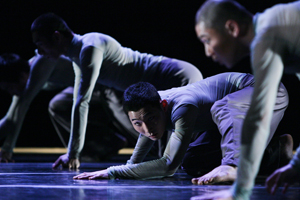
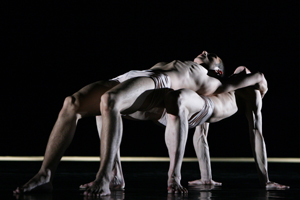
Choreographer Sang-cheul CHOE has been seeking a new way of combining contemporary dance, multimedia and arts as he has been engaged in diverse fields of arts including music, art and motion picture since the mid-90''s. His works Black Angel (2000), Contact (2001), Red Swan (2002) presented a new way of communicating through body language using the high-tech and the human body. However, unlike his works in the early 2000''s, Argument which was selected by PAMS Choice is a work that is taking the focus on the movements and breathing of the dancers only. Argument won awards for choreography and music at the 18th Dance Arts Awards in 2010 (hosted by Changmu Arts Center). I met with Choreographer Sang-cheul CHOE to find out the reason why he changed his choreography from high-tech to the human body.
''No Set, No Color, No Drama''
Q: Since the theme of the project is argument, I''d like to know the process of creating such a project. How did you argue with other artists on script, music and lights? A: We are all friends. They have influenced my works and my life for a long time. We have worked on this project Argument quite a long time than other works. Every artists who participates in this project has presented his or her idea on the theme argument, and all of us had a discussion on the subject. The script writer said that people argue because of love, and I agreed to it. There are many ways to argue with the person who thinks differently from me. You can finish the argument by throwing a bomb, but also you can argue through love. I thought this is a way of arguing reflecting the Korean sentiment. So I started to search on the movements that can show such emotions.
On the other hand, music is very straightforward and intuitive. Composer Lim Dong-chang and I are like brothers. One day he and I agreed that "Argument is the sound of dogs". Despite other artists'' opposition, I used the dog''s bark for the project. It was quite long. When we performed at the Changmu International Dance Festival this year for the second time since last year, some artists had advised me to cut the sound a little. I took their advice because I felt sorry. But, I will not edit anymore. (laugh)
|
|
| |
|
Sang-cheul CHOE |
|
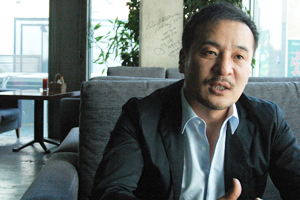
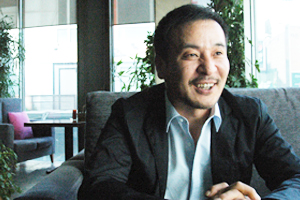
When I work and cooperate with other artists, I know that they are investing their time and pride in the project. That is why I don''t ask them to work in a certain way in advance. I entrust them with the project. Of course I couldn''t work in this way when I was younger. This doesn''t mean that I would give up my style. What we make is a dance language, and as choreographer you ought to tune up the harmony among the artists. It could drag out the work process, but I take the bull by the horns when there is difficulty or a problem. I actually enjoyed this long process.
Q: Unlike your works in the past, Argument seems to be paying a lot of attentions to the movements of the dancers. Do you want to keep this change for your choreography in the future?
A: Once I was asked if it is possible to express the process of logical thinking so-called Argument using the movements only. Actually, I like opening a gate that no one has opened before. Even if I have to give up, I enjoy the process.
From the beginning, I established three principles ''No Set, No Color, No Drama''. I wanted to approach the nature of dance where you can reach through the human movements and sweat. That is the reason why I chose to return to the body movements. It is definitely different from the cold and mechanical emotion through multimedia or other metallic measures. Argument is a work pursuing the differences of words in nuance, starting from the duplicity of a language. Through the process of making images in the big frame of dance, I learn to comply with the nature of dance. And, I am old enough to understand the strength that controls a life. Now, I am on a journey to find the original form of dance where you can reach with the refined body movements by taking out all additives.
Recognizing the difference
Q: What is contemporary dance that you have felt and practiced? A: Of course you can say that what I do now is contrary to my works in the past. However, from the point of choreographer''s view, the concept ''contemporary'' can be seen differently depending on how the choreographer him or herself sees the world rather than the concept defined by others. There has always been the gap of the times. In the mid-90''s, I held a free-style dance festival and used the word ''Project'' instead of using ''dance group'' first in Korea. At that time, many people didn''t understand my attempts, but I could push ahead because I believed that I was right. Also, my attempts to combine dance with different genres of arts or with multimedia were a step ahead at that time, though it has become normal these days.
In 2003, I went to America to study multimedia in order to combine with my works. In the course of studying, I realized that studying multimedia is not that useful to a choreographer. Actually, I discovered my uniqueness or my being as choreographer through other fields. When I learned about the differences in cultural codes, I started thinking about the true meaning of the Korean contemporary dance. Paradoxically you can become a global choreographer when you recognize the difference and respect the value of the difference.
|
|
| |
|
Argument |
|
Q: Are there only dancers in Choe Contemporary Dance Company?
A:Yes, there are. But I am training some dancer to become choreographers. There are many great dancers from Korea, but there are not many choreographers relatively. I want to help young artists with great potential to become choreographers and show their abilities freely. To have confidence and a clear vision as choreographer, they have to learn how to manage themselves. Drinking a tea, watching movies or reading books with them is a part of the training.
Q: Your company is engaged in many fields of activities. You seem very interested in tour shows or art education in addition to your creation work.
A: I am very interested in the regional cultures and the communities. As a choreographer, I want to make contributions and feel the responsibility to the community. But, there are not many social roles that dancers can play in reality. It is not easy to approach the teenagers in a protection facility or the children in the less favored area. However, it is very important for them to experience the positive emotions and sensibility through dance. It can be a way of developing future audience , but as a choreographer, I believe playing my social role is as important as choreography.
Q: Since 2009 you have been working as a programer for the International Modern Dance Festival (MODAFE). What is your main focus as a programer?
A:Programers should read the trend and should know how to make judgement and decisions on works as a promoter as well. But, more importantly, I value the genuineness of choreographers. Of course, the quality of the outcomes are important, but I can trust the work when the artist shows his/her genuine feelings through his/her work. It is trust between two people.
 PREV
PREV
.JPG)
.jpg)
.jpg)
.jpg)
.jpg)












;)


