





Filling up Korean jazz through a process of emptying
[Who&Work] The Near East Quartet _ Director Sung-jae SOHN
[Who&Work] The Near East Quartet _ Director Sung-jae SOHN
The Near East Quartet (NEQ) is a group created by artists who thought hard about the musical thirst in the traditional Korean music and contemporary jazz scene that had existed for a long time. The members are saxophonist Sung-jae SOHN, bassist Soon-young LEE, guitarist Su-wuk CHUNG and Dong-won KIM, who plays many different traditional Korean instruments. The four members of the quartet were each active in various domestic and international contemporary genre music scenes before they created NEQ. We met with director and leader Sung-jae SOHN, who also composes for the quartet.
The process of emptying
Q: Just like the Near East Quartet, which is shared by jazz and traditional Korean music, your personal resume includes a variety of different genres. Tell us about the music you have personally experienced. A: I started by playing the piano and clarinet, and at one point, I dreamed of becoming an orchestra conductor. I studied composition because I wanted to understand music in a comprehensive way, and then I heard Careless Whisper by Wham and fell in love with the saxophone. The advantage and disadvantage of the saxophone is that it has a loud volume and unique sound. Therefore, it is not used much in classical music, but is a main instrument in jazz. I wanted to play the saxophone, but I wanted to play my own songs, not play someone else''s songs my entire life, so I chose jazz. I fell for jazz because I think that it was a genre for players who played spontaneous music on the spot.
The United States think jazz is their music and they place a lot of importance on the traditions of jazz. Learning jazz in the United States, I felt a wall because there was something in their culture and emotions I could not overcome, such as the traditionality, and the politics and power inside jazz. I started opening myself to a wider variety of music as I started again in Korea, when I opened my eyes to European jazz and other genres. Europeans recognize who make jazz their own and can make their own music as jazz musicians, and that really resonated with me. I feel it is important not to just imitate standardized music but to create your own music.
|
|
| |
|
Sung-jae SOHN |
|
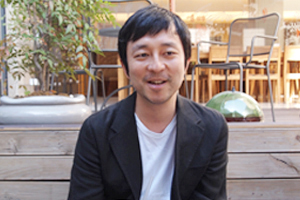
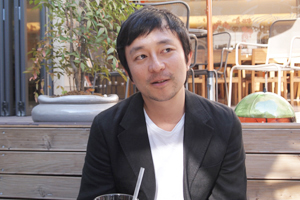
Q: Why did you attempt Korean jazz to make your own music?
A: I do not think that you have to use traditional Korean instruments to make Korean jazz. I do not think using the word "jazz" is right, either. I wanted to do music that is empty, that is created with lines, not surfaces. There are no musicians like that who play western percussion instruments like drums. They are all so used to playing to an accurate beat like a metronome. So I wondered what it would be like to work with a traditional percussion instrument. I needed a traditional instrument, not to create fusion traditional Korean music that combines traditional music with jazz, but to create new music.
Q: Nevertheless you used Korean music as a source. Was that because of a certain characteristic of traditional Korean music? What are the advantages of Korean music you wanted to apply?
A: There are many things I want to apply from traditional Korean music, but I do not want to use a specific part or beat or melody. I do not ant to add a chord to a certain beat when I play, and I do not want to play a traditional Korean melody with western instruments. There is a beautiful concept in Korean tradition that is clearly differentiated from western music. I liked the "beauty of space" or "linear beauty" -- not filling something vertically but emptying. The long pauses felt like going back in time unlike in western society, and I felt like it was humane and natural. I pursue natural music. I wanted to say through my music that going fast is not important, but what you fill the process with is. I felt it had to flow naturally from a culture you know well, and that there was a lot to gain from this slow process.
The essence of jazz and traditional Korean music
Q: What does the name, The Near East Quartet, mean? A:The Near East Quartet thinks hard about its identity, so we wanted a name that included the word "east." We decided on The Near East Quartet because we are close to the east and are an eastern quartet. I also thought it was interesting that it sounds like "nearest," and I liked the philosophical significance of being the nearest. The only small peeve we have is that "Near East" is also used to mean "the Middle East from Europe."
Q: Tell us about the theme of the first NEQ album, 《Chaosmos》.
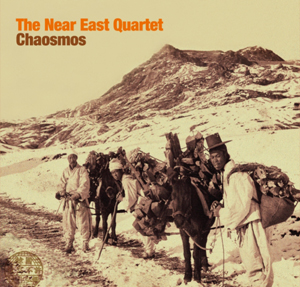
A: I hope people will look at the album cover first. I was shocked when I first saw the photograph because it felt like watching an artistic film. Three men with two horses carrying a heavy load on their backs are looking at the camera on a snowy winter''s day. Their faces, which appear like they are not used to being photographed, look tired. Judging by the clothes they are wearing, there is a good chance it was taken during Japanese Imperialism. If so, they were probably leaving their hometown and heading towards Gando or Manchuria. In an agriculture-based society, leaving their hometown meant losing their identity to Koreans. They probably looked back at their hometown before going over the hill and felt a strong sense of loss and uncertainty for the future. The photograph for this album cover was discovered through as much effort we put into our music. We wanted the theme of 《Chaosmos》 to be the sentiments of a sad wanderer. It makes you imagine a sad journey that comprehensively includes the sadness of leaving a hometown, uncertainty for tomorrow, and resignation and patience for one''s fate.
|
|
| |
|
Cover of 《Chaosmos》 |
The Near East Quartet |
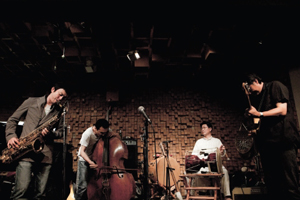
Q:It seems like NEQ is trying to create a new musical style and method of expression based on deep examination of the musical essence shared by jazz and traditional Korean music and the similarities. Can you tell us about reactions to your music or how we should listen to it?
A: Discard any preconceptions about genre or instruments and listen to it like a young child. Right after a concert, one member of the audience said it was "music with a lot of space." I want to play deep music, music that deeply touches the hearts of people. Actually, I played a lot of music the public liked as an individual musician before NEQ. However, this is the frist time I am receiving such a good reaction from musicians or music practitioners. People who listen to a lot of music, even if they are not jazz or traditional Korean musicians, like our music. However, it feels the best when I receive a good critique from someone unexpected.
Q: Tell us about NEQ or solo plans for the future.
A: I look forward to meeting people who are working on free, interesting and new things at the Seoul Art Market, where many performing arts practitioners gather. I hope meeting people who are working on great things regardless of genre will stimulate me to think about my identity and create something unique. I think it is through these meetings that the Korean music will grow more diverse and creating music will become more interesting.
I just released my solo album 《Elegy of rain》. I tried to express a Korean sentiment I want to confidently show people in this album. I try to put all my passion and hard work into music, without any prejudices or stereotypes.
 PREV
PREV
.JPG)
.jpg)
.jpg)
.jpg)
.jpg)












 is a group created by ..');)


