





Fledging Storyteller
[Who&Work] Sun-woong Koh, Director of PlayFactory Mabangzen
[Who&Work] Sun-woong Koh, Director of PlayFactory Mabangzen
Sun-woong Koh is talented in many ways. Writing and directing dramas, Koh adapts theatrical and musical pieces. Founding PlayFactory Mabangzen in December 2005, he now leads the company, and serves Gyeonggi Provincial Drama Company as artistic director. PlayFactory Mabangzen commands the top priority of him. Chosen a 2011 PAMS Choice, Killbeth was first played at Seoul International Performing Arts Festival to celebrate the 5th anniversary of Mabangzen''s foundation. With Killbeth, Koh won best directing and drama awards at DongA Theater Festival for the first time in his career.
"We didn''t wanna flounder under Shakespeare"
Q: How did you start on Killbeth?A: We created Killbeth to celebrate Mabangzen''s 5th anniversary. Our members like maneuvering and active things. We decided to do Macbeth. But in sort of our own way. The word Macbeth sounds similar to the Korean word mockbeth [which means slaying indiscriminately]. Then, we thought it would be better with a sword in it. So, we originally made it as karlo-mockbeth ["karlo" meaning "with a sword"]. We worried how to have it understood as a Shakespeare by the public. Other Shakespeare representations often got bungled up, sticking to the original scripts. We didn''t wanna flounder under Shakespeare.
|
|
| |
|
Sun-Woong Koh |
|
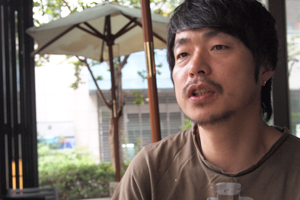
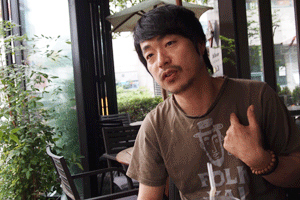
Q: Most people seem to identify Mabangzen''s theatre with fun, stylishness, and artful play of language. However, Some criticize it for too much funny talks and for lack of formalistic esthetics of emptiness and moderateness. And others say that actors are not that visible on stage. What do you have to say of those responses?
A: Some members of the theatrical community seem to believe in realism or hyperrealism. Realistic theatre, of course, carries value. Advocating for that is another, though. It feels tired and lack of fun. Sensing emotions are being force-fed, I take a step back. I think it''s a good idea not to force-feed emotions. Delivering accurate facts to audiences without emotions, why don''t we let them feel what they feel? On top of that, I use the technique of distortion. Truth can be delivered in less expression. Mabangzen''s style starts from there. Dramas cannot exist without taking morphs on stage. Our stage language is not fine-tuned yet. I guess that''s why people say those things about us.
In the interview after winning the annual spring literary contest, I said I wanted to be a writer favored by actors and actresses. My motto is also to become a writer most favored by actors and actresses, and a director most favored by them. So, it shocks me to hear the invisibility of the performers. My dramatic settings and plots do not follow conventional paths. In that respect, people might feel that way. It''s just part of the progress. I''m settling in, and actors are taking volumes of lines in stride. Everyone''s getting mature. I always sleep over the topic of emptiness and moderateness. I''m trying leaving it unfilled as much as I can. In my younger days, I liked things fit into each other on my calculation. Playing to my own beat and rhythm, things get faster and stuck to more details. It will take several years till things are left empty.
Q: Let''s talk about Mabangzen''s style. How much has it been completed?
A: Since its foundation, we''ve been trying diverse experiments. We have to establish its identity and method. The journey is not finished yet. How to act and talk on stage, and how to understand and approach the philosophical attitudes there. We are gaining grounds in those areas. Our past efforts have sizably advanced us in terms of Asian actions and powerful voice. Still, it''s often told that actors and actresses talk too fast. When they express their lines and emotions accurately, audiences appreciate "cool, good" theatrical performances. In this respect, we need more practice. However, we all participate in the discussion about how to reach the goal. Moreover, we are working on the subject within the frame.
Q: You cherish linguistic and verbal expression. So, we thought you would not venture out into overseas markets. Translation does not perfectly carry the original scripts, and its connotations and nuances. It is surely of concern to you, isn''t it?
A: I once really enjoyed the Royal Shakespeare Company''s work. I didn''t understand the words. Nonetheless, it was really impressive. That experience dawned a realization on me, "Wow, linguistic barrier doesn''t matter much." Understanding something does not necessitate linguistic understanding, I guess. Sometimes, sounds, stage and acting are amply sufficient. Of course, it is important to make culture-conscious subtitles. In directing as well, it feels necessary to teach actors a local language and have them use it during performance. Overseas marketing starts this year in earnest. We may try several attempts.
|
|
| |
|
Killbeth |
|


Theatrical performance is not such unless everyone is happy.
Q: What do you think is the core of theatrical performance?A: Jerzy Grotowski once said that a good theatrical performance just feels good about it. It''s very impressive. I don''t know which one is good and which one is not. Boom! A good piece just feels that way.
Expression is what constitutes it, and it is made while joyfully and playfully toying with things worth presenting on stage. The answer lies in joyful and playful presentation of things worth presenting, or, maybe, play itself. Concepts like fun, joy and play seem to necessitate endless practice. People often complain that to shine on stage involves excruciating practice. This complaint is like discarding the path is OK as long as the goal in life is to come by. We should be happy throughout practicing July to performing August. Some may ask it means you have to endure July to be happy in August? That''s not it. In the process of performing a drama and in the work of preparing a theatrical performance, practice as well as performance should be happy. Stories worth the happiness should be put on stage, I believe. It should be something all agree to be worth expressing and worth our fun and joy. Isn''t it what we talk about theatre?
Q: What stories do you want to deliver through your works?
A: In the past, we heeded disadvantaged characters like victims of violence and those excluded by it. It was because we poured in huge energy to fill the emptiness or to pull from without to within. So, a character full of energy was put on stage, and the character broke the surrounding balance, and the broken balance aroused reactions from others. I myself like setting those characters in my pieces. Now, I am more attracted to merits like love, respect, trust and good relationship. Values like diligence, industriousness and cooperation may feel like cliché, but I want to talk about how they are valuable to humans.
Q: What caused the change?
A: After quitting an ad agency, I did theatre fiercely. In the process, I thought, "What type of theatre should I do?" Then, I concluded theatre without love is impossible. That thought naturally diverted my path from fun without philosophy and ostentation by popping up an idea to sharing of happiness by all. Finally, I am fledged, I guess. Mature about theatre. At first, the word "fun" meant something personal and subjective. Now, I mean the happiness shared and felt by all. The word "all" may be objectionable, I guess. At least, I''m pursuing fun and happy stories that participants share.
Mabangzen was one of the motivations. To begin with, I intended on things that could distinguish it from other troupes in terms of style, language, and utterance. Once I founded it, that was not enough. I realized we needed love to hold us all together. Theatrical preparation and practice is a torture without love. I respect my colleagues who have run their theatrical companies for a long time. They look like neighboring folks. But they deserve our respect just for keeping their companies for so long. Four seasons, or just a single year means a lot. You don''t need any more words. At least for me.
Q: You choose among the alternatives given to you, or you plan and move on your plan. If you belong to the latter, please tell us your plans.
A: Plan? It''s impossible. I don''t know what''s gonna happen in a minute. Everything''s changing unpredictably. I think it''s most important to live every minute faithfully. I want to live theatre with my members without losing our zeal. I wish to set up a structure under which they spend half a year with me, and spend the rest half pursuing what they want.
 PREV
PREV
.JPG)
.jpg)
.jpg)
.jpg)
.jpg)












.jpg','Sun-woong Koh is talented in many ways. Writing an..');)


