





For the Young to Lead Future of Arts
[Who&Work] Mark Murphy, Artistic Director of REDCAT
[Who&Work] Mark Murphy, Artistic Director of REDCAT
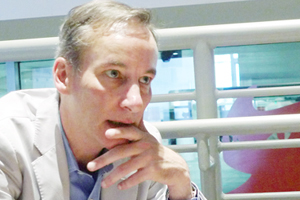
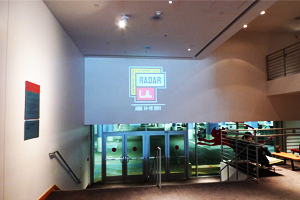
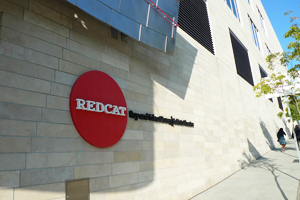
During the June stay in L.A. for attending the contemporary performing arts festival "RADER L.A.," I sat down with Mark Murphy for an interview. Murphy is the artistic director of REDCAT, which is one of the representative contemporary art centers in the Pacific region of the United States. Co-hosting organization of RADER L.A., REDCAT was first founded in 2003 by the California Institute of the Arts("CalArts"), which in turn was founded by ["Walt Disney"].
With firm financial support behind it, the center is getting rooted in the community as the venue for performing, visual and media arts as well as the center of contemporary multidisciplinary arts. Meanwhile, having introduced influential art pieces to the local and artist communities and offered opportunities to the artists in the LA area to work on new frontier, Mark Murphy believes it is the only way possible to promote performing arts in order to discover and support young artists. In an interview with him, we discussed the American performing arts and his vision as art planner. Here are the excerpts from it.
Multinational and Multiple-Genre Co-Production
Young-oh WON ("WON"): Would you tell me about REDCAT programs and your recent international co-production efforts?Mark Murphy ("MURPHY"): REDCAT is a theater associated with the CalArts [i.e. the California Institute of the Arts]. One third of its year-round programs are for promoting CalArts students’’ creative activities. Another one third of the programs are for local artists. And the remaining one-third for international collaboration in various genres. We pursue a co-production in two ways: exhibition and performance. For the former, we are exhibiting the works of Beon KIM as part of collaboration with Asia. For the latter, we helped Indonesian choreographer Sardono’’s co-performance with lighting designer Jennifer Tipton. Staying for about a month in L.A., Sardono carried out a new genre, working in person with composers, and video and animation artists. Sardono’’s work was pursued under the auspices of the New England Foundation For The Arts, and aroused huge interest.
WON: As far as we know, both countries [i.e. Korea and the United States] pursued direct and indirect collaboration until the late 1980s. The exchange has dwindled considerably. Does it have to do with internal affairs of the American community?
MURPHY: We are very interested in that area. The recent decrease in international exchange comes from numerous legal barriers like visa and tax. Despite our interest in Asia, L.A. has a huge chunk of its population consisted of Hispanics. We have to pay more attention to Latin America. For now, co-production is more about dance than about theatre.
|
| |
How to Make Preparations for the Future of Next Generation
WON: You set "Future of Theatre" as the topic for the first festival symposium, and many young artists made presentation. You also made many opportunities to young guys throughout the festival. What was the motivation?MURPHY: Personally, I am very interested in production created in a new way or in a co-operative way. As organizer, it is also interesting. I frequently ask audiences and artists, "What’’s coming next?" Public interest in that field is also on the rise with increase in interdisciplinary works like visual arts. We also pay attention to increasing public exposure to new media, and to the new generation. CalArts students are the main audience of REDCAT. The future they see is the art we envision. The works of Japanese artist Toshiki Okada are good examples in this respect. [Okada’’s works are invited at the festival.]
WON: Toshiki Okada’’s line of works considerably differs from other works at your festival. Is it for the reasons you mentioned just before?
MURPHY: His work touches on the topic of our interest. As to methodology, it is hard to express shared humor across different culture lines. His work was chosen for it. In addition, Okada superbly hide meanings through metaphor, and connects dance and text. We introduced only one Japanese work prior to him. Actually, theatrical pieces are harder to be shared by Americans, than music and dance.
WON: How come you first started collaboration with TCG [Theater Communication Group]? How do you believe it will develop?
MURPHY: My personal relationship helped me start it. Meeting a TCG director one year ago at a film festival in Cuba, I tapped on the possibility of hosting TCG Conference in L.A. Without the conference, it would be impossible for RADER L.A. to get rooted in as an independent festival.
|
|
Artist and Organizer as Community Member
WON: It is often said, "Theatre is relationship-building." Young Korean artists are very opened-minded, and willing to collaborate with artists of diverse nationalities and different genres. How about young Americans? I wish we could find some ways to lay down the ground works for their collaboration.MURPHY: It is difficult and, sometimes, "advantageous" to locate such guys. In the western American region, performing arts are mostly related to colleges. Producing staffs usually belong to colleges as well. We are not bound by formality in search for the young talent. The guys are offered to make 10-minute pilot programs four times a year. Then, their works are presented as official pieces at the festival. Some of the cases presented at the festival were developed through the process. The CalArts reportedly agreed with the Yonsei University to found an arts college in Incheon and to jointly develop curricula.
WON: The festival has turned around its half-line. Still, audiences are packing its programs. Especially, symposiums attract numerous participants. What are accomplished this year, and what do you expect of next year?
MURPHY: It’’s pretty satisfying. It is important to publicly share and discuss performances. Symposium, I guess, serves as that venue. 50% of visiting audiences are staff members or experts in this field. Hopefully, we wish to attract more from the general population. Our symposiums attract theatrical experts, while TCG ones draw young people. [TCG runs programs to support young artists.] Next year, we are not sure. Due to lack of budget, we will possibly hold it two years from now.
|
|
WON: You have served in diverse capacities like organizer, administrator, and artistic director. What are your goals to be achieved through REDCAT and the festival?
MURPHY: I worked for On the Boards in Seattle for a long time. I started, with independent artists, from trying small things in various fields such as dance, film and theatre. In other words, it was a process of advancing workshops and rehearsals to the performance level. In terms of facility, REDCAT is splendid. But the goals being pursued are almost identical. I’’d like to give more opportunities to creators. Of course, there’’s some risk. I pay more attention to sharing hearts with creators, than to commercial success. I’’m also trying to locate the young talented in our LA area, and give more opportunities to them. Artists and REDCAT are co-creators, I would say.
About Mark Murphy
As producer and organizer, Murphy has dedicated his past 20 years to international exchange of contemporary performing arts. As founding member of the National Performance Network, he served as artistic director of On the Boards in Seattle from 1984 to 2001. Since then, he has founded REDCAT and has been serving the organization as artistic director.
 PREV
PREV
.JPG)
.jpg)
.jpg)
.jpg)
.jpg)












.jpg','During the June stay in L.A. for attending the con..');)


