





Jazz It Up! Elaborate Improvisation, Unrestricted Variations
Jarasum International Jazz Festival Director IN Jae-jin
By CHOE Suna, Cultural Planner
Autumn is rightfully called “the queen of seasons” for its crystal clear sky and colorful foliage blanketing fields. Fall is also the season of popular performing arts festivals, as artists also reap the results of their hard work in autumn. Every weekend, music festivals await music fans nationwide. In addition to rock festivals, various jazz festivals are also preparing to welcome guests this year.
Many people find jazz unfamiliar and some even a little uncomfortable to listen to, especially when there is no vocalist. But a growing number these days know how to enjoy jazz to the fullest. In the mid-1990s, only two Korean colleges taught jazz, but nowadays 15 four-year universities and 20 two-year colleges offer courses in contemporary music, including jazz. Most Koreans would agree that the person who spread jazz the most here and dedicated considerable effort to promoting it is none other than In Jae-jin. Apart from serving as the director of the Jarasum International Jazz Festival, In also holds many other positions, including supervisor, planner, CEO and professor. All of his positions have much to do with jazz. Let’s learn more about the past and future of this soft-spoken, resolute “daydreamer” with a good sense of humor.
Early years with free music artist KANG Tae-hwan and the Dalki Theatre
How did you stard to working with jazz musician?
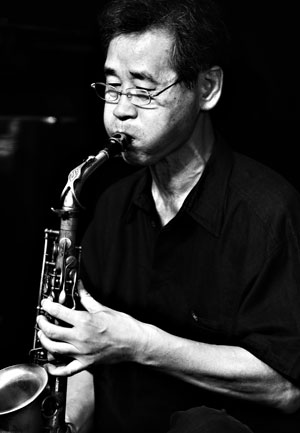
I began involving to music in earnest when I joined a college band. I played the saxophone back then. In 1993, I set up my own firm but it proved to be a challenging task because I was too young and inexperienced. At the time, mainstream music was dominated by pop. The situation in the music market was much better back then than it is now. Each album sold over a million copies. But nobody was interested in jazz and few people were willing to work this genre to make a living. That’s why I developed interest in jazz. In 1995, when I was just starting to plan concerts professionally, I happened to see a performance of Master Kang Tae-hwan. He is a globally renowned musician who conveys Asian sentiments through high-quality music, regardless of technique and genre, and in the 1970s when jazz was still unknown in Korea, he was one of the few free-style musicians. Prominent musicians like Kang Tae-hwan and PARK Jae-chun had a profound impact on me. They taught me what it takes to be a musician and a non-mainstream artist. I also learned from them that music is not a very lucrative business. But it wasn’t that bad. Mr. Kang was my inspiration. I invited him to this year’s Jarasum Jazz Festival for the first time in several years. He’ll perform solo.
 |
|
KANG, Tae-whan, Free music musician |
The Dalki Theatre that you ran in Daehangno was the cradle of jazz music. Back then it was quite unprecedented because even now there are no theatres specifically for jazz concerts. Many people were disappointed when it closed.
I have a lot of regrets with regard to my theatre because we are in desperate need of a theatre these days. Nowadays musicians have a space to practice, like clubs, but ten years ago things were much worse. But on the other hand, there’s no space now to play serious music. Performing at a club and performing in a theatre when your reputation is on the line are two different things.
Music develops when various genres are combined. For example, to promote traditional music on the global stage, traditional musicians must be able to perform along with contemporary musicians. But government funding is usually intended for traditional music only, hampering such efforts. Another problem is that jazz is not recognized as a public genre by government funding policies. Jazz is a non-mainstream music, which is similar to classical music overseas.
***In 1998, In Jae-jin rented a small theatre in Seoul’s Daehangno theatre district, which served as a venue for jazz and new musical genres. It closed in 2000 after the landlord sold the building but is still remembered as Korea’s “mecca of jazz music.”
Spreading the seeds of jazz – Jarasum Jazz Music Festival
 |
|
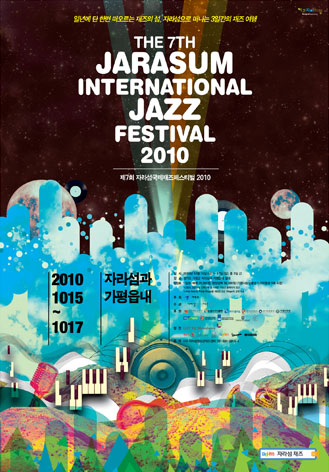
Jarasum International Jazz Festival 2010 |
In once lectured about successful strategies at a cultural planning academy. One of the people attending was a public official who wanted to organize a jazz music festival in Gapyeong, a small city of 55,000 people in the Gyeonggi Province county of the same name about 40 km northeast of Seoul. That’s how Mr. In and the county official organized the first Jarasum Jazz Festival in October 2004. Before that, Jarasum was regarded as a deserted island in the North Han River. Its ecosystem had been destroyed by reckless sand collection, and the entire island was inundated every time it rained. But In and Gapyeong County officials and musicians saw the island’s potential as a spot to promote jazz. During the first festival, it rained heavily for two of its three days. Nonetheless, there was a very respectable turnout of 30,000 visitors and good reviews. In 2009, more than 440 artists from Korea and abroad participated, drawing some 150,000 visitors. It is now an international cultural event, and the seventh festival will be held October 15-17, 2010.
Introduce the Jarasum International Jazz Festival.
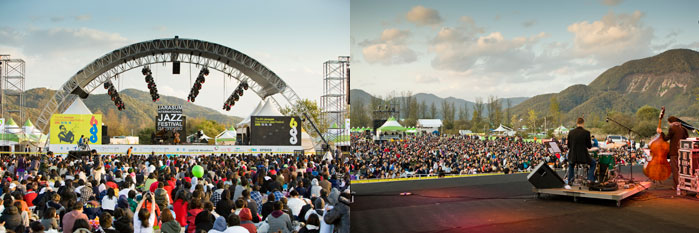
I zeroed in on Gapyeong for its scenic natural environment and cultural foundation. The Jarasum Jazz Festival features musicians from Korea and abroad who perform on the main stage “Jazz Island,” the Party Stage and in the Jazz Cube. It also features amateur bands in the “JJ Station” section and off-bands in the “JJ Spot” section. The festival is held concurrently with Gapyeong’s local market events and includes an event where visitors can request improvised performances that last for up to 15 minutes. Since 2007, we’ve also been holding an Jarasum International Jazz Concour on the sidelines to spotlight talented artists. So far, many top musicians have performed at the festival, including the Esbjorn Svenssons Trio, Joe ZAWINUL, John SCOFIELD, Giovanni MIRABASSI, Erik TRUFFAZ, Nils LANDGREN and Joshua REDMAN, among others. Domestic musicians include the Na Yun-sun Quintet, the Lim Dal-kyun Quintet and the Song Hong-seop Band as well as musicians of other genres, such as HAN Sang-won, HYUN Jin-young, KANG San-ae, YOON Mi-rae, Drunken Tiger and Dynamic Duo. This year, 35 famous groups and 50 amateur bands will participate. They include The Watts Project, Candy DULFER and Tania MARIA, KANG Tae-hwan and the Kim In-young Quartet.
What are the most important criteria in selecting artists?
We make quite bold decisions with regard to programming. In addition to inviting internationally renowned artists, we also try to introduce artists who have had little exposure. It’s also important to introduce talented contemporary domestic artists who have been drawing the spotlight. I still remember the Esbjorn Svensson Trio, who we invited to the first festival, and Joe Zawinul, who performed at our festival in 2006.
 |
|
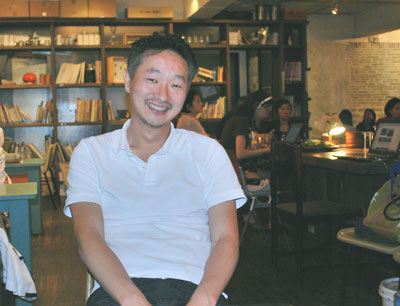
IN Jae-jin, Jarasum International Jazz Festival Director |
What is the focus of this year’s festival?
Rather than changing our planning strategies, we have adjusted our spatial planning. Since 2008, we had held performances not only on Jara Island but also in the downtown area, but visitors had a hard time moving from one venue to another. This year, we wanted to make the spatial arrangement more efficient. We have acquired expertise over the years, and our personnel structure has become more stable.
One of the festival’s major roles is promoting exchanges. Do festival artists collaborate a lot?
Jazz music allows for vigorous international exchanges. That’s also our goal. In that respect, Korea is not very internationalized. Without the support of the market, art and artistic exchanges are impossible. Music develops when diverse genres blend together in a systematic way. But in reality that is not easy. Our festival also strives to provide a venue for exchanges and attracts performers from overseas. One of our priorities is creating a venue where domestic and non-Korean artists can collaborate. This has proven popular with both the artists and the visitors.
What has helped the Jarasum Jazz Festival grow so far?
It may sound trite, but our collaboration with the private and government sectors is very smooth. We also keep pace with the latest trends. Our festival offers a chance to enjoy nature and relax. Watching performances in the open air is what audiences look for these days. Planning expertise is also an important factor. But the main secret to our success lies in the strong commitment of all the festival organizers. We faced multiple obstacles in the beginning but have grown quite fond of this festival. Our public officials, private sector personnel and even the audience members and local residents are very devoted. When many cultural festivals were cancelled last year because of flu fears, ours went ahead as planned thanks to the broad enthusiasm behind it.
With time, our festival will build on the popularity of jazz and even lure tourists to the area. In that respect, festivals serve as opportunities to learn and experience new things. Music festivals have emerged as a new trend recently. The Jisan Valley Rock Festival and the Pentaport Rock Festival have contributed greatly to expanding the music market and changing public perceptions. Their fan bases are still shaky, but this is how things are all over the world.
Jazz in Asia
Many cultural elements have been introduced from the West, jazz being one. What makes jazz in Asia any different from that in the West?
It depends on the peculiarities of the market. Right now, the music industry is very stagnant. Singapore held its “Live Singapore” event earlier this year. I participated as a judge in one of its forums. The theme was “Jazz -- Glorious Past, Uncertain Future." That’s a very symbolic phrase. Everyone is having a hard time these days. In fact, the majority of the U.S. market, especially the live music market, has relocated to Europe because of all the summer festivals there. National boundaries have become blurred within the EU, contributing to exchanges among European music artists.
Thanks to generous government support, Europe has many good musicians. It was able to create its own music market, and U.S. jazz now occupies a smaller share there. Recently, Europe has started to turn its eyes to Asia, but we still lack a mature music market. Even Japan’s music market, which used to be relatively vibrant, has become stagnant, whereas China has emerged as a market with huge potential. It’ll take it a while to develop since jazz is not a mainstream genre anyway. But Asia holds a lot of promise for jazz, and China will play a pivotal role in that.
 |
|
Jazz Island, Jarasum International Jazz Festival |
Are Korean musicians active overseas?
There are many Korean musicians who are active abroad these days, but they have yet to draw the spotlight. NA Yun-sun is currently very active in Europe. It’s not easy for Asian artists to gain recognition in Europe. I hope more artists will display their potential and establish ties with overseas partners. The Jarasum Jazz Festival tries to be a network for artists, but in the long run it’s up to them and their music. Something good will get attention everywhere in the world.
Dreaming of a free music academy
You’ve run a jazz center in Gapyeong out of a renovated government building since 2005. How is it going?
Our center has become an important local venue that promotes culture and education. Currently, we have about 200 regular students. That’s a lot given Gapyeong’s size. They have fun learning, and we often get visitors from other regions. Our center is very efficient and has been relatively successful so far. Our festival and jazz music in general have taken firm root in the area. The public sees our center and the promotion of jazz as worth the effort.
What do you want to try in the future?
One of my dreams is setting up an academy in Gapyeong specializing in jazz music. I want it to nurture artists who are independent from the central educational system and who can carry out international activities. That can be achieved not just by teaching music right, but by promoting exchanges and developing a well-established program.
***
If you ask In about his dream, he says without hesitation that it’s living happily and enjoying life. That also includes creating a joyful workplace because he attaches as much importance to training good organizers and producers as he does to nurturing good artists. He is interested in cutting-edge developments and looks at everything from a global perspective. He says planners, unlike artists, cannot be geniuses and must be trained through trial and error, just as he was.
In Jae-jin
Present – Executive Director of Jarasum International Jazz Festival and Gwangju World Music Festival
Adjunct Professor at Sangmyung University’s Graduate School of Culture & Arts
Jarasum International Jazz Festival
Jarasum (Underwater Island) got its name because it is submerged whenever the river is swollen by rain. The island is connected to the mainland by a bridge and is located within walking distance of downtown Gapyeong. Jara Island was largely unknown before the jazz festival. It is now a popular travel spot with a new arboretum and campground. A year after the 1st Jarasum International Jazz Festival in 2004, the Jarasum Jazz Center opened in Gapyeong to oversee the festival and promote culture and art in the area. In 2007, the Jarasum International Jazz Contest was launched on the festival’s sidelines to shine a light on up-and-coming artists.
Selected Best Gyeonggi Province Festival in 2008
Selected as a promising festival by the Ministry of Culture & Tourism in 2009 and 2010
Jarasum International Music Festival: www.jarasumjazz.com
Jarasum Jazz Center: www.jazzcenter.co.kr
 PREV
PREV
.JPG)
.jpg)
.jpg)
.jpg)
.jpg)












;)


