





By KIM Seul-gi (soolsoolgi@naver.com)
Photography by SEO Dong-shin, Sow Studio
Korean Theatre Review (October 2009)
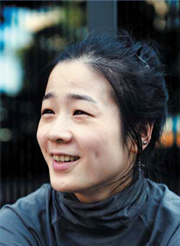
Sacheon-ga was first staged at the Chongdong Theater in 2007, and the Doosan Art Center quickly realized the potential of modernized pansori, Korean traditional narrative songs, by selecting the play for its “creator support program” in 2008. In 2009, LEE returned to the stage for more than 15 days of performances after having discovered new “sorikkuns” (narrative singers) YI Seung-hui and KIM So-jin. Despite the worries about interest waning over the pansori play’s relatively long run, the seats were filled every day. The audience must have enjoyed hearing a Berthold Brecht story sung in the genre of pansori.
“Looking back at last year and this year’s performances, I can definitely see some changes. I got older and so did the times. Many things happened within one year and that seemed to have an effect on me and the play. Though there were few actual changes in the play, the sorrow and anger I felt through my character Sundeok was different. The deaths of the two former presidents also had left big traces on me. I also wanted to ask why we should keep our silence in today’s dog-eat-dog world of limitless competition. One day I could not control Sundeok’s anger even after the performance. In fact, that looks bad for a performer; to not be able to take off the role at the end of the play and let the emotions from the performance dissolve. But, I like my condition because I am being trained to experience that stage. Maybe there should be changes next year. Now I discovered my attitude toward the character, my emotions I enjoyed in the play and my intention to govern or control my feelings, and I guess these are the nuggets I earned through this year’s performances.
“Sacheon-ga was inspired by Bertolt Brecht’s Der gute Mensch von Sezuan (A Good Woman of Setzuan), but,not everyone in the audience knew the original play. In Sacheon-ga, I wanted to tell stories that I wanted to tell; not just something I know. Pansori is that something that I can be my best at, and it is the most confident way for me to communicate. I believe pansori is a music of depth, solemn yet worldly. I’m not saying pansori is light-hearted, just that it has folk humor. This is because it sprang from the masses. So I think pansori should be fun when it is remade with today’s stories in modernized words. I also use various musical instruments as accompaniment. I never intended to use many instruments but the guitar naturally came to my mind because I needed it and the rest grew from there. It is a slight difference but that kind of process affects many things during the performance.”
At the end of last year, critics named the top three plays of 2008 and one of the chosen was Sacheon-ga. When I heard that news, I thought, ‘this is what we want.’ Sacheon-ga is certainly a pansori play. Though pansori has its roots in tradition, Sacheon-ga shows an obvious present backed by tradition. I believe pansori should not be considered as only a kind of traditional music; it should be regarded as an entire, perfect kind of performance pattern. In fact, when Sacheon-ga was performed before, the venues for gugak (Korean traditional music) showed little interest. It was better for us because people could have regarded our play as another gugak performance had it received a lot of attention from gugak people in the beginning. But, nobody (from professional gugak) paid us much attention, and Sacheon-ga was selected one of the best plays of the year. So it is both pansori and a play. I’m very happy and feel thankful that Sacheon-ga was also chosen as a PAMS Choice theater play this year. It seems to show that pansori has proven that it doesn’t have to be categorized as a kind of traditional music.”
**PAM’s Choice:
PAM’’s Choice is a jury selected designation from the annual Performing Arts Market in Seoul(www.pams.or.kr) The distinguished performing arts pieces in theater, dance, music and multimedia named receive additional support from the event organizers.
 PREV
PREV
.JPG)
.jpg)
.jpg)
.jpg)
.jpg)












;)


