





The Unvanquished Pride of Catalan Art
[Festivals/Markets] Grec Festival de Barcelona
"There are three major summer festivals in Europe. They are Festival d’Avignon, Edinburgh International Festival, and Grec Festival de Barcelona."
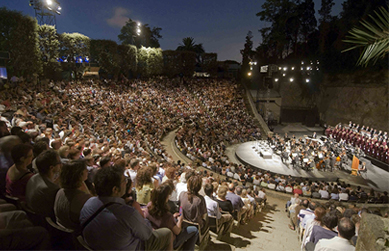
These are the words of Eugenio Navarro, the person who co-organized Punch & Judy a l’Afganistan (Punch & Judy in Afghanistan) as part of MiniGrec program at the Grec Festival de Barcelona, and is also the director for La Puntual Theatre and a puppet performer. These proud words would not have been an exaggeration before the budget cut due to the European financial crisis: Traditionally, the Grec Festival was held all over Barcelona throughout July and August, a time when the tourists often outnumbered the local residents of Barcelona, at venues such as the open-air stage of Teatre Grec with 2,000 seats located on Mount Montjuïc surrounded by beautiful landscapes. Prior to the budget cut, around 130 to 150 performances, including the co-produced programs, were shown in seven or eight different venues for two months. The objective of the festival was to introduce high-quality international performing art pieces to the people of Barcelona, as well as to help the outstanding Catalan performing arts make inroads into the international market. The festival is hosted by the Institut de Cultura de Barcelona, an organization affiliated with the Barcelona City Council. However, due to the European financial crisis, Barcelona’s municipal budget was retrenched drastically two years ago, which also impacted the festival by reducing the event period to a single month during July, staging around 80 pieces. Tickets are sold for every program, with the annual budget for the festival estimated approximately €3.8 million (KRW 5.3 billion).
|
|
|
| Teatre Grec |
▸ Grec Festival bus ad (top) ▸ Grec Festival brochures (bottom) |
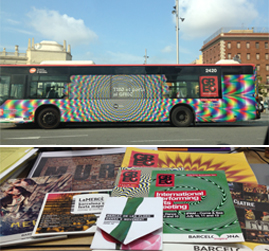
Grec Festival, which first started in 1976, has reached its 38th anniversary this year. According to a report summing up the festival results, it was counted that during the one-month period from July 1 to 31, a total of 79 pieces were performed, and 128, 352 people came to see the shows. The number of pieces performed decreased slightly in comparison to 2013, but the number of attendees increased. La Fura dels Baus, one of the performing arts organizations representing Barcelona, which was also invited to Hi Seoul Festival in 2011 and 2012, presented their new work,
Grec Festival of Barcelona maintains the simultaneous goal of introducing the outstanding performing art pieces of Catalonia to the international market and also providing Catalan audiences with the opportunity to watch high-level international performances. Given that the cost of tickets covers every performance, popularity also seems to play an important role during the committee’s selection process. Some of the programs selected appear to negotiate the boundary between art and show. Institut de Cultura de Barcelona is not in charge of organizing all of the festival programs; instead, they built a collaborative system incorporating the experts of each given field into the organization process. For instance, they collaborate with the CaixaForum Barcelona gallery for musical programs, organize dance programs with the Mercat de le Flors dance company, and work with freelance producers who specialize in family/children’s plays when it comes to MiniGrec programs. Ultimately, the festival art director makes the final decision, but the programming responsibility and authority is entrusted to outside experts to a certain extent, allowing the festival to broaden its spectrum and grant flexibility to what could otherwise be a rigid administrative system. This is a practice carried out in Korean performing arts festivals as well, but they are mostly limited to on-site operation, marketing, or technical departments, with the programming being treated as the sole discretion of the festival organizers or the executive department. For a composite arts festival that incorporates several genres and media, however, there are clear advantages to the collaborative programming system that Grec Festival has chosen to deploy.
|
|
|
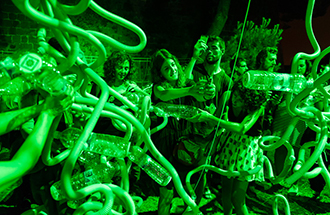
| La Fura dels Baus <M.U.R.S.> on stageⓒJosep Aznar | Mercat de les Flors |
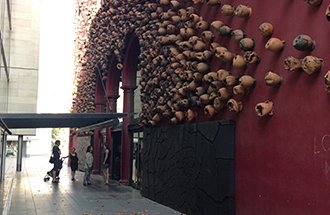
Every year, Grec Festival strategically incorporates a Tango Night into the festival program through an agreement that has been made with the Argentine government. This Tango Night is reserved for a group of tango performers who are recommended by and whose travel expenses are funded by the Argentine government to come and dance at the Grec Festival. The quality of their performance was, of course, quite impressive, but the audience’s response to the performance was equally fervent. This may be a result the program’s reputation at the festival, the product of a long-standing partnership between the festival and the Argentine government. The strategic relationship between these two nations is an important element that should be taken into consideration by Korean performance groups hoping to make inroads to the international market. Grec Festival welcomes these collaborative relationships as a strategic means of reducing their costs while continuing to host high-level performance groups from outside the country.
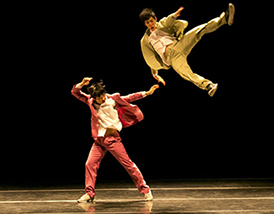
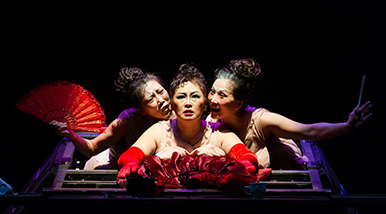
This year, Grec Festival invited two performance groups from Korea: Ahn Soo-young Company and Sadari Movement Lab. Last year, the assistant director of Grec Festival participated in PAMS (Performing Arts Market in Seoul), watched the performances by these two groups as part of PAMS Choice performances, and decided to invite them. As my visit to the Grec Festival did not coincide with their performance schedules, I missed their showing at Grec, but it seems that as much as the festival organizers are excited about inviting new Asian to the event, they are also conscious of ticket sales when introducing unfamiliar names to local audiences. Based on my conversation with Carles Sala, director of Barcelona Capital at Institut de Cultura de Barcelona (linked to Barcelona City Council), although the organizers would like to invite the excellent musical performance groups from Korea such as Jambinai or Jeong Ga Ak Hoe to the Grec Festival, it is difficult to do so since acts must be accessible enough to appeal to a wide audience.
|
|
|
| Ahn Soo-young Company <Time Travel 7080> | Sadari Movement Lab <The Maids> |
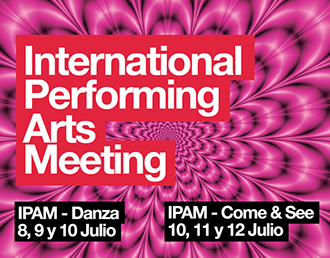
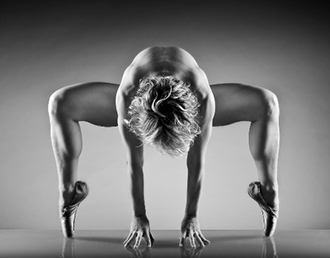
One of the programs that is integral to the Grec Festival is the International Performing Arts Meeting(IPAM) that is designed to cater to experts in the each respective performing arts field. The event was originally organized as a biennial arts market hosted by the Association of Catalan Theater Companies (ACTC), an offshoot of the Come & See project, which was designed to introduce works created by the ACTC members overseas. From 2012 onward, the Come & See program started to be combined with the Grec Festival, and in 2013, the year in between Come & See events, the Grec Festival recognized the need to hold an international arts market and independently established the IPAM. In 2014, when Come & See and IPAM overlapped, the organizers decided to integrate the two and hold them as part of IPAM as IPAM-Dance and IPAM-Come & See. Mireia Branera from aPortada, which practically managed IPAM-Come & See this year, said that what sets this year’s IPAM-Come & See apart from the previous events is that it is no longer just a showcase that presents the shows to the average viewer. In the current format, the viewers, who are professionals and investors from throughout the field, watch the shows with the possible intent to co-produce them in other festivals. In other words, the works introduced by the IPAM-Come & See are ones that have already been selected for the Grec Festival; hence, it becomes much easier for them to receive additional funding from other festivals, whose organizers or relevant parties come to see the shows. This environment, in turn, improves the production community for Barcelona’s performance arts groups, further promoting its productions. In this sense, the system serves as a practical strategy that emphasizes the important role of the performing arts festival.
|
|
|
| 2014 IPAM-Come & See poster | Sol Picó <One-hit wonders>ⓒCome & See Website |
Institut de Cultura de Barcelona hosts two major festivals representative of Barcelona’s arts culture: One is the aforementioned Grec Festival of Barcelona, and the other is La Mercé. La Mercè is a festival held for four to five days around Sept. 24 in celebration of the Roman Catholic feast day of Our Lady of Mercy (La Mare de Déu de la Mercè). During the festival period, there are events held in the city center such as giant puppet parades or castells (human pyramids), which are based on traditional Catalan culture, and open-air street arts events, including the outdoor plays, as well as dance, circus, and musical performances that take place in suburban parks or old castles. Every year, the organizers select a guest city and invite performers from the city. This year’s even revolved around Stockholm, Sweden, and next year’s city will be Buenos Aires, Argentina. A comparable event in Korea is the Hi Seoul Festival, an outdoor performance arts festival that unfolds in the streets of Seoul. For this reason, the Institut de Cultura de Barcelona wishes to form a partnership between the Hi Seoul Festival and La Mercé, which appear to share more common ground than Hi Seoul does with the Grec Festival. If the Hi Seoul Festival continues to maintain its identity and build dynamic programs around it, this would not be an impossible dream.
Korean festivals experienced quite a roller coaster ride this year. Due to unforeseen external events, many lost direction and faltered, with artists losing their ground and suffering as a result of that. In light of these challenges, it is now a time for self-examination and self-reflection. Being faced with such trials, I was moved by the strength and potential of the Catalan art that was displayed throughout Barcelona’s festivals, which has quietly and persistently maintained its identity in times of trouble. It is from those strengths and potential that the pride of Catalan artists remains invigorated.
ⒸGrec Festival Website
 PREV
PREV
.JPG)
.jpg)
.jpg)
.jpg)
.jpg)












.jpg','“There are three major summer festivals in Europe...');)


