





The In-Between Space of Expressions
[Trends] The PLACCC Festival in Budapest
I met Fanni Nánay for the first time in March 2013 during a training on international cultural connections I coordinated for IN SITU, the European network for artistic creation in public space. Behind this discreet woman and the PLACCC Festival she has co-funded and been running since 2008, you can read and understand the recent political changes in Hungary which directly affect the cultural sector and particularly the alternative and independent one.
The focus on art and creation in public space and site-specific works was like an evidence for the creation of the PLACCC Festival in 2008 by Fanny Nánay and Katalin Erdödi as these forms of expressions were not yet presented and supported in Hungary. The European and international experiences of both women, the connections they made through their different work experiences (Nánay used to work for the Merlin International Festival Theatre in Budapest), the impressions left by projects such as the Rimini Protokoll led the two women to create the PLACCC Festival in 2008. It was part of the Budapest-based Autumn Festival for the first edition and it has been running on an independent basis since then. The initial focus on site-specific theatre before developed over the years to more site-specific and public space works, linking visual art practices, architecture or urban game projects.
|
|
|
|
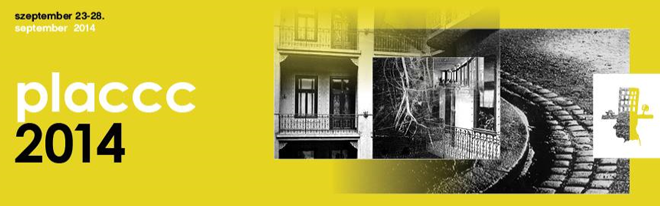
| PLACCC 2014 performance Poster(up), IN SITU logo(down) |

An independent cultural scene out of breath
Despite the rather small scale of the Festival in 2008-2009, it was for Nánay still easier "to organise a Festival as the Government was more pro-European and interested into innovative work. The turning point was from 2010 after the election of Viktor Orban’s right-wing coalition when the situation has started to increasingly worsen. The different sets of regulations which have been implemented exist only to asphyxiate the independent, alternative and avant-garde cultural sector. And Orban’s re-election in April 2014 is another very bad signal for the years to come". The different ways to strangle the sector include for instance the cut of national public funding to organisations not “national” enough for the current cultural political orientation; a tax system not in favour of private companies which support NGOs and not-for-profit organisations, including in the cultural sector; the increasingly burdensome administrative documents required for any type of support or authorization (for instance to perform in a public space); and the neutralization of the sector. As Nánay phrases it, "Politicians, in a very cynical way, just pretend the independent cultural sector does not exist and that nothing of what we all do happens".
This situation has led the Festival to re-structure itself with the leaving of Katalin Erdödi in 2011 and the constitution of an artistic Board composed of the artistic director of the TRAFO, a young programmer and an urbanist. All including Nánay are working on a voluntary basis. The Festival is taking place this year again with a budget of about 40,000-50,000 euros with foreign institutions as the only source of public funding (Dutch and Flemish funds and EU funding through the IN SITU network). Some private Hungarian foundations like Summa Artium are still helping the Festival but the funding is continuously decreasing because of the economic crisis. Nánay also feels that the reputation of Hungary is getting worse and that some foreign cultural organisations are therefore less keen on supporting the independent cultural sector in Hungary.
The local and European strategy
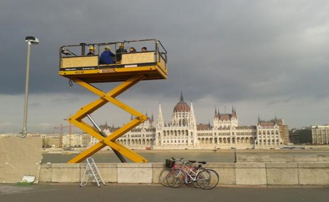
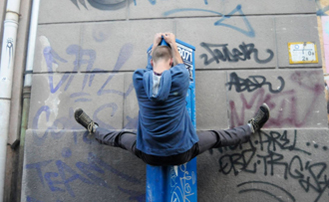
What’s left for the PLACCC festival after six years of decreasing support and considering the lack of recognition by the national authorities? Well, still a very interesting selection of site-specific theatre, dance in urban space, visual art and design interventions in public space, pop-up exhibitions where local artists interact with European ones such as those co-produced under the EU-funded programme META by the IN SITU network. Let’s mention for instance the Dutch theatre maker Lotte van den Berg(<Building conversation>) and the Flemish choreographer Benjamin Wandewalle(<Birdwatching 4x4>).1)
1) See the presentation letter by the PLACCC Festival director, Fanni Nánay.
|
|
|
| <Building conversation> Lotte van den Berg | <Birdwatching 4x4> Benjamin Wandewalle |
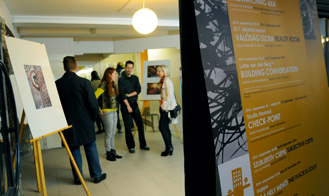
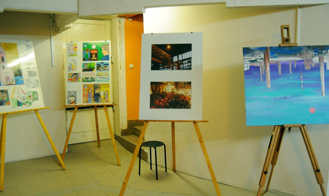
This Hungarian-European programme echoes as well a deeply rooted festival in particular in the district of Csepel, this in-between district between Buda and Pest. Nánay mentions that “people still feel special to live there and use the expression I go to Budapest while reaching the city as if this area was a somehow special and different space”. This mixed area – composed of 19th century architectures, post-industrial spaces and empty buildings - has been one of the key places of the Festival since 2013, also attracting private investors. The 2014 edition of PLACCC sees again some works developed in this area such as the “Subjective Csepel Project”, a joint venture of Czech and Hungarian artists which aims to transform an empty shop in Csepel into a pop-up gallery. Nánay ’s idea, together with other cultural initiatives focusing on Csepel, is to progressively build a long-term support relationship with these private investors while giving to this area a new life, and to local people other ways to feel connected.
|
|
|
| Szubjektív Csepel, PLACCC 2014 |
Nánay works through her intuitions and convictions, the same way she did when she first wrote to the IN SITU coordinator seven years ago asking how to be part of the network. Incidentally the IN SITU network at that time started to be more open to Eastern partnerships. It was then the beginning of a long-term partnership with other festivals and organizations in Europe focusing on creation in public spaces through different EU programmes, including the current one, META, the European Manifest for Transformation through Art. "Without the IN SITU connections, I would not be able to meet so many new artists and programmers. It just allows me to enter a new world of possibilities and to stay connected to the European scene”.
The closing of the 2014 edition of the PLACCC Festival will be followed by an internal discussion on the future of the Festival itself with curators, programmers and artists, helping the organizers to reflect on the future of the Festival, as the context has changed so much since its beginning. Like the in-between place of Csepel, the PLACCC festival illustrates this pocket of multiple expressions that only the resilience of people can drive through within this close-minded context. If the EU at a political level does not seem to provide the cultural sector with very good signals,2) cultural organisations and individuals in Europe shall engage to continue to act and react so that Hungary does not become a disconnected in-between cultural place in Europe.
2) At the time of the writing of this article, one shall highlight the recent appointment of the Foreign Minister Tibor Navracsics from the centre-right ruling Fidesz party for the Position of EU Commissioner for Education, Culture, Youth and Citizenship.
ⒸPLACCC Festival homepage/Facebook
|
◈ Additional references - Hungary’s Political Theatre: <New Government Targets Artists> - 2014 IETM Asian Satellite Meeting(Melbourne, Australia) with a presentation from Anna Lengyel, PanoDrama, Hungary: Working group 「Social and political constraints: the artist as activist, promoting freedom of speech, democracy and diversity」 - UN Report by Farida Shaheed, 「The right to freedom of artistic expression and creation」 |
※ Marie Le Sourd is a cultural manager with an expertise on international cultural cooperation and mobility issues. The text was edited by Elena Di Federico.
 PREV
PREV
.JPG)
.jpg)
.jpg)
.jpg)
.jpg)












;)


