





Korea Performing Arts, Heating Up the Halfway Around the World in Colombia
[Trend] Review of the 2014 Ibero-Americano International Theater Festival
Korean Theater Gaining Recognition at South America’s Largest Theater Festival
Entertaining over 2.8 million people in its 14-year run, the biennial Ibero-Americano International Theater Festival of Bogota (Festival Iberoamericano de Teatro de Bogota) is one of the South America’s largest performing arts festival, lasting from April 4 to April 20 this year. One of this season’s standout plays was
|
|
|
| Street theater of Yeonhui Street Theater Troupe | |
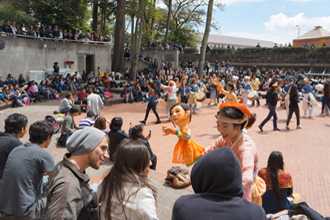
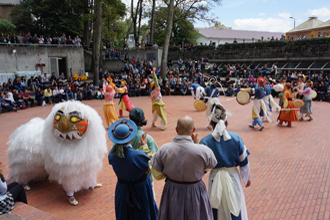
Competing with the 400 other participating performances, 〈Blood Wedding〉 was selected by the festival’s administration as one of the 10 Must-See Plays before it even opened. The company was offered the Estadio El Campin as their performance venue, a space that seats 6,000 and is ordinarily used for large concerts and sports events. As Marta explained, “I have such confidence in this production that at first I had considered booking the 10,000-seat bullfighting arena for it, though, unfortunately, we could not follow through with those plans.” Starting from April 11, the STT drew over 3,000 people to each of its eight performances, selling nearly every seat from which the stage was visible. To call the performances a success would be an understatement: The mash-up of traditional Korean theater and flamenco evoked multiple standing ovations, a rare sight in Colombian crowds.
|
|
|
| 〈Blood Wedding〉, Yeonhui Street Theater Troupe | |
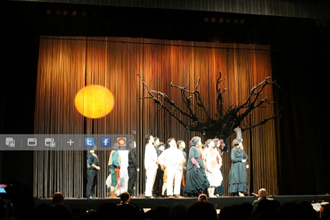
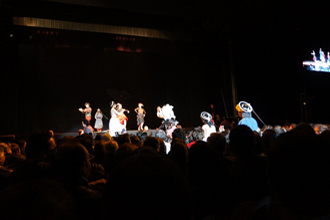
In an act of genuine appreciation, the festival covered all of the STT’s expenses, from performance fees and lodging to the provision of stipends. Of course, the STT is not the only company to be treated like an honored guest. Where past teams would have accepted poor compensation in overseas markets, more companies are being met with the assurance of wages and treatment on par with industry standards. This shift is a demonstration of how far Korea’s performing arts have come; beyond the level of being part of a diplomatic or a token cultural exchange, they are being evaluated based on their own production values.
"Viability" ? the Key to Advancement in Overseas Markets
 |
To ensure that this is not simply a passing trend, domestic enterprises are putting an unprecedented effort into sponsoring performing arts in Korea, hoping that they can break into overseas markets and earn their place as a venerable force in he global entertainment industry. Korea Arts Management Service (KAMS) has launched an initiative called Center Stage Korea that is becoming a leader in this movement. |
When an overseas festival or venue expresses interest in featuring Korean talent, KAMS will draft a proposal outlining impressive productions that would be appropriate for potential sponsorship. Should a Korean theater troupe be formally invited to such an event, the contract must meet two conditions before KAMS will accept on their behalf: First, the performance fee must be reasonable for the level of work required, and second, at least two Korean troupes must be invited. This ensures that troupes are paid according to industry standards, with KAMS contributing to a system where Korean theater companies regularly gain exposure. If proposals meet the specifications above, KAMS also supports Korean companies by covering their travel and transport costs. As the influence of Hallyu (Korean Wave) grows and the quality of Korean content improves, the number of contracts with international institutes has also begun to rise. When Center Stage Korea launched in 2011, it handled six international contracts, a number that more than tripled the following year and in 2013 reached a total of 25. Not only did the number of requests rise, but so did the caliber and structure of the proposed productions.
|
|
|
| 〈The Chorus; Oedipus〉, Theatre Company ‘Juk-Dal’ | Jambinai |
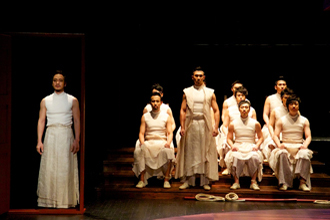
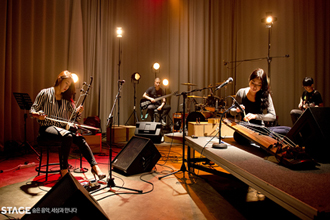
STT’s official invitation to the Ibero-Americano International Theater Festival is an example of this enterprise in action. Given the troupe’s appeal after its 2012 production of
“Modernizing the Traditional, Korean Theater is a Great Inspiration”
At this year’s Ibero-Americano International Theater Festival, we could see the Korean troupes established a reputation for impressive work grew every day. When asked about the success of Korean theater in Colombia, Marta pointed out the balance of traditional and modern elements in Korean performing arts.
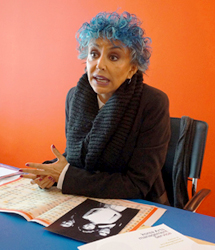 |
“The appeal of Korean theater lies in how Koreans mix traditional ingredients into the work, reinventing them for the modern day. Take this production, for example: Traditional Korean elements are melded exquisitely within the play. Add to this the Korean take on Spanish flamenco, which makes it more familiar for the audience. The blend of modern and traditional instruments also creates some very beautiful music,” she said. For these reasons, Marta has expressed a strong desire to facilitate an even broader exchange between Colombia and Korea with regards to performing arts. Although Colombia’s image is associated with drugs and civil war, the country has a significant appetite for culture. The city of Bogota saw a drop in its crime rate during the festival, leaving many in the community believing that the arts can help contribute to a safer, healthier society. In the past, Colombian theater comprised of mostly political productions, |
| Ana Marta |
but in the past five years an increasing number of well-trained writers and directors have been entering the scene fresh out of local universities, among other places. “As we have just begun to find our footing, the Korean theater, modernizing tradition, is both a great help and an inspiration to us,” she said, further brightening the future prospects for Korean theater overseas.
 PREV
PREV
.JPG)
.jpg)
.jpg)
.jpg)
.jpg)












.jpg','Entertaining over 2.8 million people in its 14-yea..');)


