





Ten Years of the Jarasum International Jazz Festival: Gapyeong Has Changed
[Festivals/Markets] A Festival Has Changed the Region in This Way
Gapyeong, which is located on the border between Gyeonggi Province and Gangwon Province, is famous for Koreans who live in Seoul and who want to enjoy nature near their city. Gapyeong’s only special product used to be pine nuts. Its population is 62,402 and its total area, 843.6㎢. In other words, a 166th of Seoul’s population is living in a city that is 1.5 times bigger than Seoul. However, Gapyeong was recently visited by about 270,000 for four days from October 3 to 6; a group of people which is more than four times larger than the population of Gapyeong gathered together in Jarasum to listen to jazz. How has the humblest city been covered with such stylish music?
The Public and Private Share Their Dream
During a lecture in fall 2003, Mr. In Jae-jin (artistic director of the Jarasum International Jazz festival) talked about his ambitious plan of creating a jazz festival. A minor official working for Gapyeong Country happened to be there. At that time, Gapyeong County was struggling with its declining attractiveness as a tourist spot so it was deeply concerned about how to improve its image, build its own brand and revitalize the local economy. In January 2004, the county was discussing creation of a “cultural festival” as a measure to deal with its difficult situation. The official who attended the lecture then remembered what Mr. In was saying and he suggested “jazz” as the theme of a new festival. In the fall of the same year, a festival started in Jarasum, which had been a wasteland.
Since Gapyeong County strongly wanted a festival, it was easy to start one. Nevertheless, it was difficult to run the Festival afterward because public servants lacked knowledge on a “jazz” festival. In the summer of that year, Mr. In visited the Pori Jazz Festival with them. This festival, which has taken place since 1966, had actually motivated Mr. In to create a festival. Indeed, as soon as Mr. In went to Jarasum, such a “utopian” festival was overlapping with the place. The public servants were also touched by the tens of thousands of audience who were happy to listen to music in nature. Despite the cruel heavy rain in its first year, the Jarasum International Festival was able to prepare its second year. That may be because for the Festival officers and local public servants, their experience in Finland wasn’t just about modelling on the country’s festival but it was about sharing the same “dream.”
The festival was run stably thanks to the sufficient understanding and cooperation of the public and private sectors. However, the Festival, which had been held only inside the island of Jarasum until 2007, hadn’t drawn great attention from the citizens of Gapyeong. Since another peak season was added to the existing one in summer, merchants and hoteliers ceaselessly supported the Festival. In contrast, even the Secretariat of the Festival wasn’t able to expect that the ordinary citizens of the county, who mostly work on agriculture or forestry, would buy their own tickets and enjoy the Festival. For your information, under the Election Act in 2005, issuing free tickets or selling tickets at a discount to residents came to be banned in Korea.
|
|
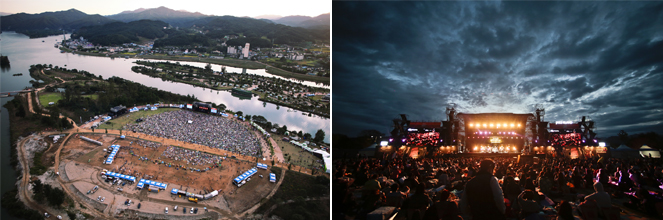
| 10th Jarasum International Jazz Festival |
Jarasum Jazz Center Spreading Jazz throughout the Local Community
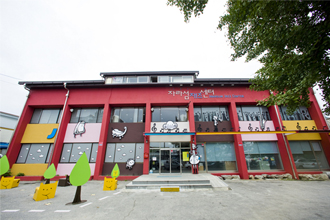
In August 2005, the Jarasum Jazz Center (“Jazz Center”) was opened. The Jazz Center, which was created by remodelling the former town office of Gapyeong, later became the Secretariat of the Jarasum International Jazz Festival and the hub of arts and culture education in Gapyeong. Next year, the body corporate Jarasum Youth Jazz Center (“Secretariat”) was founded. The founding of this center means that the knowhow of programming and managing the Festival finally came to be recognized. In 2006, six cultural classes started. In order to ensure the permanent management of the Jazz Center, the entire staff, who used to commute from other cities, moved to Gapyeong Town. As all the five members of the Secretariat, including the director, became citizens of Gapyeong, citizens were able to let go of their doubt about the Festival.
The Jazz Center, as the name of the Secretariat’s body corporate indicates, runs a variety of arts and culture programs for adolescents. Here are some of the center’s representative classes: ① musical instrument class teaching how to play drums and the guitar, ② singing class where students sing in Japanese and Chinese (Gapyeong has many multiethnic families). ③ “Friday Cinema” which takes place in a theater suffering from lack of audience due to the small population in Gapyeong (The movie ticket is only 1,000 won.), ④ “Market Day Concert” targeting families coming to Gapyeong Town’s five-day market and ⑤ “Seoul Cultural Excursion” designed for dual income parents who need a break on weekends. Moreover, a hall located on the second floor of the Jazz Center has the Cartoon Library for Children so the number of those who visit the Jazz Center regularly every year is increasing. Today, about 200 students visit the Jazz Center every month. For most of the classes provided by the Jazz Center, you need to wait for six months to take them. Furthermore, entry to special lectures and concerts is done on a first-come-first-served basis and the tickets are sold out on the first day. In short, all the programs are very popular. Although most of them don’t actually deal with jazz while only the Market Day Concert teaches how to attend jazz concerts with what kind of etiquette. However, the fact that the programs provided by the Jazz Center draw great attention from local residents is very meaningful in itself.
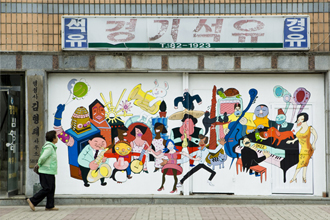
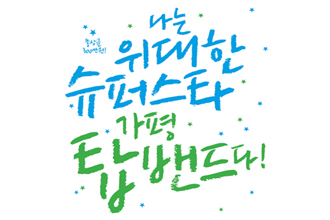
The arts and culture programs cover a large scope of genres and content in an attempt to help the local community become familiar with jazz. Instructors are sent to local schools and military bases to run musical instrument classes for them. In addition, the “Jarasum Jazz Concert Coming to Its Audience” takes place in the six towns of Gapyeong County so that no one in Gapyeong may be excluded from cultural activities. In 2009, as part of a public art project, 17 jazz mural paintings were created in Gapyeong Town, considering the flow of the Festival visitors. In particular, such a project wouldn’t have been carried out without the help of government offices and sufficient communication with residents. Such active efforts made by the Secretariat brought dramatic changes to Gapyeong. The number of citizen bands significantly increased to reach 25 today. In an attempt to support them, the secretariat has hosted the Gapyeong Band Contest since 2012, enabling its three winners to perform on the Festival stage. As a result, this contest, which has become a major local summertime cultural event, is growing as fast as the Festival. Along with them, seven music clubs and bands from Gapyeong’s elementary, middle and high schools, including the Wind Orchestra of Wigok Branch School and Choir of Miwon Elementary School, joined the 10th Festival.
|
|
|
| Jarasum Jazz Center which was opened in 2005 (former town office of Gapyeong) | Jazz mural paintings that were created as part of a public art project in 2009 |
Local Residents Who Are Gradually Becoming the Owners of the Festival
In the summer of 2009, a big crisis came. In order to stop the spread of influenza A (H1N1) virus, large events hosted by Korean local governments were cancelled one by one. As the Korean government raised the national disaster level for the infectious disease to “serious” a month before the Festival, local authority of Gapyeong also held a emergency meeting. Consequently, the 6th Jarasum International Jazz Festival was about to be cancelled. Nonetheless, the meeting ended with an unexpected result. The residents of Gapyeong and the local assembly agreed that even if all of Gapyeong County’s events for the second half of the year would be cancelled, the Jazz Festival would be held, considering the international trust and the audience who stayed despite the heavy rain during the 1st Festival. That year, the number of visitors significantly increased but not a single virus-related problem arose so it served as an occasion to turn evils into blessings. Currently, one of the staff of the Secretariat joined it after working for the county office of Gapyeong on a contract basis and has worked for the Festival for four years. Meanwhile, a university student living in Gapyeong, who is a big fan of the Festival, worked as an intern for three months during the Festival period. Every year, a growing number of people from Gapyeong and Chuncheon want to work as volunteers during the Festival. In particular, the young people who was born in Gapyeong but now live in other cities are so proud of the Festival that in addition to visiting the Festival, they promote the Festival by telling others when they can buy the Festival tickets. It is not an exaggeration to say that it is the residents who are the keepers of the Festival.
Once you arrive in Gapyeong Town, you will find signs that are not to be seen elsewhere: Jazz Hair (beauty parlor), Jazz House (motel) and Jara Jazz (fastfood restaurant). Inside them, they don’t play jazz music but those who work there are quite knowledgeable so they can provide you with a general explanation on the Festival and jazz. That may be because they receive many questions from visitors. A new large cafe located at the town’s crossroads plays jazz all the time. This year, serving as the venue of the Festival’s night program called the “Midnight Jazz Cafe,” this cafe offered drinks at a discount to the Festival visitors. Meanwhile, a modern-looking beer bar actively uses the Festival poster for its decoration.
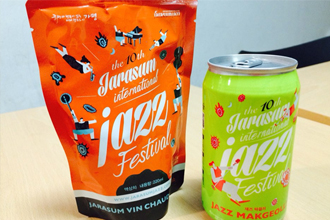
Celebrating its 10th anniversary this year, the Festival launched “Jarasum Vin Chaud” as its official drink. Vin chaud is warm wine which is drunk mostly in Nordic countries to gain energy and prevent cold in winter. The Secretariat planned the production of this wine and in cooperation with the Agricultural Cooperative for Special Alcoholic Drinks of Gapyeong, it invited a chef from the Bourgogne region in France. The chef then looked around the vineyards and wineries in Gapyeong and developed a recipe using local materials. The Jarasum vin chaud is a new product that will generate added value in the Gapyeong region by encouraging the consumption of grapes and wine from Gapyeong. Even after the Festival, this wine has been sold well online. Meanwhile, “Jazz Makgeolli,” Korean-style alcoholic drink, is produced in cooperation with Urisul, Gapyeong’s representative brewing company. This is the first product made in collaboration with a local business in an attempt to promote the Festival as a brand. Its main idea is about matching live yeast, which is used when makgeolli becomes mature, with music played by the artists who are on stage in a given year. Since 2010, this drink has been made of different materials (e.g. black rice, pine nuts and citron) year after year. Those who taste this drink tend to repeatedly buy it again every year at the Festival so the product greatly contributes to the local economy. There are also other products. For example, the pizza made with Gapyeong’s pine nuts, which is ambitiously supplied by the Restaurant Business Branch of Gapyeong, and beef neck steak, which is seasoned with Gapyeong’s wine, have been popular. Meanwhile, Gapyeong’s Federation of Livestock Cooperatives has supplied the “Jazz Beef Combo” during each Festival. To summarize, it is becoming natural for Gapyeong’s local businesses to cooperate to come up with ideas for the Festival and to make something of value.
Jazz Becomes Gapyeong’s Special Product
It is certain that music is the most accessible art for the general public. That is because music doesn’t require its audience to think deeply compared to fine art, the theater and dance. However, jazz is different. Jazz has such a wide spectrum; easy listening jazz exists but in general, “jazz,” which is represented by its fans and artists, is one of the most difficult music genres that have been created by modern people. Since you need to know jazz to understand its true value and depth, jazz is actually an academic genre to the point that it is natural to say, “You join the world of jazz.” If someone had first visited Gapyeong, just with an ambition to make a festival under the theme of such difficult music, would we have the Festival today?
Coincidences, relationships, imagination and efforts have been piled to make the Festival celebrate its 10th anniversary. Now, if Gapyeong County has any opportunity to make a local booth to promote the county during fairs, it naturally promotes “jazz” as its special product. During the busy period of preparing and organizing the Festival, representatives of the Jung-gu district office of Ulsan and the city hall of Pohang say that they are willing to travel long distance to visit the county office of Gapyeong, in an attempt to learn from the Festival. In such cases, Gapyeong’s public servants in charge of festivals doesn’t know what to do because they are so busy but at the same time, they realize the current status of the Festival.
The Jarasum International Jazz Festival has become the “it” annual festival that must be visited not only by those in charge of Korea’s local festivals but also by those related to performances of all genres, government offices, large companies’ marketing teams, embassies and cultural centers. In addition, foreign countries want to cooperate with Asian partners. In particular, European cultural institutions have increasingly suggested focus programs for their countries’ artists. The body corporate Jarasum Youth Center created the “Jarasum Jazz Scholarship,” thus supporting students from Gapyeong who study music at university. The Festival’s education project for Korean jazz musicians, which started with the “Jarasum Creative Music Camp” this year, will also be developed further. The Festival piled stairsteps one by one along with the region, so that the audience can happily enjoy nature and music. Such stairsteps have contributed to making today’s brand called “Jarasum” going beyond Gapyeong. The Jarasum International Jazz Festival will keep moving forward until the day when Gapyeong is called the “hometown of Korean Jazz.”
|
|
|
| Poster of the 2013 Gapyeong Band Contest | Poster of the 2013 Gapyeong Band Contest |
* Photos provided by the Secretariat of the Jarasum International Jazz Festival
 PREV
PREV
.JPG)
.jpg)
.jpg)
.jpg)
.jpg)












;)


