





Oasis Feeds Next Generation in Barren Land
[Trend] Contemporary Performing Art Festivals and Art Centres in the Middle East
The past two decades have witnessed the emergence of a large number of independent initiatives aiming at promoting contemporary performing arts (i.e. theatre and dance) in major cities of the Middle East– Alexandria, Amman, Beirut, Cairo, Damascus, and Ramallah. Up to this point, established mainstream festivals had been the main centres of cultural production.
Although each one of these cities has its own art (hi)story, socio- political and economical context (where specific tendencies triggered by the politics of culture can be identified), their performing art scenes face common challenges. The lack of public funding coupled with the absence of contemporary artistic spaces or educated audiences constitute major obstacles in the region. Due to the lack of governmental support for culture or restrictive governmental control, the endeavours undertaken are usually implemented by artists’ collectives, non-profit organisations, curators or art organisers. These independent groups have been striving to build alternative platform to encourage artistic projects, regular events and festivals. They have also invested great efforts in opening creative spaces and galleries dedicated to contemporary art practices. In order to achieve these goals, these independent associations have relied on a variety of financial support modalities: local individual philanthropic donors, pan-Arab funding bodies (Arab Fund for Youth and Culture, Al-Mawreed Al-thaqafy, Young Arab Theatre Fund, Arab Digital Expression Foundation, Safar Fund), international organisations such as Prince Claus Fund (Netherlands), Ford Foundation (USA), Roberto Cimetta Fund, Sida Foundation (Sweden) and locally implemented European cultural centres. The lack of physical spaces dedicated to art projects prompted artists and cultural operators to respond to this demand in various creative ways.
|
|
|
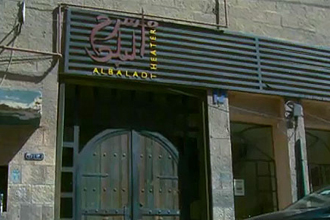
| Beirut Art Center (Lebanon). Photo by Nadim Asfar | Al Balad Theatre (Jordan). Photo by Raed Asfour |
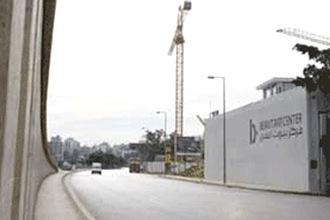
Although, public funding for the arts is negligible to non-existent in Lebanon, Beirut is home to one of the most dynamic contemporary art scenes in the region. Its cultural annual agenda comprises several events organised by non-profit associations, cultural venues or theatres. The multidisciplinary ‘Home Works’ Forum initiated by Ashkal Alwan (The Lebanese Association for Plastic Arts) offers a yearly programme of exhibitions, dance and theatre performances, film and video screenings, book launches, concerts, and debates. ‘98 weeks’, an artistic research project and curatorial collective, combines both theoretical and practical forms of research, organising workshops and symposia. Zoukak Sidewalks by Zoukak Theatre Company hosts international artists in residence providing a shared space between international artists, local practitioners and interested audiences. Zicco House, a cultural and residency space operating within a communal approach organises the ‘Beirut Street Festival’ dedicated to in situ public performances. Theatre venues such as the Monnot Theatre organises an International Storytelling Festival. More symbolic festivals, like the ‘Beirut Spring Festival’ in memory of assassinated journalist Samir Kassir, take place yearly in the city with a international program revolving around themes of tolerance and cultural diversity. However, Beirut still suffers from a lack of local art spaces due to the complexity of land deeds and expensive running costs. The only centre solely dedicated to contemporary art practice in Lebanon is the Beirut Art Centre, which was inaugurated in 2008.
It is in this context that art organisations have learned to become flexible and adapt to multiple venues. One advantage to this situation is that mobility prevented censorship from shutting venues down.
With the recent war situation in Syria and its direct impact on cultural and artistic life in the country, eminent events and festivals in Damascus are facing major difficulties to keep up their activity. Nevertheless, remarkable initiatives are still emerging such as ‘Ettijahat’, an organization stimulating the growth of independent culture in Syria. Lately, Beirut has become a hub for displaced Syrian performing artists from the diaspora. Dawar al-Shams Theatre in collaboration with SHAMS, a cultural theatre cooperative were responsible for a special event bringing together more than 100 Syrian artists (painters, actors, dancers and playwrights). The 2013 Arab Dance Platform focused on Syrian choreographers and dancers. Other groups like Sima Dance Company have elected the local Babel Theatre as a residency space.
In Egypt, despite the socio-political instability, Cairo witnesses an activ(ist) performing art scene with numerous events. Studio Emad Eddine organises the Downtown Contemporary Art Festival (DCAF), a large international multi-disciplinary contemporary art festival. A contemporary dance thematic festival ‘Transdance’ conceived and produced by HaRaKa is also held in Cairo focusing on alternative forms of thinking about choreography and performance. Its central themes of resistance and memory seek to interrogate and provoke audiences intellectually. Since the number of venues is very scarce for a city of 20 million inhabitants, with poor audience development and heavy reliance on funding –due to the recent closure of platforms and socio-political pressure–, artists are seeking independent art spaces. This situation led young artists to respond to the situation in an inventive way. Thus, ‘Hal Baddel’ (literally meaning ‘Alternative Solution’), a three-week non-profit voluntary local festival, was initiated in 2013 by two young cultural activists. It included music, puppets and contemporary dance. With the aim to develop further the emergent contemporary dance scene, a young cultural operator and dancer, built the first adapted independent dance studio EECDS in Giza and funded the ‘Contemporary Dance Night’, an event offering dance residencies and supporting Egyptian local dancers.
Further north, in Alexandria, although the cultural landscape is sparse and sporadic, the Art Centre of the Bibliotheca Alexandrina supports performing art programmes. For 9 years, it held the ‘Creative forum for independent theatre groups’ in collaboration with I-act. Today, I-act organises the ‘Backstreet Festival’ promoting art in non-traditional spaces, whereas ‘Dancing Egyptian Spring’, an experimental artistic project, invites Egyptian and international artists to take over some symbolical locations around the city and transform them into unusual venues for performance.
|
|
|
|
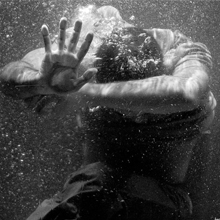
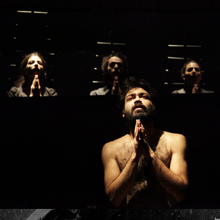
| Ahmed El Gendy, < One >(2012), CDN 2 (Egypt). Photo by Amr El Sawah. |
Omar Abi Azar (Lebanon), < Hamlet-Machine >(2009), Zoukak Theatre Company. Photo by Randa Mirza |
Nawal Skandarani, < harassment@artonly >(2012), Hakaya Festival (Jordan). Photo by Raed Asfour. |
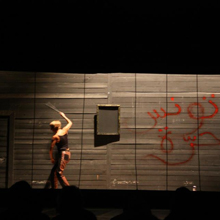
With its annual International Theatre Festival, Amman is also turned towards performing arts, especially dance with its annual ‘Zakharef Motion Dance’ festival. It also organises the storytelling festival ‘Hakaya’ in collaboration with Al Balad Theatre. This venue hosts theatre and dance performances along side the governmental structure of Al Hussein Cultural Centre. Other independent art centres like Makan and Darat Al-Funun are part of the artistic landscape but they are mainly interested in visual arts, music, and photography.
On the other side of the border, the Popular Art centre promotes a vibrant and dynamic performing art sector in Palestine. It organises the ‘Palestine International Festival’ and the ‘Heritage Festival’ focusing on local folk performing arts. Working for the development of contemporary dance performance, ‘Sareyyet Ramallah’ brings the annual ‘Ramallah Contemporary Dance Festival’ introducing a variety of contemporary dances to the Palestinian people.
In order to increase visibility and encourage audience building, the various artists involved in the independent performing art sector are sharing their experiences and resources by collaborating together. This dynamic is strengthening their solidarity. Cooperative and networking strategies are being developed to create synergies through the creation of pan Arab production structures such as the Arab Theatre Training Centre. Joint residency programme between Ashkal Alwan in Beirut and the Townhouse Gallery in Cairo are being programmed, platforms such as ‘Dancereflaction’ or ‘Masahat’ a dance festival network that brings together Beirut International Platform of Dance, Ramallah Contemporary Dance Festival, Amman Contemporary Dance Festival and Tanween Network for Theatrical Dance (Syria) were created.
As a result, performing art practitioners are becoming increasingly more capable to develop an open field for thinking beyond borders and crossing them while seeking for a larger international exchange. This dynamic is shaping the Middle Eastern Arab contemporary artistic space in an original way through the paradoxal phenomena of migration and de-territorialisation.
 PREV
PREV
.JPG)
.jpg)
.jpg)
.jpg)
.jpg)












.jpg','The past two decades have witnessed the emergence ..');)


