





Arabian tradition style and its influence to contemporary performing arts
[Trend] Traditional forms of theatre in Syria
Nobody can confirm or deny the existence of some forms of drama and theatre activities in Syria before the end of the 19th century, which is the time when AbūKhalīl Al-Qabbānī (1835–1902) introduced these activities in their western form. Al-Qabbānī, a rich merchant from Damascus who was the first to present a performance in his grandfather’s house, might have seen plays in the neighboring city of Beirut where French and Italian visiting groups performed, or could have known Moliere and Racine through the Turkish translation of their texts. The originality of Qabbani resides in his capacity to adapt the occidental form of the theatre to the taste of the local audience. The plays he wrote and directed were inspired by the "One Thousand and One Nights(Arabian Nights)" folk tale, and he introduced songs and dances into the story plot, which transformed his plays into a rich Operetta. The atmosphere he created on stage was magical and captivating to the audience who found something quite new and unfamiliar in these events.
It is true that the same audience was familiar with the shadow theatre that was performed in coffee shops, but the difference was enormous between flat articulated figures moving behind an illuminated curtain, and real actors dressed in costumes from the Middle Ages, playing the roles of sultans and caliphs. The illusion that was created on stage was unexpected, and spectators couldn’t comprehend this magical transformation to a point where, as mentioned in books that described some of these events, some of the audience tried to intervene on the stage to rescue the threatened characters.
The big success of Qabbani’s plays frightened the conservatives in Damascus, and the new adventure ended with a decree by the Ottoman government preventing theatrical performances in Syria. Qabbani’s theatre was closed, and the artist was obliged to immigrate to Cairo where the atmosphere was more open to new artistic experiences.
Paradoxically, shadow theatre, which was full of obscenities, was allowed and tolerated by the religious authorities that accused Qabbani’s work of corrupting the morals!! Is it because he put on stage real actors1 ? Was it a result of the mockery of the Caliph Harun Al-Rashid in the second play he presented? Or is it the fear of the huge success of this new form of entertainment? Whatever was the reason behind this prohibition, it was able to stop the first attempt to introduce theatre in Syria for quite a while.
1At the beginning of the experience, hairless men played the roles of women, and gradually, Christians and Jewish women were hired to play on stage.
|
|
|
| Traditional Syrian shadow puppet ‘Karagöz’ |
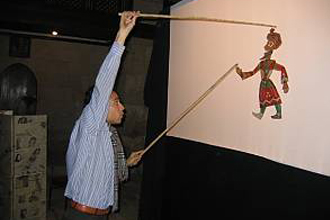
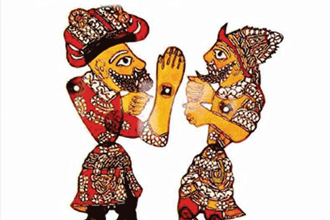
As for shadow theatre, it was known in all Silk Road countries, and it could have been brought in to Syria by the gypsies. This is confirmed by the local Syrian name for shadow theatre:"Karagöz". The word means "black eye" in Turkish, and it might be a reference to the gipsy puppeteers manipulating the shadow in coffee shops and public baths in Syrian towns. Gypsies originate from central Asia, and they used to travel through countries to perform in souks (market places) and fairs. Their presence in Syria is known for centuries, and they are behind many popular forms of entertainment like dances and acrobatic movements, fortune telling, and animal entertainment using dogs, bears and trained monkeys. The plots and the scenarios of "Karagöz" were short, simple, and farcical. It presented stock character types like the stupid old men, the tricky servant, the shrew wife and the soldier that is full of false audacity. The improvised dialogue was a severe satire of the current events, and a caricature of all stratus of the society. In these performances, one could hear dialects and pronunciations of the different nationalities that lived in Syria like people from Cairo, Baghdad, Morocco, Yemen, Sudan etc.
The obscenity of the dialogue, which was tolerated in the past by the men-only audience, was the reason for its disappearance in the 1960th, when the Ministry of Culture and National Guidance was created in Syria in a mission to present the finest aspects of culture to educate people. The Indecency of the language also prevented the preservation of the scenarios after the disappearance of the genre in the 1960th. When the Ministry of Culture approved the documentation of this popular form of theatre, and decided to publish a book about it, many of the words in the dialogue were removed.
The impact of Karagöz remained very present in the collective and popular memory, and it influenced the creation of The Tricks of Ghawar: comic sketches that were written and performed by the Syrian actor Durayd Lahham. These sketches are the transposition of the plots and "canvas" of Karagöz, re-interpreted for real actors instead of flat figures. The Tricks of Ghawar aired on Syrian television during the 1970’s, and were replayed many times later due to their popularity.
|
|
|
| < The Tricks of Ghawar > |
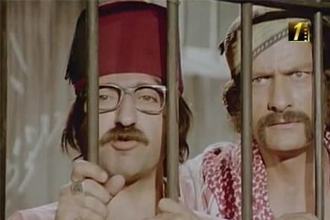
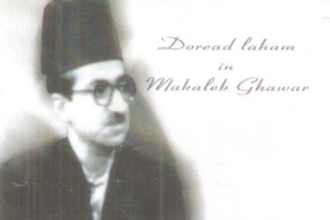
If we try to make links between Karagöz and the regional entertainment forms, we can observe continuity between this local shadow theatre and the traditions of the Greek comedies of the 4th century BC, the Roman comedies of Plautus and Terence, the Atellan farces, and the Commedia dell’arte of the 16th century in Italy.
Even though the origin of the Syrian Karagöz is still disputed, and even though we don’t have concrete and chronological proof for the continuity that exists between the aforementioned entertainment forms, our hypothesis can be reinforced by the geographical position of Syria: Situated at the meeting point of three continents: Asia, Africa and Europe, which is why Syria hosted many ethnic groups and a variety of religions and communities. Also, the Sumerians, Egyptians, Hittites, Assyrians, Babylonians, Canaanites, Phoenicians, Arameans, Persians, Greeks and Romans, colonized the land from the third millennium BCE onwards, which is why Syria had certainly known many forms of dramatic traditions that were brought by the conquerors and assimilated by the local population.
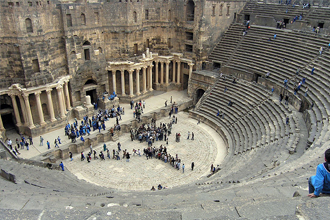
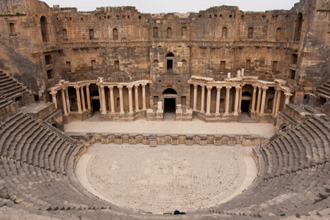
The huge and perfectly preserved Roman theatre of Bosra (south of Syria) enforces the hypothesis that performances could have been held there during the Roman hegemony. We are unable to reconstruct a clear picture of the nature of the performances that were held in this theatre, which seats 15 thousand spectators, and is considered as one of the most beautiful amphitheaters in the world; but we might suggest that these performances could have been initially linked to pagan and agricultural ceremonies and carnivals that were associated with fertility. These ceremonies did not develop into theatre (tragedy and comedy) like in the other Roman provinces, but they became gradually a kind of folk entertainment after the rule of Muslims.
|
|
|
| Roman theatre of Bosra in Syria |
How could such an important tradition of ritual ceremonies die? Many scholars believe that the disappearance of lot of pagan rites was a result of Muslims’ reign in Syria. But it’s surely not the only reason: popular forms of entertainment were neglected by the scholastic texts that preserve the history of a country. Only some documented accounts of everyday life in big Syrian cities, especially by travelers visiting the region, suggest the presence of buffoons, mimes, comic performers, jesters, acrobats, fortunetellers and jongleurs from different cultures. They were part of the social landscape in the region from the Middle Ages to the 1950’s when they were replaced by cinema and television.
In this brief panorama about the traditional forms of theatre in Syria, we have to also mention the very popular art of Storytelling, which usually happens in coffee shops, and tells the stories of heroes and other popular folk tales, especially during the month of fasting. With his book on his knees, the storyteller used to sit on a high chair in the middle of the listening audience; He captures the hearts with his enthusiastic intonation, talking about strength, chivalry, honor, and folk heroes. He often adds personal touches to the story plot to engage the audience and get them to sympathize with the pain of the story’s characters and their struggle for justice. Some storytellers would add dramatic effects to their stories by playing musical instruments while telling the story, or by making dramatic gestures at appropriate points in the tale.
Storytellers, just like shadow theatre, are now object of exotic curiosity for the Syrian people. Syrian modern theatre never returned to these popular forms; it followed the technical and thematic evolution of theater all over the world instead. Roots, identity and heritage were topics of discussion among authors and critics during the last decades, but the radical changes that are happening in the Arab world have brought a new reality and new priorities. Democracy and freedom are more pressing issues today, and authors and actors are more concerned with what theatre should reflect, and which role should it play in rebuilding the new society people are aspiring to.
 PREV
PREV
.JPG)
.jpg)
.jpg)
.jpg)
.jpg)












.jpg','Nobody can confirm or deny the existence of some f..');)


