





The direction for performing arts in a post-hallyu era
[Trend] ① What is performing arts hallyu, the Korean wave?
Conditions of the Post-Hallyu
As the transnationalization of Korean pop (K-pop) speeds up in the post-hallyu (the Korean Wave) era with the global craze of Psy’’s "Gangnam Style," hallyu-which effectively began in late 1990s-seems to have entered a new stage. In its nascent stage, the substantiality of hallyu, which started with an increase in popularity of televised Korean dramas and idol groups in Greater China and Southeast Asia, was often called into question. However, the current global competitiveness of Korean popular culture-which includes not just K-pop but also films, dramas, games, and performances-suggests that hallyu has passed its temporary bubble phase and entered a phase of sustainable competitiveness. The popularity of Korean popular culture in not only Southeast Asia but also North America, Europe, and South America is no longer an unfamiliar sight.|
|
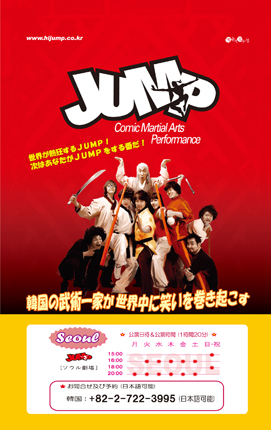
I would like to define the recent trends in hallyu as "post-hallyu." What is distinctive about post-hallyu? Two points of view are of importance. First, the production and consumption scope of popular culture have become even more widespread in comparison to the preexisting hallyu. Until the early 2000s, hallyu was mostly led by films and dramas. Although we cannot deny the popularity of idol groups such as H.O.T or Shinhwa in China and Southeast Asia, films and dramas held a dominant position within hallyu. However, in late 2000s, hallyu became stronger not only in the traditional areas of films, dramas, and popular music but also in games, performances, fashion, music, and tourism. Games such as Lineage, Aion, and Mabinogi are now popular the world over and are the major source of Korean cultural exports. In addition, nonverbal performances such as Nanta and Jump and musicals featuring idol group members have attracted a definite audience and received favorable reviews abroad.
The expansion of international awareness of hallyu from Southeast Asia to North America, Europe, and South America is also a distinguishing feature of post-hallyu. Especially, the K-pop-led globalization of hallyu has become a representative case of a creative cultural hybridization that departs from the structures of Americanization and an imitation of Western culture. The worldwide popularity of "Gangnam Style" is leading hallyu’’s departure from Asia towards other shores.
The second feature is the clear transition from cultural discourse to cultural capital in the post-hallyu era. In the discourse on hallyu culture up until the early 2000s, the major topics were to determine the true nature of the cultural trend. Discussion topics included: "Is hallyu sustainable?", "Is there a true nature to hallyu?", and "How should we create supporting policies for hallyu?" There were many diverse opinions within the cultural discourse of hallyu-from the idea that it was only a signifier of cultural nationalism to a notion that it was a good opportunity to spread the cultural status of Korea throughout the world.
However, not many people today deny the current presence of hallyu. Researchers who were initially skeptical of the presence of this cultural phenomenon are now focusing on how Korea’’s cultural nationalism is mobilized in the reproduction within the culture industry. In other words, what is now important for hallyu is not cultural discourse but cultural capital. This, in other words, is evidence that the affect of capital on cultural production is much stronger than before. Major entertainment agencies that produce K-pop often receive investments from corporations or financial capital with overseas expansion in mind. In order to strengthen their capital, entertainment agencies have gone public on KOSDAQ and used the investments to expand the scope of entertainment production.
Perhaps post-hallyu means that the term hallyu is not necessarily needed. Hallyu is no longer a special and unfamiliar phenomenon. In addition, the general and specific definition of hallyu as the global flow of Korean culture is no longer required. This is because hallyu is becoming quickly divided into individual cultural products within the culture industry market. What is important now is not the word hallyu, but the increased awareness and competitiveness of individual cultural products and the determining the preconditions for a particular cultural phenomenon. hallyu, in its current division into film, dramas, games, and concerts, has become a somewhat tacky term. Now lets take a look at the some of the emerging global phenomena in the post-hallyu era within the performing arts.
The Performing Arts Hallyu’’s Three Forms
The hallyu of the three performing arts areas may insignificant in comparison to films, dramas, games, and popular music. But recent accomplishments by musicals have fueled the performing arts to take gradual steps into the limelight of hallyu. It is difficult to put an exact definition to the performing arts hallyu. But in terms of the worldwide popularity and interest in pop music concerts and musicals, the hallyu of performing arts can be divided into three specific types.
|
|

First is the K-pop concert market. In comparison to the familiar popularity of K-pop on the Internet, such as YouTube, the recent craze for concerts is relatively new. The K-pop concert market is concentrated mostly in Japan. While Psy has toured throughout the United States and Europe with the enormous popularity of “Gangnam Style,” he has yet to perform a solo concert with ticket sales. While Big Bang’’s first world tour Alive 2012, which started in early 2012 and lasted until January of 2013, will travel to 24 cities in 12 countries with an expected audience of 800,000.
Most well-known K-pop musicians, however, are focusing on the certain Japanese concert market instead of a potentially straining world tour. Japan, which has the world’’s second largest popular music market, is often highest on the list for concerts due to the high value of the yen, a definitive fan-following, transparent market operations, and a close geographical location. Idol groups such as TVXQ, Big Bang, Super Junior, Girls’’ Generation, Kara, Beast, CNBLUE, and FT Island utilize their high concert competitiveness in the Japanese market. Most of the profits for K-pop groups active in Japan come from sales of singles and concert tickets. While their recognition might be higher in Greater China and Southeast Asia compared to Japan, these markets lack the competitiveness for concert profits. In addition, concert production and the management market in China and some Southeast Asian countries is not as transparent, sometimes resulting in issues related to profit distribution. In the long term, tours must become commonplace and the market must be expand beyond a Japan focus to other Asian countries and to Europe and South American countries for a sustainable development of K-pop.
|
|
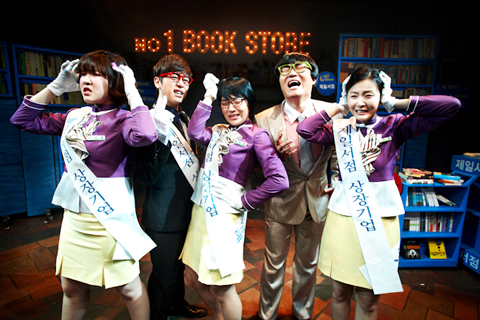
Second is the musicals market. There is controversy as to whether the musicals count as hallyu. It is certain that the Korean musicals market is not as popular as the rest of hallyu market with regard to popularity across the world. The Lost Empire in 1995 is the only example of a successful Korean musical in the international stage. Apart from Laundry, Kwanghwamoon Younga, and Jack the Ripper, which entered the Japanese musicals market, there are no other particular successes.
Yet a point of note is the increase in hallyu tourism from Japan and their contribution to increased ticket sales in the domestic musicals market, which feature idol group members-a result of K-pop’’s popularity. Elizabeth-which features Kim Jun Su of JYJ-and Mozart were sold out with ticket sales from foreign hallyu tourists. In addition, Palace, Legally Blonde, Catch Me If You Can, and Closer to Heaven have all casted or will cast major idol group members. While the appearance of idol group members has caused much controversy regarding the execution of the musicals, the idols have largely contributed to the hallyu hits within the domestic musicals market. The appearance of idol group members has not produced a level of success worthy of close attention in either original or licensed musicals. Yet nonverbal performances such as Nanta and Jump will be in the limelight as the long-term popular repertory for foreign tourists visiting Korea. In addition, the entry of Laundry and Jack the Ripper into the Japanese musical market as long-running shows through licensing is encouraging to the musicals market.
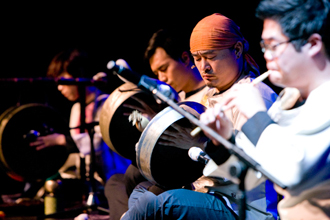
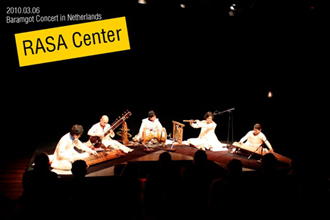
Last is the status of foreign expansion for nonmainstream concerts in genres such as indie or gugak (Korean classical music). There currently aren’’t any nonmainstream artists that have garnered interest around the world, but attempts to break into the foreign market by talented indie bands are slowly increasing. Rock and punk bands such as Galaxy Express, Guckkasten, No Brain, and The Strikers, who lack the popularity of idol groups, have been active in the Japanese indie concert market with a significant level of recognition. Gugak ensembles such as Baramgot, Noreum Machi, Be-Being, Gongmyoung, and Vinalog, which feature crossover world music, have been steadily introduced across world music festivals in Europe. Under the full backing of the Korean government, Korean world music groups have boosted the global world music market, which has been recently exhibiting a downtrend trend.
|
|
|
| performance of Noreum Machi | performance of Baramgot |
Can the performing arts be globally competitive?
Can the performing arts be globally competitive? To be honest, the term "performing arts hallyu" is used out of convenience. A more specific term would be "the global competitiveness of Korean performing arts." The capital scale of the Korean performing arts market has greatly increased in the past few years due to the growth of the musicals market. The long-running productions of Nanta and Jump, the large influx of capital into the musicals market, and the live-performance market boosted by K-pop fever show that the performing arts market of Korea still possesses as much potential as other hallyu markets.
Yet from another perspective, the large capital, popular actors, and musicians of the performing arts market do not necessarily guarantee overnight worldwide success. In order for the Korean performing arts market to be competitive, improving the creative environment is necessary, above everything else, for long-term growth. In other words, composers, lyricists, stage producers, stage technicians, and performance producers must be in continued supply and must be treated with respect. Without a stable and professional workforce and an appropriate treatment of those professionals, it will be difficult to expect global competitiveness for Korean production companies.
Only long-term investments into the artists who form the foundation of the performing arts-such as creative screenwriters, producers and directors with an exceptional sense, and skilled stage technicians-are the only measures for escaping from the temptation of a flash in the pan. Nurturing professionals related to the performing arts is the fastest and most accurate shortcut to transition from license-based performance production to creativity-centered original productions.
 PREV
PREV
.JPG)
.jpg)
.jpg)
.jpg)
.jpg)












 ..');)


