





Cultural Export Promotion in Europe
[Trend] A report about the cultural and creative industries (CCIs)
The first article in this series examined cultural policy initiatives in Finland to boost cultural export promotion. Judith Staines now presents European policy and examples of cultural export promotion strategies in other European countries. While Finland is the only EU country to date which has evolved a national cultural export promotion programme for the cultural and creative industries (CCIs), there are many other interesting European strategies, some in designated CCI sectors, others in specific regions or cities.
EU developments
In recent years, there has been increased awareness of the importance of cultural and creative industries at EU level. These industries – which include architecture, archives and libraries, artistic crafts, audiovisual (such as film, television, video games and multimedia), cultural heritage, design, festivals, music, performing arts, publishing, radio and visual arts – are one of Europe’’s most dynamic economic sectors. They employ millions of people across the EU, contribute a substantial share to EU GDP and studies have shown that they grow faster than the rest of the economy.The European Commission supports a process of bringing together representatives of cultural ministries and arts councils from EU Member States to discuss policy and learn from examples of good practice. This Open Method of Coordination (OMC) has established new OMC group to examine how countries can improve Export and Internationalisation Strategies for the Cultural and Creative Industries. At the first meeting in December 2012, EU government representatives were briefed on policy and strategies to support cultural export currently seen in Europe, set out in a paper co-authored by Judith Staines through the European Expert Network on Culture.
|
| |
|
|
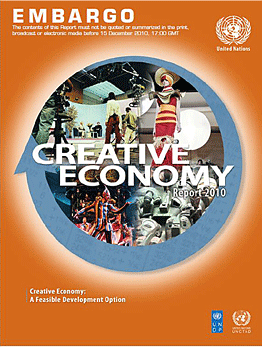
Analysis of the trends in CCI export and internationalisation relies on accurate, comparable statistical data. The study found that the main international bodies involved in such work (UNESCO Institute for Statistics, United Nations Conference on Trade and Development - UNCTAD/UNDP and Eurostat) all provide extensive evidence for the growth in international flows of cultural goods and services over recent years, for increases in cultural exports against other traded goods. According to the UNCTAD/UNDP Creative Economy Report 2010, creative goods exports account for the vast majority of world trade of CCIs. Design is the largest sub-sector for creative goods exports (taking 60% of all CCI goods exports in 2008).
Nine EU Member States were in the top 20 world exporters of creative goods and within ’’developed economies’’ six of the top ten countries are in the EU. Among developed economies in 2008, Germany was the top exporter of both Performing Arts and Publishing & Printed Media; Italy was top exporter of Design and the UK, France and Germany appear in the top five exporters of Visual Arts. Creative goods exports from the EU in 2010 represent 36% of the total value of creative goods exports worldwide.
Eurostat Cultural Statistics report 2011 found that in 2009 the EU-27 exported more cultural goods to the rest of the world than it imported, recording a trade surplus of around €1.9 billion. The main products exported were books, works of art, antiques, newspapers and DVDs.
At national level, the process of collecting and analysing statistics on cultural export is well established in many countries. For example, the UK publishes annual bulletins for economics of creative industries.
CCI sector strategies in Europe
Many EU countries have developed targeted strategies to promote cultural exports in certain CCI sectors. In film and audiovisual, all EU countries have designated bodies to help creators and producers to market and distribute their work internationally. For example, Flanders Image in Belgium and German Films actively promote their national film productions abroad. Support ranges from grants to attend international trade events, international co-production and distribution, translation grants for sub-titling and dubbing, national promotions and showcases abroad, tax incentives to encourage film location and post-production of foreign films, market research and expert business advice.Many countries have organisations responsible for books and literature promotion (translation programmes, attending international trade fairs, helping publishers on trade missions abroad). For example, a new national agency, FranceLivre/BookFrance, promotes French books to a global audience and supports the acquisition of translation rights for French publications by publishers abroad. Portugal, Ireland, Slovenia, Poland are among the many European countries with book/literature promotion agencies.
|
|
| |
| Music Export Norway•s BDP in Berlin, ©Thomas Olsen, Berlinko | ||
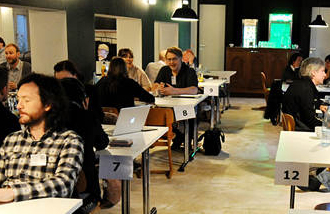

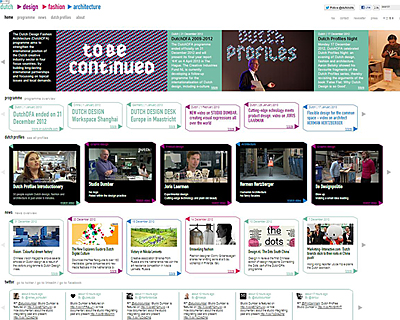
With its strong market position and export potential, design (encompassing areas such as interiors, fashion, architecture, graphics etc.) is an international promotion focus for many European countries. The Netherlands ran an extensive four-year programme to promote Dutch design, fashion and architecture into targeted markets: DutchDFA set up workspaces in Mumbai and Shanghai where Dutch designers could meet and work with design collaborators, manufacturers and others in India and China, and there were special promotions in Germany and Turkey. Denmark is developing a distinctive internationalisation policy centred on design.
|
| |
|
|
 PREV
PREV
.JPG)
.jpg)
.jpg)
.jpg)
.jpg)












.gif','The first article in this series examined cultural..');)


